
Gene Overview
GABRA2 Gene
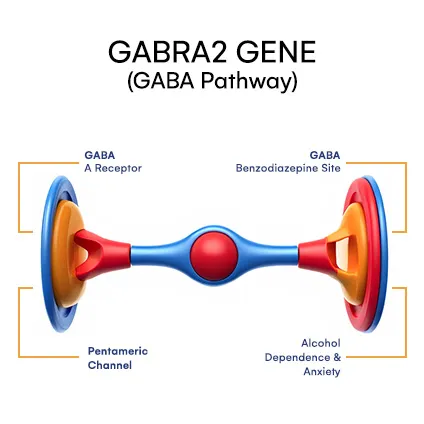
The GABRA2 gene is located on chromosome 4p12 and encodes the gamma-aminobutyric acid type A receptor subunit alpha-2, a protein component of GABA-A receptors, which are a key part of the brain’s main calming system. Certain variations are associated with differences in anxiety regulation, impulse control, stress tolerance, and susceptibility to mood-related challenges.
GABRA2 does not determine emotional control or addiction vulnerability, but it contributes to how efficiently the brain regulates calming signals and inhibitory responses throughout life.
Why GABRA2 Matters for Your Health
GABRA2 has broad implications across multiple brain and mental health systems. Understanding GABRA2 helps explain why some people experience greater ease in calming down, managing impulses, and tolerating stress compared to others.
Anxiety Regulation
Plays a central role in how the brain dampens excessive excitatory signals and manages anxious responses
Mood Stability
Influences emotional steadiness and the ability to return to baseline after stress
Impulse Control
Affects the brain's ability to regulate reactive and impulsive behaviour patterns
Sleep Quality
Contributes to the brain's ability to transition into and sustain restful sleep states
Stress Tolerance
Influences how efficiently the nervous system recovers from prolonged emotional or physical strain
Key Functions of GABRA2
- Encodes a subunit of the GABA-A receptor, the brain's primary inhibitory channel
- Regulates the calming effect of GABA neurotransmitter activity
- Supports the balance between neural excitation and inhibition
- Influences anxiety thresholds and stress reactivity
- Plays a role in impulse regulation and behavioural inhibition
- Contributes to sleep onset and sleep architecture
How GABRA2 Variants May Influence You
This is not a diagnosis. It indicates tendencies that can be influenced through daily choices and environmental factors.
Higher Efficiency Variant
May support stronger inhibitory signalling, greater emotional steadiness, and more effective stress recovery tendencies.
Moderate Variant
Typically indicates balanced GABAergic function with no major advantage or limitation.
Lower Efficiency Variant
May require stronger lifestyle support to manage anxiety sensitivity, impulse regulation, and nervous system recovery effectively.
Scientific Foundation
Science Behind the GABRA2 Gene
GABA Receptor System
GABRA2 is a part of the GABAergic system — the brain’s principal inhibitory neurotransmitter network. This receptor complex controls the flow of chloride ions into neurons, reducing neural excitability and promoting a calming effect across multiple brain regions including the cortex, limbic system, and cerebellum. This inhibitory signaling helps prevent overstimulation and maintains neural stability.
Mental Health & Behavioural Research
Research has associated certain GABRA2 variants with differences in anxiety sensitivity, stress reactivity, and impulse-related behavioural tendencies. Studies suggest these variants influence inhibitory tone rather than directly causing any condition, with lifestyle and environment playing a significant moderating role.
Gene Interactions
How Lifestyle Influences GABRA2
Although genes are fixed, GABRA2 receptor activity and GABA ergic tone are meaningfully influenced by lifestyle.
Nutrition
Diets that support gut-brain signalling and include magnesium-rich and fermented foods healthy inhibitory neurotransmitter over time.
Sleep
Consistent, quality sleep supports GABAergic recovery and healthy inhibitory signalling across brain networks.
Stress
Focused stress management supports GABRA2-associated calming pathways. Regular relaxation and wind-down practices help maintain GABA-related nervous system balance.
Movement
Regular physical activity, particularly low-to-moderate intensity exercise, supports GABAergic signalling and promotes natural nervous system regulation.
Habits
Long-term routines matter more than short-term interventions the nervous system responds best to sustained, predictable patterns.
Signs You May Benefit From Understanding GABRA2
How Lifecode Interprets GABRA2 in Your Report
Our comprehensive interpretation analyzes your GABRA2 variants alongside related neurotransmitter genes to provide personalized insights into your anxiety sensitivity, inhibitory tone, sleep tendencies, and stress regulation patterns. We categorize findings and prioritize actionable recommendations based on your complete genetic profile.
Lifestyle Guidance
Practical Recommendations
These are general lifestyle considerations, not medical advice.
Nutrition
Prioritize magnesium-rich foods, fermented foods, and nutrients that support GABAergic tone and gut-brain health.
Recovery
Build consistent wind-down and sleep routines to support inhibitory nervous system recovery each day.
Stress Management
Incorporate breathwork, progressive muscle relaxation, or mindfulness practices to regularly activate the parasympathetic calming response.
Supplement
General GABAergic and nervous system support supplementation may be discussed during consultation.
Daily Habits
Focus on consistency over intensity — predictable daily rhythms have the greatest long-term benefit for inhibitory nervous system health.
FAQ
Frequently Asked Questions
A big part of the answer lies in your brain chemistry. The GABRA2 gene influences how well your brain produces and uses its natural calming signals. People with more efficient GABRA2 activity tend to recover from stress faster, while others may need extra lifestyle support to achieve the same sense of calm.
Yes. Your GABRA2 gene plays a direct role in helping your brain transition from an active, alert state into restful sleep. If your calming brain signals are less efficient, you may find it harder to fall asleep, wake frequently during the night, or feel unrefreshed in the morning even after enough hours of sleep.
Possibly. The GABRA2 gene influences impulse regulation and emotional reactivity. When your brain’s calming system is less efficient, you may notice lower frustration tolerance, quicker emotional reactions, or difficulty pausing before responding in stressful situations. Understanding this can help you build better coping strategies.
- Consistent sleep schedule — fixed bedtimes reinforce your brain’s natural calming rhythm every night
- Gentle evening routine — dimming lights and avoiding screens helps activate natural GABA calming signals
- Breathing exercises — slow, deep breathing directly activates the brain’s parasympathetic calming response
- Regular moderate exercise — walking, yoga, or swimming support natural GABA production without overstimulating the nervous system
- Limiting caffeine and alcohol — both disrupt GABA receptor balance and worsen anxiety and sleep quality over time
- Mindfulness or meditation — daily practice strengthens inhibitory brain pathways linked to GABRA2 function
While genes like COMT affect how stress hormones are cleared and SLC6A4 influences serotonin balance, GABRA2 specifically controls your brain’s primary braking system. It determines how well your brain actively switches off stress signals rather than just managing them. Lifecode evaluates all these genes together to give you a complete and personalized picture of your stress and emotional regulation profile.
Speak to a Lifecode Consultant
“Understanding GABRA2 helps you focus on resilience and recovery rather than chasing quick fixes.”