
Gene Overview
SLC6A4 (Serotonin Transporter Gene)
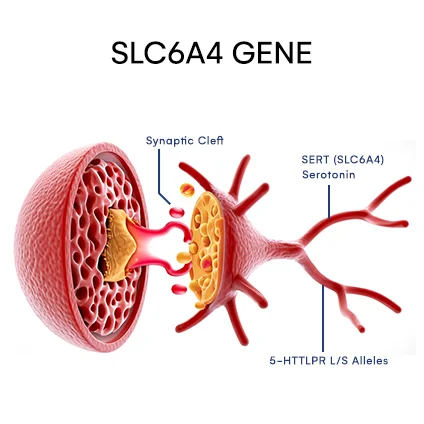
The SLC6A4 gene carries the blueprint for the serotonin transporter protein, a molecular gatekeeper that regulates how long serotonin remains active in the spaces between nerve cells. By controlling serotonin reuptake, this protein shapes the rhythm of mood, emotional resilience, and appetite signaling throughout the body.
(SLC6A4 influences tendencies but does not determine outcomes). It reflects one thread in a complex neurochemical tapestry. Variations in this gene can subtly shift how the brain manages serotonin availability, influencing everything from emotional steadiness to hunger cues and satiety responses across daily life.
Why SLC6A4 Matters for Your Health
SLC6A4 sits at the intersection of emotional regulation and metabolic signaling. Its influence extends well beyond mood, touching appetite control, stress tolerance, and digestive function in ways that are only beginning to be fully understood.
Serotonin Availability
Determines how efficiently serotonin is recycled after nerve signaling
Appetite & Satiety Cues
Influences hunger regulation and fullness perception after meals
Emotional Steadiness
Shapes baseline mood tone and sensitivity to emotional stress
Stress Resilience
Modulates how the nervous system responds under prolonged pressure
Gut-Brain Communication
Supports serotonin-driven signaling along the enteric nervous system
Key Functions of SLC6A4
- Encodes the serotonin reuptake transporter protein (SERT) in neuronal membranes
- Regulates synaptic serotonin concentration through active reuptake mechanisms
- Shapes appetite signaling via gut serotonin pathways and hypothalamic feedback
- Contributes to emotional processing and stress response modulation
- Participates in sleep architecture, circadian rhythm, and hormonal feedback loops
- Maintains neurochemical equilibrium across central and enteric nervous systems
How SLC6A4 Variations May Influence You
This is not a diagnosis. It reflects tendencies shaped over time.
Higher Transporter Efficiency Pattern
May support rapid serotonin recycling, with generally stable mood tone and consistent appetite signaling under everyday conditions.
Typical Transporter Efficiency Pattern
Usually reflects balanced serotonin availability and reliable emotional and appetite regulation across varied circumstances.
Lower Transporter Efficiency Pattern
May experience prolonged serotonin activity in synaptic spaces, which can heighten emotional sensitivity and influence appetite variability — and may respond well to structured lifestyle routines that support serotonin balance.
Scientific Foundation
Science Behind the SLC6A4 Gene
Serotonin Reuptake Mechanism
SERT, the protein encoded by SLC6A4, actively transports serotonin from synaptic gaps back into neurons following signal transmission. This reuptake cycle governs the duration and intensity of serotonin’s effects on mood, appetite centers, and stress circuits.
Appetite & Metabolic Research Associations
Studies connect SLC6A4 variants — especially the promoter region 5-HTTLPR polymorphism — with differences in emotional eating behavior, carbohydrate preference, and body weight regulation. These associations are influenced by dietary patterns, gut microbiome composition, and life experience.
Pathway Integration
SLC6A4 operates within a broader network involving the hypothalamic-pituitary axis, gut-brain signaling, and corticolimbic emotional circuits, linking serotonin transport efficiency to appetite hormones, sleep quality, and stress adaptation simultaneously.
How Lifestyle Influences SLC6A4 Activity
Genetic predispositions exist, but serotonin system balance is highly responsive to the rhythms and inputs of daily life.
Nutrition
Tryptophan-rich foods, complex carbohydrates, and micronutrients like magnesium and B6 support serotonin synthesis and transporter function.
Sleep
Consistent sleep cycles help regulate serotonin turnover and appetite hormone balance overnight.
Stress
Sustained psychological stress can disrupt serotonin reuptake dynamics and amplify emotional eating tendencies.
Movement
Aerobic and rhythmic physical activity ( meaningfully increases serotonin availability and transporter resilience) can support serotonin availability and overall neurotransmitter balance.
Gut Health
A balanced microbiome supports the enteric serotonin system, where the majority of the body's serotonin is actually produced.
Signs You May Benefit From Understanding SLC6A4
How Lifecode Interprets SLC6A4 in Your Report
Lifecode evaluates SLC6A4 within the context of neurotransmitter metabolism, appetite regulation, and stress response networks. Interpretation centers on patterns that affect serotonin transporter efficiency and their downstream influence on mood stability and hunger signaling. Results are always considered within the full metabolic and neurological genetic profile rather than viewed in isolation.
Lifestyle Guidance
Practical Recommendations
These are general lifestyle considerations, not medical advice.
Nutrition
Include tryptophan-rich foods and complex carbohydrates to support natural serotonin production pathways.
Recovery
Protect sleep consistency to maintain serotonin turnover and overnight appetite hormone regulation.
Stress Management
Build regular stress-reduction practices that buffer against serotonin system overload.
Movement
Incorporate rhythmic aerobic activity, which is among the most effective lifestyle supports for serotonin balance.
Daily Habits
Structured meal timing and behavioral routines help anchor appetite signaling and emotional steadiness throughout the day.
FAQ
Frequently Asked Questions
The SLC6A4 gene controls serotonin movement in the brain. It helps regulate mood, sleep, and emotions by recycling serotonin after nerve signals.
Variations may affect serotonin levels. This can increase sensitivity to stress and raise risk of anxiety, depression, or mood changes.
Healthy habits like exercise, sleep, and stress control can support serotonin balance and improve mood, even with genetic variations.
Speak to a Lifecode Consultant
“Understanding SLC6A4 helps you focus on resilience and recovery rather than chasing quick fixes.”