
Gene Overview
COMT (Catechol-O-Methyltransferase)
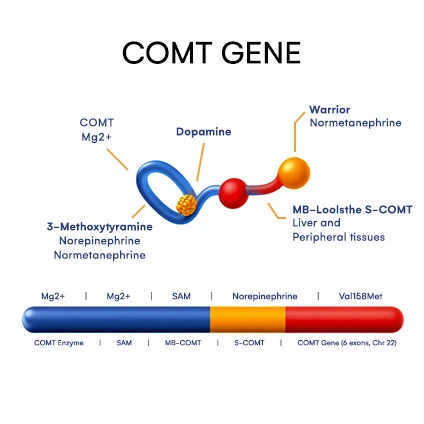
The COMT gene , located on Chromosome 22 (22q11.21) provides instructions for producing catechol-O-methyltransferase, an enzyme involved in breaking down catecholamines such as dopamine, epinephrine, and norepinephrine. These molecules regulate mood, focus, and stress response. COMT does not determine behavior or mental health outcomes alone. It influences how quickly certain neurotransmitters and hormones are metabolized.
Variations may affect cognitive processing, emotional regulation, and stress recovery patterns over time, interacting with sleep, lifestyle habits, and environmental factors. These effects are subtle and vary widely between individuals, making COMT one factor among many influencing brain function and behavior.
Why COMT Matters for Your Health
COMT plays a role in neurotransmitter balance and stress response regulation. Understanding this pathway helps explain differences in focus, mental stamina, and emotional recovery under pressure. Together, these functions contribute to how the brain adapts to daily demands and stressors.
Neurotransmitter Regulation
Helps metabolize dopamine and related signaling molecules
Stress Response Balance
Influences how quickly stress hormones are cleared
Cognitive Processing
Affects attention, mental flexibility, and focus patterns
Emotional Regulation
Supports balance in mood-related signaling pathways
Hormone Metabolism
Participates in processing certain hormone metabolites
Key Functions of COMT
- Breaks down catecholamine neurotransmitters
- Regulates dopamine signaling in the brain
- Supports stress hormone metabolism
- Maintains neurotransmitter balance
- Participates in hormone and metabolic compound breakdown and maintains overall balance in brain signaling pathways
- Contributes to cognitive and emotional regulation processes
How COMT Variations May Influence You
This is not a diagnosis. It reflects tendencies shaped over time.
Faster Neurotransmitter Metabolism Pattern
May clear dopamine and stress hormones more quickly, potentially influencing alertness and cognitive pacing.
Typical Metabolism Pattern
Usually reflects expected neurotransmitter regulation and stress response balance.
Slower Neurotransmitter Metabolism Pattern
May experience prolonged neurotransmitter signaling, which can influence stress sensitivity and cognitive processing patterns.
Scientific Foundation
Science Behind the COMT Gene
Neurotransmitter Breakdown Mechanism
COMT adds a methyl group to catecholamine molecules, enabling their breakdown and removal. This process regulates dopamine signaling, particularly in areas of the brain involved in decision-making and executive function. This activity is especially important in the prefrontal cortex, where dopamine levels influence planning, focus, and impulse control.
Neurocognitive Research Associations
Research links COMT variants with differences in dopamine metabolism, stress response patterns, and cognitive processing styles. These relationships depend on interactions with environment, sleep, and lifestyle.
Pathway Integration
COMT functions within methylation pathways and neurotransmitter metabolism networks, interacting with folate metabolism, stress hormones, and brain signaling systems.
How Lifestyle Influences NQO1 Activity
Genetic baseline exists, but neurotransmitter balance responds strongly to environmental inputs.
Nutrition
Balanced nutrient intake supports neurotransmitter metabolism pathways.
Sleep
Adequate sleep supports healthy brain signaling and stress recovery.
Stress
Chronic stress may increase demand on neurotransmitter regulation systems.
Movement
Regular physical activity supports mental resilience and neurotransmitter balance.
Habits
Consistent daily routines support cognitive and emotional stability.
Signs You May Benefit From Understanding COMT
How Lifecode Interprets COMT in Your Report
Lifecode evaluates COMT alongside neurotransmitter metabolism, stress regulation, and methylation pathways. Interpretation focuses on patterns influencing dopamine balance, cognitive resilience, and stress recovery capacity. Insights are considered within the broader genetic context rather than relying on a single gene outcome. This approach helps provide more meaningful and personalized insights.
Lifestyle Guidance
Practical Recommendations
These are general lifestyle considerations, not medical advice.
Nutrition
Maintain balanced nutrient intake that supports neurotransmitter metabolism.
Recovery
Protect sleep quality to support cognitive and emotional regulation.
Stress Management
Adopt consistent strategies that help regulate stress exposure.
Movement
Regular activity supports mental clarity and resilience.
Daily Habits
Stable routines help maintain balanced brain signaling patterns, and mindfulness practices (such as meditation or breathing exercises) may support stress regulation and emotional balance.
Related Genes
FAQ
Frequently Asked Questions
COMT is a gene that controls how fast your body breaks down stress hormones and mood-related chemicals like dopamine. It basically influences how you handle pressure, focus, and emotions daily.
No, it does not directly cause anxiety or depression. It only reflects how your brain processes certain chemicals. Your lifestyle, sleep, and habits play an equally big role.
You cannot change your gene, but you can influence how it functions. Good sleep, regular exercise, balanced nutrition, and stress management can positively support your COMT activity.
Through a simple genetic test like the one offered by Lifecode. Your report will show whether you have a faster, typical, or slower neurotransmitter metabolism pattern.
COMT influences dopamine regulation, which is closely linked to attention and focus. Research suggests certain COMT variations may contribute to ADHD-related cognitive patterns.
Speak to a Lifecode Consultant
“Understanding COMT helps you focus on resilience and recovery rather than chasing quick fixes.”