
Gene Overview
CLOCK Gene
CLOCK genes are located in both the brain and throughout the body. The CLOCK gene encodes a transcription factor that is central to the circadian clock. This gene does not determine sleep quality alone, but it contributes to how efficiently the body synchronizes its internal biological rhythms with the external environment across every system and organ.
This gene encodes a core component of the circadian clock mechanism, a molecular timing system that coordinates sleep-wake cycles, hormone release, metabolism, and cellular repair. Certain variations are associated with differences in chronotype preferences, sleep timing, mood stability, and metabolic regulation across the day.
Why CLOCK Matters for Your Health
CLOCK has broad implications across multiple brain, body, and mental health systems. Understanding CLOCK helps explain why some people naturally thrive on early schedules while others function better later in the day, and why disruptions to routine can affect far more than just sleep.
Sleep Timing
Regulates the internal biological clock that drives natural sleep onset and wake timing
Mood Regulation
Influences emotional stability through its role in rhythmic hormone and neurotransmitter cycling
Metabolism
Coordinates the timing of energy use, appetite signalling, and glucose regulation throughout the day
Hormonal Balance
Drives the rhythmic release of cortisol, melatonin, and other key regulatory hormones
Cognitive Performance
Affects alertness, concentration, and mental sharpness at different points across the daily cycle
Key Functions of CLOCK
- Encodes a core transcription factor of the circadian clock mechanism
- Regulates the timing of sleep onset, duration, and wake cycles
- Coordinates rhythmic gene expression across multiple organ systems
- Influences the cyclical release of melatonin and cortisol
- Plays a role in metabolic timing and appetite regulation
- Supports the synchronisation of cellular repair processes to during appropriate rest periods
How CLOCK Variants May Influence You
This is not a diagnosis. It indicates tendencies that can be influenced through daily choices.
Higher Efficiency Variant
May support stronger circadian rhythm stability, more consistent sleep-wake timing, and healthier hormonal cycling patterns.
Moderate Variant
Typically indicates balanced circadian function with no major advantage or limitation in sleep and rhythm regulation.
Lower Efficiency Variant
May require stronger lifestyle support to maintain consistent sleep timing, mood stability, and metabolic rhythm effectively.
Scientific Foundation
Science Behind the CLOCK Gene
Circadian Clock Mechanism
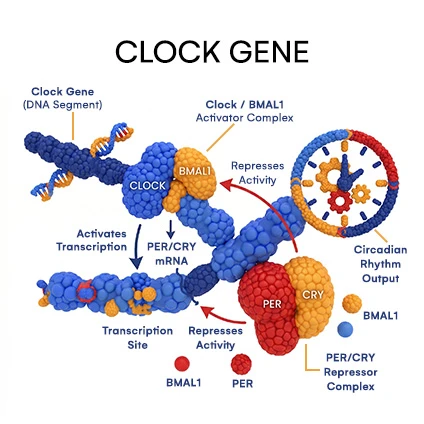
CLOCK encodes a transcription factor that forms a core part of the body’s molecular circadian clock. Together with its binding partner BMAL1, the CLOCK protein drives the rhythmic expression of thousands of genes across nearly every tissue and organ in the body. This 24-hour molecular cycle governs when the body sleeps, when it releases hormones, when it processes nutrients, and when it performs cellular maintenance and repair.
Chronotype & Sleep Research
Research has linked certain CLOCK variants to differences in chronotype — the natural preference for earlier or later sleep and activity timing. Studies have also associated CLOCK variations with differences in sleep duration, sleep quality, and vulnerability to mood disturbances when circadian rhythms are disrupted, such as during shift work or irregular schedules.
Gene Interactions
CLOCK works alongside genes like PER1, PER2, CRY1, and BMAL1, forming an interconnected feedback loop that fine-tunes the body’s internal timing system. It also interacts with genes influencing cortisol regulation and melatonin production, connecting circadian function directly to stress and mood pathways.
How Lifestyle Influences CLOCK
Although genes are fixed, CLOCK gene expression and circadian rhythm stability are profoundly influenced by lifestyle and environmental cues.
Nutrition
Maintaining consistent meal timing aligned with the natural light-dark cycle supports healthy circadian gene expression and metabolic rhythm regulation.
Sleep
Regular sleep and wake times — even on rest days — are the most powerful behavioural anchor for maintaining CLOCK-driven biological rhythm stability
Stress
Recovery Focused stress management supports CLOCK-associated hormonal cycling. Chronic stress disrupts cortisol rhythmicity, which in turn impairs circadian synchronisation and CLOCK-related signalling.
Movement
Regular physical activity, particularly when performed at consistent times of day, reinforces circadian entrainment and supports healthy CLOCK pathway function.
Habits
Long-term routine consistency matters more than short-term interventions — the circadian system responds best to predictable, repeated daily patterns aligned with natural light exposure.
Signs You May Benefit From Understanding CLOCK
How Lifecode Interprets CLOCK in Your Report
Our comprehensive interpretation analyz(s)es your CLOCK variants alongside related circadian and sleep genes to provide personalized insights into your chronotype tendencies, sleep rhythm stability, hormonal cycling patterns, and metabolic timing. We categorize findings and prioritize actionable recommendations based on your complete genetic profile.
Lifestyle Guidance
Practical Recommendations
These are general lifestyle considerations, not medical advice.
Nutrition
Align meal timing with daylight hours where possible and avoid late-night eating to support circadian metabolic signalling.
Recovery
Establish and maintain fixed sleep and wake times seven days a week to anchor your circadian clock and support CLOCK gene rhythm stability.
Stress Management
Incorporate morning light exposure and evening wind-down routines to reinforce natural cortisol and melatonin cycling patterns.
Supplements
General circadian support and sleep-onset supplementation may be discussed during consultation.
Daily Habits
Focus on consistency over intensity — the circadian system is shaped by repetition, and stable daily anchors produce the greatest long-term benefit for sleep and overall biological rhythm health.
FAQ
Frequently Asked Questions
The CLOCK gene controls your body’s internal biological clock. It decides when you feel sleepy, when you wake up, when hunger strikes, and when your energy peaks throughout the day.
Yes. CLOCK gene variations influence your natural chronotype — your inbuilt preference for sleeping and waking early or late. This is biological, not just a habit.
Your CLOCK gene may affect sleep quality and hormonal cycling. If your internal rhythm is misaligned with your daily schedule, you may wake feeling unrefreshed despite enough hours of sleep.
- Leafy greens — spinach, kale, broccoli support methylation and hormone balance
- Fatty fish — salmon, mackerel provide omega-3s that support brain and circadian signalling
- Eggs — rich in choline, supporting neurotransmitter and hormonal balance
- Nuts and seeds — walnuts and flaxseeds support melatonin production
- Berries — antioxidants reduce inflammation that disrupts circadian rhythms
- Whole grains — oats and brown rice provide steady energy aligned with metabolic timing
- Tart cherry juice — a natural source of melatonin supporting sleep onset
Speak to a Lifecode Consultant
“Understanding “Clock” helps you focus on resilience and recovery rather than chasing quick fixes.”