
Gene Overview
BDNF Gene
BDNF does not determine intelligence or emotional strength, but it contributes to how efficiently the brain maintains growth, repair, and adaptability throughout life.
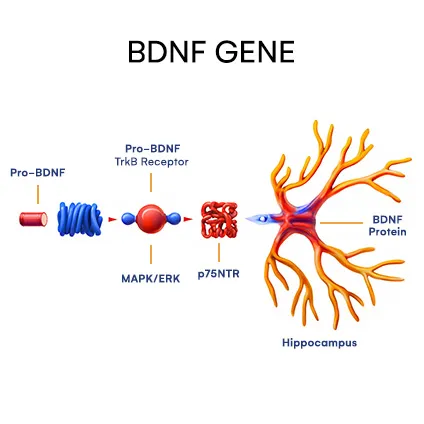
This gene influences the production of Brain-Derived Neurotrophic Factor, a protein essential for the survival and development of neurons. Certain variations are associated with differences in cognitive resilience, emotional regulation, and mental recovery.
Why BDNF Matters for Your Health
BDNF has broad implications across multiple brain and mental health systems. Understanding BDNF helps explain why some people adapt more readily to stress, learning challenges, and mood-related difficulties.
Brain Health
Supports neuron growth, survival, and synaptic plasticity over time
Mood Regulation
Plays a central role in emotional balance and stress-related mood responses
Memory & Learning
Influences the brain's ability to form and retain new information
Sleep Quality
Affects the depth and restorative quality of sleep cycles
Mental Recovery
Affects how well the brain recovers from emotional or cognitive strain
Key Functions of BDNF
- Promotes the growth and maintenance of neurons
- Supports synaptic plasticity and long-term memory formation
- Helps regulate mood-related neurotransmitter activity
- Influences dopamine and serotonin signaling pathways
- Activates protective brain-repair mechanisms
- Plays a role in resilience to stress and emotional challenge
How BDNF Variants May Influence You
This is not a diagnosis. It indicates tendencies that can be influenced through daily choices.
Higher Efficiency Variant
May support stronger cognitive flexibility, emotional resilience, and healthier brain-aging tendencies.
Moderate Variant
Typically indicates balanced neurological function with no major advantage or limitation.
Lower Efficiency Variant
May require stronger lifestyle support to manage mood stability, cognitive performance, and mental recovery effectively.
Scientific Foundation
Science Behind the BDNF Gene
Neurotrophin Family
BDNF belongs to the neurotrophin family of growth factors, which regulate the development, function, and survival of neurons in both the central and peripheral nervous systems. It interacts closely with pathways such as TrkB receptor signaling, dopaminergic regulation, and synaptic remodeling.
Mental Health Research
Research has shown that BDNF levels and certain variants are linked to conditions such as depression, anxiety, and cognitive decline. Studies suggest a role in neurological resilience rather than direct causation of mental health conditions.
How Lifestyle Influences BDNF
Although genes are fixed, BDNF activity is significantly influenced by lifestyle.
Nutrition
Diets rich in omega-3 fatty acids and antioxidants over time can support the brain's natural neuroprotective response.
Sleep
Consistent, quality sleep supports neuronal repair and healthy BDNF expression.
Stress
Focused stress management supports BDNF-associated resilience pathways. Regular stress-management practices help maintain BDNF-related emotional stability.
Movement
Regular aerobic physical activity is one of the most potent natural activators of BDNF production.
Habits
Long-term routines matter more than short-term interventions.
Signs You May Benefit From Understanding BDNF
How Lifecode Interprets BDNF in Your Report
Our comprehensive interpretation analyzes your BDNF variants alongside related neurotransmitter genes to provide personalized insights into your cognitive function, emotional resilience, and mental health tendencies. We categorize findings and prioritize actionable recommendations based on your complete genetic profile.
Lifestyle Guidance
Practical Recommendations
These are general lifestyle considerations, not medical advice.
Nutrition
Prioritize brain-supportive nutrients including omega-3s, magnesium, and polyphenol-rich foods.
Recovery
Build consistent sleep and cognitive rest routines to support neurological repair.
Stress Management
Incorporate mindfulness, breathwork, or other stress-reduction practices regularly.
Supplement
General neuroprotective and mood-supportive supplementation may be discussed during consultation.
Daily Habits
Focus on consistency over intensity — sustained routines drive lasting neurological benefits.
FAQ
Frequently Asked Questions
BDNF stands for Brain-Derived Neurotrophic Factor. Think of it as your brain’s natural fertilizer. The BDNF gene controls how well your brain grows new connections, repairs itself, and stays sharp over time. It plays a big role in memory, mood, and how quickly you bounce back from stress.
Yes. BDNF influences how your brain regulates dopamine and serotonin — the chemicals that control mood and emotional balance. If your BDNF activity is lower, you may notice persistent low mood, emotional flatness, or slower recovery after stressful experiences. This is a biological tendency, not a personal failing.
No. A BDNF variation simply reflects a tendency in how your brain supports itself — it is not a diagnosis or a guaranteed outcome. Many people with lower efficiency BDNF variants live with excellent mental health by consistently supporting their brain through sleep, nutrition, exercise, and stress management.
- Fatty fish — salmon, sardines, and mackerel are rich in omega-3s that naturally boost BDNF levels
- Blueberries and dark berries — packed with antioxidants that protect brain cells and support BDNF production
- Dark chocolate — flavonoids in cocoa support brain growth factor activity
- Turmeric — curcumin has been linked to increased BDNF expression in research studies
- Leafy greens — spinach and kale provide folate and magnesium essential for brain health
- Nuts and seeds — walnuts especially are linked to improved brain health and BDNF support
- Green tea — contains L-theanine and antioxidants that support healthy brain signaling
Lifecode analyzes your BDNF gene alongside related neurotransmitter and brain health genes to provide simple, personalized guidance on nutrition, sleep, stress management, and daily habits — helping you support long-term cognitive resilience, emotional balance, and lasting brain health in a practical and meaningful way.
Speak to a Lifecode Consultant
“Understanding BDNF helps you focus on resilience and recovery rather than chasing quick fixes.”