
Gene Overview
NR3C1 Gene
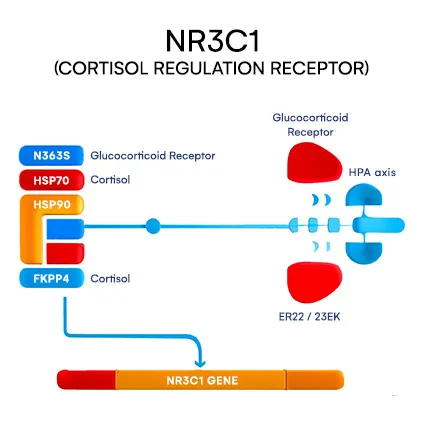
The NR3C1 (Nuclear Receptor Subfamily 3 Group C Member 1) gene is located on chromosome 5q31.3 and encodes the glucocorticoid receptor (GR) — the primary receptor through which cortisol exerts its effects throughout the brain and body . The glucocorticoid receptor is widely expressed across the brain, immune system, cardiovascular system, liver, adipose tissue, skeletal muscle, and endocrine organs, making NR3C1 one of the central regulatory genes involved in human stress physiology and systemic homeostasis.
NR3C1 does not determine how a person experiences stress, but it contributes fundamentally to how sensitively and efficiently the body’s cells receive, process, and respond to cortisol — the brain and body’s primary stress regulation signal — throughout every stage of life.
Certain variations are associated with differences in cortisol sensitivity, stress response intensity, inflammatory regulation, emotional resilience, and the long-term health consequences of chronic or repeated stress exposure. Research also suggests that NR3C1 plays an important role in HPA axis regulation, neuroplasticity, and stress adaptation across the lifespan.
Why NR3C1 Matters for Your Health
NR3C1 has broad implications across multiple brain, mood, metabolic, and systemic health systems. Understanding NR3C1 helps explain why some people are more physiologically sensitive to stress than others, why the same stressful experience can produce very different biological responses between individuals, and why cortisol dysregulation underlies such a wide range of mental and physical health challenges.
Cortisol Sensitivity
Determines how sensitively cells throughout the brain and body detect and respond to circulating cortisol signals during and after stress activation
Stress Response Intensity
Influences the magnitude and duration of the physiological stress response and the efficiency of its resolution once a threat has passed
Mood & Emotional Regulation
Shapes the neurological impact of cortisol on brain regions involved in mood, anxiety, and emotional processing including the hippocampus, amygdala, and prefrontal cortex
Immune & Inflammatory Balance
Plays a central role in cortisol's anti-inflammatory function, influencing how effectively the immune system is modulated during and after periods of stress activation
Metabolic Regulation
Affects how cortisol influences blood glucose, energy mobilisation, appetite signalling, and fat distribution — particularly under conditions of chronic stress exposure
Key Functions of NR3C1
- Encodes the glucocorticoid receptor, the primary cellular receptor for cortisol throughout the brain and body
- Mediates the full range of cortisol's physiological effects on mood, immunity, metabolism, and stress physiology
- Regulates the HPA axis negative feedback loop that controls cortisol production and stress response termination
- Influences the impact of cortisol on hippocampal neuroplasticity, memory, and cognitive function under stress
- Shapes the sensitivity of the immune system to cortisol-mediated anti-inflammatory signalling
- Contributes to the long-term calibration of stress physiology through gene-environment and epigenetic interactions
How NR3C1 Variants May Influence You
This is not a diagnosis. It indicates tendencies that can be influenced through daily choices.
Higher Efficiency Variant
May support more precise cortisol sensitivity, more effective HPA axis feedback regulation, and healthier long-term stress physiology and inflammatory balance tendencies.
Moderate Variant
Typically indicates balanced glucocorticoid receptor function with no major advantage or limitation in cortisol sensitivity or stress response regulation.
Lower Efficiency Variant
May require stronger lifestyle support to manage cortisol sensitivity, stress response intensity, inflammatory regulation, and the cumulative physiological effects of sustained stress exposure effectively.
Environmental factors such as sleep quality, chronic stress exposure, nutrition, trauma history, and lifestyle habits may significantly influence how these variants are expressed.
Scientific Foundation
Science Behind the NR3C1 Gene
The Glucocorticoid Receptor
NR3C1 encodes the glucocorticoid receptor (GR), a nuclear receptor protein expressed in virtually every cell type in the human body. When cortisol is released from the adrenal glands in response to stress, it travels through the bloodstream and binds to glucocorticoid receptors, triggering a cascade of cellular responses that regulate metabolism, immune activity, brain function, and the body’s return to physiological balance. The sensitivity and functional efficiency of this receptor — shaped in part by NR3C1 variants — determines how powerfully and precisely cortisol’s messages are received and acted upon across all body systems. After cortisol binding, the glucocorticoid receptor translocates into the cell nucleus where it regulates the expression of numerous stress-responsive and anti-inflammatory genes.
HPA Axis Feedback & Stress Termination
One of the most critical functions of the glucocorticoid receptor is its role in the HPA axis negative feedback loop — the mechanism through which rising cortisol levels signal the hypothalamus and pituitary gland to reduce further cortisol production, effectively switching off the stress response. Variants that alter glucocorticoid receptor sensitivity can disrupt this feedback efficiency, leading to either prolonged cortisol elevation after stress or blunted cortisol responses that impair the body’s ability to mount adequate stress reactions when needed.
Early Life, Epigenetics & Stress Programming
NR3C1 is one of the most extensively studied genes in the field of developmental stress programming and epigenetics. Research has demonstrated that early-life experiences — including maternal care quality, childhood adversity, and prenatal stress exposure — can alter the epigenetic regulation of NR3C1 expression, influencing glucocorticoid receptor density in the brain and the long-term sensitivity of the HPA axis. These findings underscore the profound influence of early environment on how NR3C1 variants express themselves across a lifetime. Some studies have identified altered DNA methylation patterns within the NR3C1 promoter region in association with chronic stress and early-life adversity.
Cortisol, Brain Structure & Mental Health
Studies have linked NR3C1 variants and glucocorticoid receptor function to differences in hippocampal volume, prefrontal cortex activity, and amygdala reactivity — brain structures central to memory, emotional regulation, and threat response. Altered glucocorticoid receptor sensitivity has been associated with differences in stress-related mood conditions, cognitive performance under pressure, and emotional recovery capacity following adversity.
Gene Interactions
NR3C1 works in close partnership with genes like FKBP5, CRH, CRHR1, HSD11B1, and BDNF, collectively forming the molecular architecture of the stress response system. Its interaction with serotonin pathway genes and neuroplasticity regulators connects cortisol receptor function directly to mood stability, cognitive resilience, and long-term brain health.
How Lifestyle Influences NR3C1
Although genes are fixed, NR3C1 expression, glucocorticoid receptor sensitivity, and HPA axis function are profoundly and consistently shaped by lifestyle, environment, and behavioural patterns across the lifespan.
Nutrition
Diets that stabilize blood glucose, reduce systemic inflammation, and provide nutrients essential to cortisol metabolism — including magnesium, B vitamins, vitamin C, and omega-3 fatty acids — support healthy glucocorticoid receptor function and NR3C1-related cortisol regulation. Chronic dietary stress from ultra-processed foods and unstable blood sugar patterns can dysregulate HPA axis function over time.
Sleep
Consistent, restorative sleep is among the most powerful lifestyle regulators of glucocorticoid receptor sensitivity and HPA axis calibration. Healthy sleep supports the natural overnight decline in cortisol, promotes glucocorticoid receptor recovery, and restores the precision of the NR3C1-mediated cortisol feedback system that daytime stress depletes.
Stress Recovery
Sustained and consistent stress management practices are foundational for individuals with reactive NR3C1 profiles. Mind-body practices including mindfulness meditation, breathwork, yoga, and somatic regulation techniques have demonstrated measurable effects on HPA axis tone, glucocorticoid receptor sensitivity, and NR3C1-associated cortisol regulation — particularly when practised regularly over extended periods.
Movement
Regular moderate-intensity physical activity supports healthy cortisol rhythmicity, improves glucocorticoid receptor sensitivity, promotes hippocampal neuroplasticity, and strengthens the HPA axis regulatory systems that NR3C1 function depends upon. Both aerobic and resistance exercise contribute meaningfully to cortisol regulation when performed consistently.
Habits
Long-term lifestyle consistency matters more than short-term interventions — glucocorticoid receptor sensitivity and HPA axis calibration are shaped by sustained, repeated behavioural patterns. The epigenetic responsiveness of NR3C1 means that consistent positive lifestyle habits have genuine and meaningful potential to influence how this gene is expressed across time.
Signs You May Benefit From Understanding FKBP5
How Lifecode Interprets NR3C1 in Your Report
Our comprehensive interpretation analyzes your NR3C1 variants alongside related stress response, mood, and metabolic genes to provide personalized insights into your glucocorticoid receptor sensitivity, cortisol regulation tendencies, HPA axis calibration profile, and stress physiology patterns. We categorize findings and prioritize actionable recommendations based on your complete genetic profile.
Lifestyle Guidance
Practical Recommendations
These are general lifestyle considerations, not medical advice.
Nutrition
Prioritize blood-glucose stabilising, anti-inflammatory dietary patterns and include nutrients that directly support cortisol metabolism, adrenal function, and glucocorticoid receptor health to complement NR3C1-related stress physiology.
Recovery
Establish and protect consistent sleep and physiological wind-down routines to support overnight cortisol decline, glucocorticoid receptor sensitivity recovery, and HPA axis restoration aligned with your genetic cortisol regulation profile.
Stress Management
Invest in regular, sustained mind-body regulation practices — including breathwork, mindfulness meditation, somatic movement, or therapeutic support — to directly and meaningfully modulate glucocorticoid receptor tone and NR3C1-associated cortisol sensitivity over time.
Supplement
General adrenal support, cortisol-modulating, adaptogenic, and HPA axis regulation supplementation may be discussed during consultation. Supplement use should be individualized and guided by a qualified healthcare professional where appropriate.
Daily Habits
Focus on consistency over intensity — the glucocorticoid receptor system and NR3C1 expression respond most powerfully to sustained, repeated behavioural and lifestyle patterns rather than isolated or short-term interventions, making daily routine the most effective long-term tool for cortisol regulation and stress resilience.
FAQ
Frequently Asked Questions
The answer often lies in your NR3C1 gene. It controls how sensitively your cells receive cortisol signals. Some people are biologically wired to feel stress more intensely and take longer to return to calm — not because of weakness, but because their cortisol receptor system is more reactive by nature.
Quite possibly. When your cortisol receptor system is less efficient at switching off after stress, your body stays in a prolonged activation state. Over weeks and months this sustained cortisol exposure quietly depletes your energy reserves, disrupts sleep quality, and creates the deep physical exhaustion that many people recognize as burnout.
Research suggests yes. NR3C1 is highly sensitive to early life experiences through a process called epigenetic modification. Childhood adversity or prolonged stress during developmental years can alter how this gene is expressed — influencing cortisol receptor sensitivity well into adulthood. The encouraging news is that consistent positive lifestyle habits can meaningfully help recalibrate this system over time.
Yes. Because cortisol is your body’s primary anti-inflammatory signal, NR3C1 influences how effectively your immune system is regulated during and after stress. People with reactive NR3C1 profiles may notice more frequent illness, digestive disruption, skin flare-ups, or inflammatory responses during prolonged periods of high pressure or emotional stress.
Think of it this way — FKBP5 controls the sensitivity of the molecular brake that slows the stress response down, while NR3C1 encodes the actual receptor that receives the cortisol signal in the first place. Together they form the core of your cortisol regulation system. Lifecode evaluates both genes alongside your complete stress and mood genetic profile to give you a precise, personalized picture of exactly how your stress biology operates.
Speak to a Lifecode Consultant
“Understanding NR3C1 helps you focus on resilience and recovery rather than chasing quick fixes.”