
Gene Overview
FKBP5 Gene
FKBP5 does not determine how a person handles stress, but it contributes significantly to how efficiently the body regulates its stress response system — influencing how quickly and completely the brain and body recover after exposure to stress, threat, or emotional challenge.
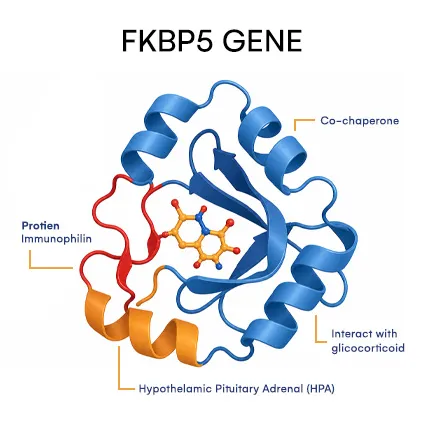
This gene encodes FK506-binding protein 51 FKBP51, a co-chaperone protein that plays a critical regulatory role in the glucocorticoid receptor pathway, the molecular system through which cortisol the body’s primary stress hormone communicates with cells throughout the brain and body. Certain variations are associated with differences in stress hormone sensitivity, emotional recovery speed, trauma resilience, and the long-term calibration of the stress response system across life.
Why FKBP5 Matters for Your Health
FKBP5 has broad implications across multiple brain, mood, and mental health systems. Understanding FKBP5 helps explain why some people recover from stressful experiences more readily than others, why early-life adversity can have lasting effects on stress physiology, and why stress-related mood challenges vary so significantly between individuals.
Stress Hormone Regulation
Plays a central role in controlling how sensitively cells respond to cortisol and how efficiently the stress response is switched off after activation
Emotional Recovery
Influences the speed and completeness of emotional and physiological return to baseline following stressful or threatening experiences
Trauma Resilience
Affects the degree to which stressful experiences particularly early-life adversity leave lasting imprints on the stress response system May be associated with how stressful experiences, especially early-life adversity, relate to long-term patterns in the body’s stress response.
Mood Stability
Contributes to the regulation of anxiety, low mood, and emotional reactivity through its influence on glucocorticoid signalling in the brain
Sleep Quality
Affects the quality and restorative depth of sleep through its role in evening cortisol decline and the physiological wind-down process
Key Functions of FKBP5
- Encodes a co-chaperone protein that regulates glucocorticoid receptor sensitivity and cortisol signalling
- Controls the efficiency of the HPA axis negative feedback loop that switches off the stress response
- Influences the duration and intensity of cortisol exposure at the cellular level
- Plays a role in shaping long-term stress response calibration through gene-environment interactions and epigenetic mechanisms
- Contributes to the regulation of fear memory consolidation and extinction
- Affects inflammatory signalling pathways that interact with chronic stress physiology Has been associated with modulation of inflammatory signalling pathways that interact with chronic stress physiology
How FKBP5 Variants May Influence You
This is not a diagnosis. It indicates tendencies that can be influenced through daily choices.
Higher Efficiency Variant
Variants associated with relatively increased glucocorticoid receptor resistance often linked to higher FKBP5 induction . May support more effective cortisol regulation, faster emotional recovery from stress, and healthier long-term stress response calibration tendencies.
Moderate Variant
Typically indicates balanced stress hormone regulation with no major advantage or limitation in cortisol sensitivity or emotional recovery.
Lower Efficiency Variant
Variants associated with relatively increased glucocorticoid receptor sensitivity. May require stronger lifestyle support to manage stress hormone sensitivity, emotional recovery speed, and long-term stress response regulation effectively particularly following significant life stressors or periods of sustained adversity.
Scientific Foundation
Science Behind the FKBP5 Gene
The HPA Axis & Glucocorticoid Regulation
FKBP5 acts as a negative regulator of glucocorticoid receptor activity. It regulates the sensitivity of the glucocorticoid receptor the primary cellular receptor through which cortisol exerts its effects across the brain and body. When cortisol binds to its receptor, FKBP5 acts as a molecular brake, moderating receptor activity and influencing the speed and completeness of the HPA axis negative feedback loop. Variants that alter FKBP5 function can shift the sensitivity of this system, affecting how long and how intensely cortisol continues to signal after a stressful event has passed.
Stress, Trauma & Epigenetic Research
FKBP5 is one of the most extensively studied genes in stress and trauma research. Studies have identified associations between specific FKBP5 variants and differences in stress-related mood conditions, emotional dysregulation, and stress response calibration particularly when early-life adversity is present. Research has also demonstrated that FKBP5 is subject to epigenetic modification, meaning that significant stressful experiences especially during developmental sensitive periods can alter how this gene is expressed, with effects that may persist across extended periods of life.
Gene-Environment Interaction
One of the most significant findings in FKBP5 research is the strength of its gene-environment interaction. The impact of FKBP5 variants is substantially shaped by the level and timing of stress exposure throughout life. This means that lifestyle, environment, and therapeutic support can meaningfully influence outcomes associated with FKBP5 variants, making its functional impact particularly sensitive to environmental and behavioural influences.
Gene Interactions
How Lifestyle Influences FKBP5
Although genes are fixed, FKBP5 expression and HPA axis regulation are among the most lifestyle-responsive aspects of stress biology, with consistent evidence that behavioural and environmental inputs meaningfully shape stress hormone calibration over time.
Nutrition
Diets that support stable blood glucose, reduce systemic inflammation, and include nutrients involved in cortisol metabolism such as magnesium, vitamin C, and omega-3 fatty acids help support healthy HPA axis function and FKBP5-related stress regulation.
Sleep
Consistent, quality sleep is one of the most powerful regulators of the HPA axis. Adequate sleep supports healthy evening cortisol decline, glucocorticoid receptor sensitivity recovery, and the overnight physiological restoration that FKBP5-related stress pathways depend on.
Stress Recovery
Focused and consistent stress management practices are particularly important for individuals with reactive FKBP5 profiles. Regular engagement with mind-body practices — including breathwork, mindfulness, and somatic techniques — directly influences HPA axis tone and supports FKBP5-associated cortisol regulation over time.
Movement
Regular moderate-intensity physical activity helps regulate cortisol rhythmicity, supports glucocorticoid receptor sensitivity, and promotes the neuroplasticity pathways that interact with FKBP5-related stress resilience mechanisms.
Habits
Long-term routine consistency matters more than short-term interventions — the stress response system is shaped by repeated, sustained behavioural patterns, and the epigenetic responsiveness of FKBP5 means that lifestyle habits have genuine potential to influence how this gene is expressed over time.
Signs You May Benefit From Understanding FKBP5
How Lifecode Interprets FKBP5 in Your Report
Our comprehensive interpretation analyzes your FKBP5 variants alongside related stress response and mood genes to provide personalized insights into your cortisol regulation tendencies, emotional recovery patterns, trauma resilience profile, and HPA axis calibration. We categorize findings and prioritize actionable recommendations based on your complete genetic profile.
Lifestyle Guidance
Practical Recommendations
These are general lifestyle considerations, not medical advice.
Nutrition
Prioritize blood-sugar stabilizing, anti-inflammatory foods and include nutrients that support cortisol metabolism and adrenal function to complement FKBP5-related stress hormone regulation.
Recovery
Establish consistent sleep and physiological wind-down routines to support healthy evening cortisol decline and overnight HPA axis recovery aligned with your genetic stress response profile.
Stress Management
Incorporate regular mind-body practices such as breathwork, mindfulness meditation, or somatic movement. It has been shown to influence HPA axis regulation and FKBP5-associated cortisol sensitivity management over time.
Supplement
General adrenal support, cortisol-modulating, and stress-resilience supplementation may be discussed during consultation. Any supplementation should be considered in consultation with a qualified healthcare professional, as evidence for cortisol-modulating supplements varies and may not be appropriate for all individuals.
Daily Habits
Focus on consistency over intensity — the stress response system, and FKBP5 expression in particular, responds most meaningfully to sustained, repeated behavioural patterns rather than isolated or short-term interventions.
FAQ
Frequently Asked Questions
Your FKBP5 gene controls the molecular switch that stops stress hormones after a threat passes. If less efficient, your nervous system stays alert and tense even during calm, peaceful moments.
Yes. Significant early-life stress can alter how your FKBP5 gene is expressed through epigenetic changes. This influences your stress response today, though consistent healthy lifestyle habits can meaningfully help recalibrate it over time.
Your FKBP5 gene influences how naturally cortisol drops in the evening. If this decline is less efficient, falling asleep becomes harder, sleep feels lighter, and mornings often leave you feeling unrefreshed.
Yes. FKBP5 is epigenetically responsive, meaning consistent breathwork, mindfulness, exercise, and stable sleep routines can genuinely influence how this gene behaves and improve your cortisol regulation meaningfully over time.
Speak to a Lifecode Consultant
“Understanding FKBP5 helps you focus on resilience and recovery rather than chasing quick fixes.”