
Gene Overview
ADORA2A Gene
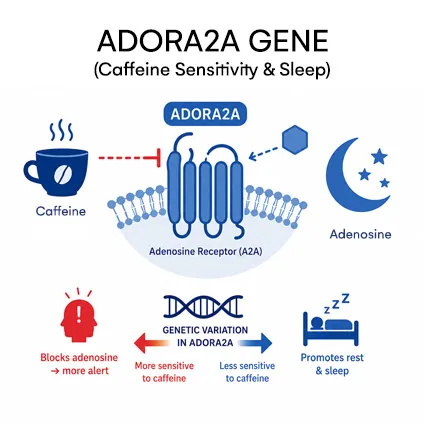
The ADORA2A gene is located on chromosome 22q11.23 and encodes a G-protein-coupled receptor (GPCR) highly expressed in the central nervous system, particularly in the basal ganglia and striatum. ADORA2A does not determine sleep quality alone, but it shapes how sensitively the brain responds to adenosine — the primary sleep-pressure molecule — and how strongly caffeine influences alertness, sleep onset, anxiety, and overnight recovery.
This gene encodes the Adenosine A2A receptor, through which adenosine signals mental fatigue and drives the biological need for sleep. Certain variations are associated with differences in caffeine sensitivity, sleep pressure perception, and the degree to which stimulant consumption disrupts sleep and restoration.
Why ADORA2A Matters for Your Health
ADORA2A influences sleep, mood, cognitive performance, and stimulant response. Understanding it helps explain why the same caffeine intake produces dramatically different effects between individuals.
Caffeine Sensitivity
Determines how strongly caffeine's adenosine-blocking effects translate into alertness, overstimulation, or anxiety
Sleep Pressure Perception
Influences how efficiently the brain detects accumulating adenosine and responds to the natural need for sleep
Sleep Architecture
Affects how significantly caffeine disrupts sleep onset and overnight restorative quality even when consumed hours earlier
Mood & Anxiety Response
Shapes how caffeine and adenosine receptor activity influence anxiety and stress tolerance
Cognitive Performance
Influences whether caffeine provides genuine cognitive benefit or overstimulation based on receptor sensitivity
Key Functions of ADORA2A
- Encodes the Adenosine A2A receptor, mediating adenosine's sleep-promoting and arousal-regulating effects
- Regulates the brain's detection and response to sleep pressure during waking hours
- Serves as the primary molecular target through which caffeine exerts its stimulant effects
- Influences dopamine signalling connected to motivation, mood, and reward
- Contributes to anxiety threshold regulation through adenosine-dopamine receptor interactions
- Modulates neuronal excitability in brain regions involved in arousal, cognition, and motor control.
How ADORA2A Variants May Influence You
This is not a diagnosis. It indicates tendencies that can be influenced through daily choices.
Higher Sensitivity Variant
May experience stronger caffeine responses including heightened alertness, increased anxiety, and greater sleep disruption — even from moderate or earlier consumption.
Moderate Variant
Typically indicates balanced adenosine receptor sensitivity with average caffeine response and no major limitation.
Lower Sensitivity Variant
May experience reduced caffeine responsiveness with less stimulant effect and lower sleep disruption risk.
Scientific Foundation
Science Behind the ADORA2A Gene
Caffeine Sensitivity Research
Specific ADORA2A variants are strongly associated with differences in caffeine sensitivity. Higher sensitivity variants produce greater alertness benefits but also greater anxiety and sleep disruption even from afternoon consumption. Studies show these variants influence both acute stimulant response and the degree to which caffeine suppresses slow-wave sleep and reduces overnight sleep quality.
Gene Interactions
ADORA2A interacts with dopamine-related genes including COMT and DRD2, connecting adenosine receptor function to motivation and mood. Its interaction with CYP1A2 governing caffeine metabolism speed creates a combined genetic profile shaping the full individual caffeine response.
How Lifestyle Influences ADORA2A
Although genes are fixed, caffeine sensitivity and sleep quality are meaningfully shaped by consumption habits, timing, and daily routines.
Nutrition
Caffeine timing matters more than total quantity. Earlier cutoff times — potentially before midday for higher sensitivity individuals — protect sleep architecture from overnight adenosine receptor interference.
Sleep
Consistent sleep timing supports natural overnight adenosine clearance and resets sleep pressure effectively. Higher sensitivity individuals benefit most from protecting sleep duration and environment quality.
Stress Recovery
Caffeine amplifies cortisol and arousal, compounding anxiety in sensitive individuals. Reducing intake during high-stress periods prevents stimulant and stress-driven arousal from combining.
Movement
Regular physical activity supports healthy adenosine metabolism and natural sleep pressure regulation — reducing reliance on caffeine for daily alertness over time.
Habits
Awareness of ADORA2A sensitivity allows meaningful adjustments to caffeine timing and quantity that produce genuine improvements in sleep quality and mood stability.
Signs You May Benefit From Understanding ADORA2A
How Lifecode Interprets ADORA2A in Your Report
Our comprehensive interpretation analyzes your ADORA2A variants alongside related sleep, metabolism, and neurotransmitter genes to provide personalized insights into your caffeine sensitivity, sleep pressure regulation, and stimulant impact on overnight recovery. We prioritize actionable recommendations based on your complete genetic profile.
Lifestyle Guidance
Practical Recommendations
These are general lifestyle considerations, not medical advice.
Nutrition
Adjust caffeine timing to your ADORA2A sensitivity higher sensitivity individuals benefit from earlier cutoff times and reduced quantities to protect sleep.
Recovery
Maintain consistent sleep duration and timing to support healthy adenosine clearance and effective overnight sleep pressure reset. Stress
Stress Management
Reduce caffeine during high-stress periods to prevent compounding stimulant and stress-driven arousal affecting mood and sleep.
Supplements
General sleep support and adenosine pathway supplementation may be discussed during consultation.
Daily Habits
Build alertness through consistent sleep, light exposure, and movement progressively reducing dependency on caffeine as a primary daily performance tool.
FAQ
Frequently Asked Questions
The ADORA2A gene encodes an adenosine A2A receptor that controls how your brain responds to caffeine and sleep pressure. It determines your caffeine sensitivity, sleep quality, and how strongly stimulants affect your alertness, anxiety, and overnight recovery. Understanding your ADORA2A variant helps explain why caffeine affects people so differently.
ADORA2A doesn’t determine sleep quality alone, but it significantly shapes how sensitively your brain responds to adenosine—the primary sleep-pressure molecule. It influences sleep onset, sleep architecture, and how caffeine disrupts your overnight restoration, even when consumed hours before bedtime.
Higher sensitivity variants cause stronger caffeine responses including heightened alertness, increased anxiety, and greater sleep disruption even from moderate amounts. Lower sensitivity variants experience reduced caffeine effects and lower sleep disruption risk. Moderate variants typically show balanced, average caffeine response.
Your ADORA2A variant is genetic and fixed, but your caffeine sensitivity and sleep quality are meaningfully shaped by daily habits. Lifecode recommends adjusting caffeine timing, reducing intake during stress, maintaining consistent sleep schedules, and building alertness through movement and light exposure.
Lifecode analyzes your ADORA2A variants alongside related sleep, metabolism, and neurotransmitter genes to provide personalized insights into your caffeine sensitivity and sleep patterns. We deliver actionable recommendations based on your complete genetic profile for better sleep and mood stability.
Speak to a Lifecode Consultant
“Understanding “ADORA2A” helps you focus on resilience and recovery rather than chasing quick fixes.”