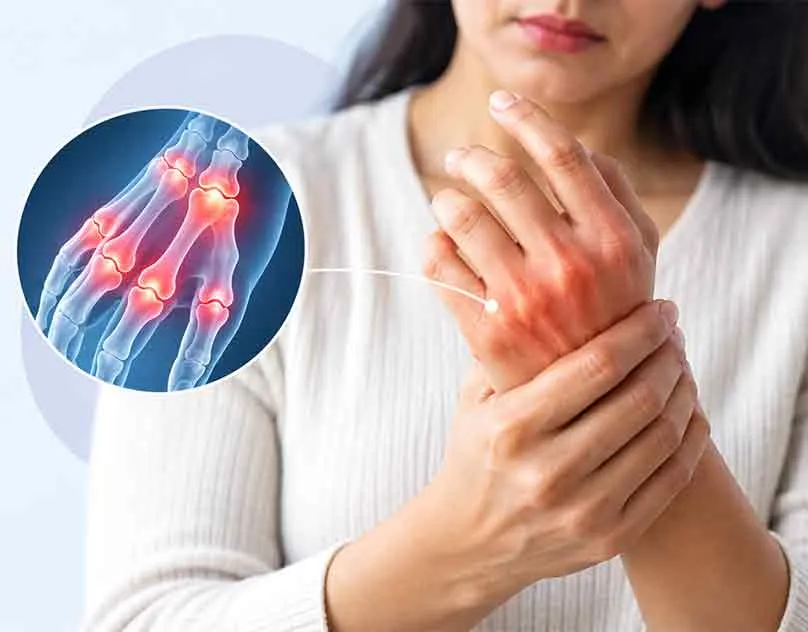


Is hypothyroidism genetic get a knowledge of genetic test

Is Hypothyroidism Genetic? What Runs in Families and What Doesn’t

Your mother takes a thyroid tablet every morning. Your aunt does too. Now your own report shows a high TSH, and you wonder if this was always going to happen to you. 

It’s fair worry. Here is a clear answer. 

So, is hypothyroidism genetic? 

Partly, yes. Genes can make you more likely to get hypothyroidism. They don’t decide it for you. 

Most hypothyroidism is caused by an autoimmune problem called Hashimoto’s thyroiditis. In this condition, the body’s defence system attacks the thyroid gland. The genes that control your immune system run in families, so the risk can pass from parent to child. Twin studies suggest genes explain a large share of how well the thyroid works, with one commonly quoted estimate around 65%. 

Still, a gene is a risk, not a verdict. Many people with a family history never develop the condition. Others have no family history at all. 

How genes raise your thyroid risk 

Genes can affect the thyroid in three main ways: 

  • Immune system genes. Variants in genes such as PTPN22, CTLA4 and the HLA group can make the immune system more likely to attack the thyroid. 
  • Thyroid-building genes. Genes such as TSHR, PAX8 and FOXE1 help the gland form and work. Changes in them can lead to an underactive thyroid. 
  • Hormone-making genes. Genes such as TPO and TG help the thyroid make its hormones. Faults here can slow production. 

Some babies are born with an underactive thyroid. This is called congenital hypothyroidism, and it affects roughly 1 in 2,000 to 2,500 newborns. Only a small share of these cases (about 2–5%, according to one review) comes from inherited gene changes. Every newborn in India should be screened, and early treatment lets the child grow normally. 
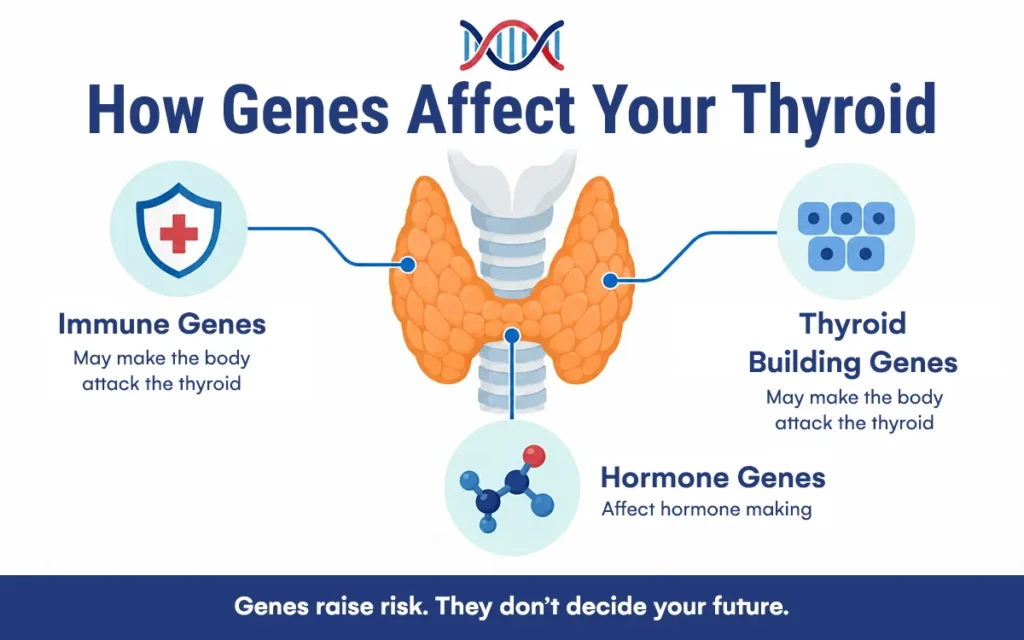
How Genes Affect Your Thyroid

Both. Think of genes as a loaded gun’s chamber and the environment as the trigger. Some people carry more “bullets” than others, but something usually has to pull the trigger. 

Common environmental triggers include: 

  • Too little or too much iodine. Your thyroid needs iodine to make hormones. A shortage causes problems, and so does a big excess from supplements. 
  • Low selenium. This mineral helps protect the thyroid. 
  • Smoking. It is linked with a higher risk of thyroid disease. 
  • Pregnancy and childbirth. Many women first notice thyroid trouble after delivery. 
  • Some medicines. Lithium and amiodarone are two examples. 
  • Radiation or thyroid surgery. Both can reduce how much hormone the gland makes. 

So when someone says, “hypothyroidism is genetic, so nothing can be done,” that’s only half true. You can’t change your genes. You can change many of the triggers around them. 

Hypothyroidism in India: the numbers 

India has more thyroid trouble than many Western countries. 

  • A large study across eight Indian cities found that about 10.95% of adults, roughly 1 in 9, had hypothyroidism. Studies in developed countries usually report 2–5%. 
  • About 8% of adults had subclinical hypothyroidism, an early stage where TSH is high but hormone levels are still normal. 
  • Women and older adults were affected more often. 
  • Around 1 in 5 people in that study had anti-TPO antibodies, a sign of autoimmune thyroid disease. 
  • Nearly one-third of people with hypothyroidism did not know they had it. 

That last point matters most. Many people live for years with tiredness and weight gain and blame work stress. 

Women are affected far more often than men. Autoimmune thyroid disease, the most common cause, is more frequent in women, and researchers think hormones play a part. Thyroid problems often show up at three points in life: 

  • After pregnancy. The immune system shifts during and after pregnancy, and some women develop thyroid trouble in the months after delivery. 
  • During perimenopause and menopause. Symptoms like tiredness, weight gain and mood changes overlap with thyroid symptoms, so the thyroid is easy to miss. 
  • When periods change. Heavy, late or irregular periods can sometimes point to a thyroid problem. 

If you are planning a pregnancy and thyroid problems run in your family, ask your doctor for a TSH test first. Untreated hypothyroidism can affect both the mother and the baby. 

Should you worry if it runs in your family? 

Be alert, not afraid. If a parent, sibling or grandparent has a thyroid problem, ask your doctor about a yearly check. 

Watch for these signs: 

  • Constant tiredness, even after good sleep 
  • Weight gain you can’t explain 
  • Feeling cold when others feel fine 
  • Dry skin and thinning hair 
  • Constipation 
  • Low mood or poor focus 
  • Irregular or heavy periods 
  • Swelling at the front of the neck 

The usual tests are TSH, Free T4, and anti-TPO antibodies. The anti-TPO test shows whether your immune system is involved. That helps explain why your thyroid is slow, and it can show risk before your TSH rises. 

  • Myth: “Hypothyroidism is genetic, so I can’t do anything.” Genes raise your risk, but iodine, selenium, smoking and regular testing all matter. Treatment works well for most people. 
  • Myth: “If my parents don’t have it, I’m safe.” Many people with thyroid disease have no family history. Age, sex, pregnancy and diet also play a role. 
  • Myth: “I’ll know if I have it.” Early hypothyroidism often feels like ordinary tiredness. About one in three Indian adults with the condition did not know they had it. 
  • Myth: “Cutting out all cabbage and soy will fix my thyroid.” Cooked vegetables in normal portions are fine. Avoiding entire food groups can leave you short of nutrients. 
  • Myth: “Natural remedies can replace my tablet.” No herb or supplement has been shown to replace thyroid hormone treatment. 

Where diet comes in 

Diet can’t cure hypothyroidism, and it can’t replace your tablet. But food does shape how well your thyroid works, and it can make your medicine work better or worse. 

What helps 

  • Iodised salt. In most Indian homes, it’s the main iodine source. Use it in normal amounts. Don’t add extra. 
  • Selenium-rich foods. Eggs, fish, sunflower seeds, whole grains and a few Brazil nuts a week. 
  • Protein. Dal, curd, paneer, eggs, fish and chicken. 
  • Iron and vitamin D. Both are often low in Indian adults, and low levels can add to tiredness. 

What to handle with care 

  • Cabbage, cauliflower, broccoli and radish. Cooked, they’re fine in normal portions. Eating large amounts raw may affect the thyroid. 
  • Soy products and heavy millet intake. Don’t cut them out. Just don’t eat them in very large amounts, and keep a gap from your tablet. 
  • Medicine timing. Take levothyroxine on an empty stomach, about 30–60 minutes before breakfast. Keep calcium, iron and antacids at least 4 hours away. 
  • Biotin supplements. They can change thyroid test results. Tell your lab or doctor if you take them. 

This is a simple pattern, not a prescription. Your doctor or dietitian should adjust it for you. 

  • On waking: Take your thyroid tablet with water on an empty stomach. 
  • Breakfast (30–60 minutes later): Moong dal chilla with curd, or vegetable poha with peanuts. 
  • Mid-morning: A boiled egg or a handful of roasted chana. 
  • Lunch: Roti or rice, dal, a cooked vegetable, salad and a bowl of curd. 
  • Evening: Tea or coffee at least an hour after the tablet. Have it with a few sunflower seeds or a fruit. 
  • Dinner: Fish curry or paneer bhurji, with cooked vegetables and one roti. 

Keep calcium, iron and multivitamin tablets at least 4 hours away from your thyroid medicine. 

Questions to ask your doctor 

Take this short list to your next visit: 

  1. Should I get an anti-TPO test as well as TSH? 
  1. How often should I repeat my thyroid tests? 
  1. Do my other medicines or supplements affect my thyroid tablet? 
  1. Should my children or siblings be tested? 
  1. Do I need extra iodine or selenium, or am I getting enough from food? 

When to see a doctor soon 

Don’t wait for your yearly check if you notice any of these: 

  • A lump or growing swelling in your neck 
  • Trouble swallowing or breathing 
  • A very slow heartbeat, extreme tiredness or confusion 
  • Hoarseness that lasts more than a few weeks 
  • Missed periods or trouble conceiving along with the symptoms above 

These can have other causes, but they need a proper check. 

A routine thyroid report shows what your thyroid is doing right now: your TSH, T3, T4 and antibody levels. It can’t show the genetic factors behind those numbers, such as how your body handles key nutrients or certain foods. A DNA-based test fills that gap. It reads genetic markers linked to thyroid health, nutrient needs and food responses, so you can build a diet around your own body instead of a generic “foods to avoid” chart. 

What a DNA test does not do 

It can’t diagnose hypothyroidism, and it can’t replace TSH or antibody tests. It gives you a risk picture and a starting point for your diet and lifestyle. Your doctor still makes the diagnosis and decides your treatment. 

A DNA-based diet and wellness test may suit you if: 

  • A parent or sibling has a thyroid problem. You’ll know which genetic factors may be worth paying attention to, instead of waiting for symptoms. 
  • You’re tired of one-size-fits-all diet charts. Two people with the same thyroid report can need very different food and nutrient plans. 
  • You’ve been told your thyroid is “borderline.” A personalised plan can help you act early, alongside regular check-ups with your doctor. 

What you get 

Your plan is built from your own report: the nutrients and foods that matter most for you, and the first few changes worth making. It works alongside your doctor’s advice and doesn’t replace it.

Stop Guessing What Your Thyroid Diet Should Look Like 

Medical Disclaimer:

This article is for general information and education only. It is not medical advice, diagnosis or treatment, and it does not replace a consultation with a qualified doctor such as an endocrinologist. Do not start, stop or change any medicine or supplement, including thyroid tablets, without talking to your doctor. Genetic information shows risk, not certainty, and a DNA-based test cannot diagnose hypothyroidism. If you have symptoms, or thyroid problems run in your family, please get tested and speak to a healthcare professional. If you notice trouble breathing or swallowing, a very slow heartbeat, or confusion, seek medical care right away.

Reference

  • Zucker R, Kovalerchik M, Stern A, Kaufman H, Linial M. Revealing the genetic complexity of hypothyroidism: integrating complementary association methods. Front Genet.
  • Healthline. Is hypothyroidism genetic?
  • Unnikrishnan AG, Kalra S, Sahay RK, Bantwal G, John M, Tewari N. Prevalence of hypothyroidism in adults: An epidemiological study in eight cities of India. Indian J Endocrinol Metab. PMC

FAQ

Frequently Asked Questions

It can come from either side. Autoimmune thyroid disease is seen more often on the mother’s side, but a father’s genes count too.

You can’t change your genes. You can avoid known triggers: don’t smoke, get enough iodine and selenium without overdoing supplements, and get tested regularly. 

Your child has a higher chance than average, but most children of parents with hypothyroidism don’t develop it. 

No. Most people need thyroid hormone tablets. Diet supports treatment.

October 14, 2026 Uncategorized
Last Updated On October 14, 2026