


Is Piles Genetic is blood relation
is Piles are a blood relation

Is Piles Genetic? What the Science Actually Says

Yes, piles (hemorrhoids) has a genetic link. A large 2021 genetic study identified regions of DNA tied to weaker veins and connective tissue in the rectal area. But genetics only sets the tendency. Straining, sitting, and what you eat every day decide whether that tendency actually turns into piles — and that part is within your control.

If piles keeps coming back, or a parent or sibling has dealt with it for years, you’ve probably wondered if you were simply born with weaker plumbing down there. The honest answer needs a little more explaining than a plain yes.

This article is for general information only and is not a substitute for professional medical advice, diagnosis, or treatment. Always speak with a qualified doctor about your symptoms or before making decisions based on a genetic test.

Piles happen when the cushions of veins inside your rectum and anus become swollen and inflamed, usually from repeated pressure. Genetics affects how strong those veins and the connective tissue around them are to begin with.

Being genetically predisposed doesn’t mean piles are guaranteed. It means your veins and tissue may be a little more prone to stretching and swelling under pressure than someone else’s. Diet, bowel habits, and how much you strain still decide whether that tendency ever becomes a real problem.

In 2021, researchers studied close to a million people, one of the largest genetic studies ever done on this condition and identified 102 separate regions in human DNA linked to hemorrhoid risk. It’s worth noting this study was conducted in people of European ancestry, so how strongly these findings apply across other populations, including Indian populations, is still being studied, genetic risk research in South Asian cohorts is far more limited.

A few genes stand out for what they actually do:

  • FOXC2 – involved in vein and lymphatic vessel development. Weaker versions are linked to vein problems, including varicose veins and hemorrhoids.
  • NOX and NOS genes – affect blood vessel tone and inflammation. Certain variants make blood vessels more reactive and prone to swelling.
  • CALM3 – plays a role in smooth muscle function, which affects how well the tissue supporting your veins holds up under pressure.²

In rare cases, hemorrhoids are linked to an inherited connective tissue disorder called Ehlers-Danlos syndrome, where weaker collagen affects vein and tissue strength throughout the body, not just in the rectal area.

You don’t need to memorise these names. What matters is that genetic testing can flag whether you carry a higher polygenic risk, which the same research linked to an earlier age of onset and a higher chance of needing repeat surgery. That’s useful to know before you’re dealing with a recurring problem, not after.
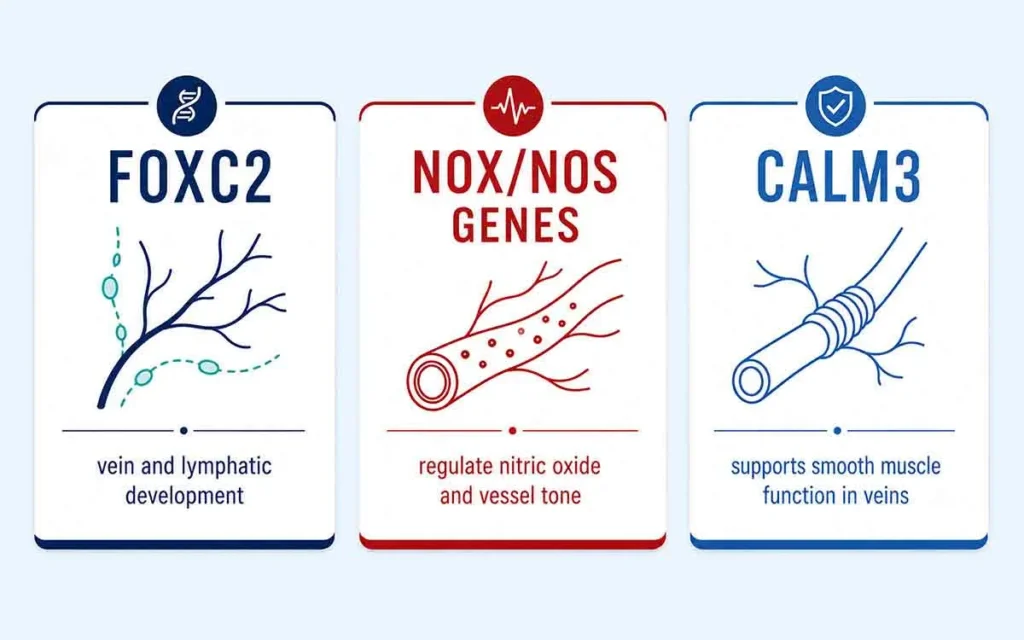
Gene related to Piles

  • If piles run in your family, part of that is shared genes, and part of it is shared habits, since families often eat similar meals and share similar bathroom routines growing up.

  • Family history is a signal worth paying attention to, not a life sentence. It means you likely need to be more deliberate about fibre, hydration, and bathroom habits than someone with no family history, especially if you sit at a desk most of the day.

This is a far bigger problem than most people admit out loud.

According to the Association of Colon & Rectal Surgeons of India’s 2016 practice guidelines, roughly 5% of the population has active symptoms at any given time, and about half of all adults will experience piles by age 50.

Industry and media reports have also cited figures of around 41 million people in India living with piles and roughly 1.2 million new cases diagnosed each year, along with an estimated 30–40% drop in daily work efficiency for those affected. These figures are widely repeated in Indian health coverage but don’t trace back to a peer-reviewed published source, so treat them as industry estimates rather than confirmed data.

A hospital-based study in Karnataka recorded prevalence as high as 75% among the patients it examined — this reflects how common piles becomes once people are already seeking medical care for related issues, not the prevalence in the general population.
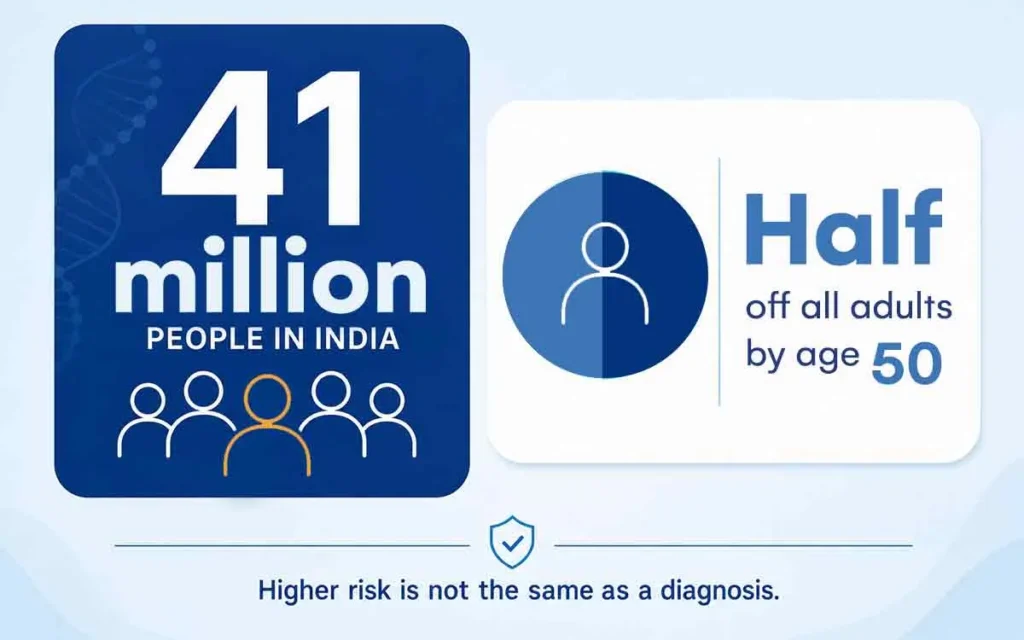
Indians Piles records


Most people delay treatment out of embarrassment, which is exactly why it tends to get worse instead of resolving on its own.

If your day looks like back-to-back meetings, a chair you barely leave for eight-plus hours, and a bathroom break you keep postponing until the call ends, your risk is climbing well beyond what your genes alone would set. 

Research on office workers consistently points to the same risk cluster: 

Prolonged sitting – long hours at a desk increase pressure on rectal veins and slow down bowel movement, both of which raise hemorrhoid risk. 

Delaying the urge to go – holding it in during meetings or deadlines increases straining later, and repeated straining is one of the biggest drivers of hemorrhoid flare-ups. 

Low fibre, high-convenience meals – skipped breakfasts, canteen food, and quick snacks between calls often mean far less fibre than your gut needs, leading to harder stools and more straining. 

Low water intake – long meeting blocks often mean forgetting to drink water for hours, which also makes stools harder to pass. 

Chronic stress – stress affects gut motility and can worsen constipation, adding one more layer of pressure on an already strained system. 

 

Desk jobs  more challenging for Piles

This is also why piles has historically shown up more in people with desk-based, higher-stress jobs, not less. Two colleagues with identical workloads can end up with very different outcomes, because their veins and connective tissue don’t tolerate that daily pressure the same way. Generic advice like “eat more fibre” is correct, but it doesn’t tell you how much fibre, water, or movement your specific body actually needs to offset your risk. 

Yes, in most cases, even people carrying higher-risk gene variants can go their whole lives without symptomatic piles if they manage the factors that actually trigger it: mainly fibre intake, hydration, movement, and bathroom habits.
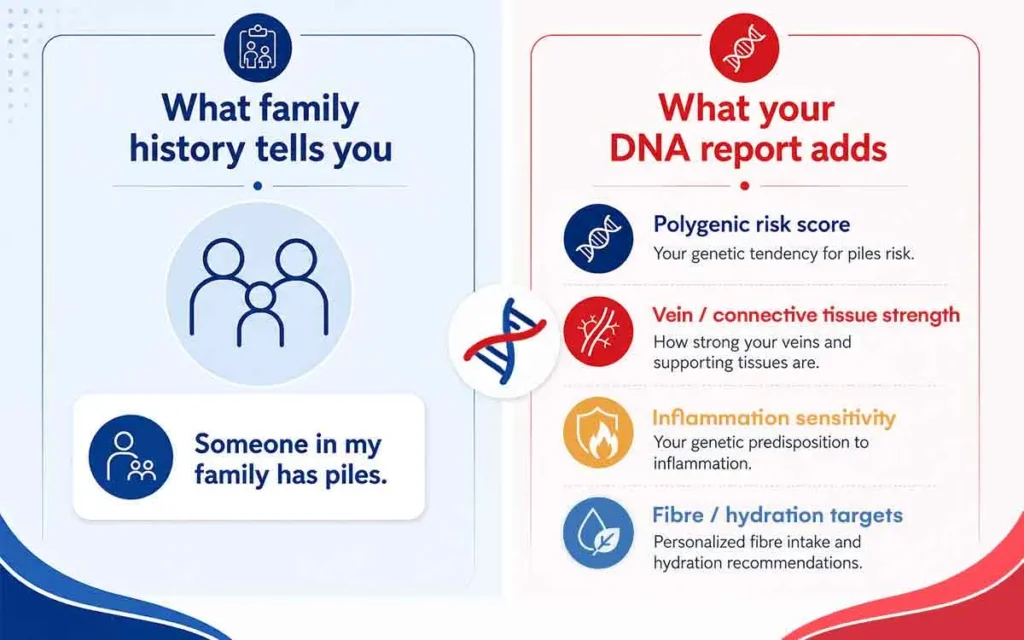
Family history tells how you nearby to Piles


A pattern seen again in research: two people with a similar family history and similar genetic risk can have completely different outcomes years later, based entirely on daily habits. The genes set the tendency. What you do every day at your desk and at the dinner table decides whether that tendency ever becomes a diagnosis.

Picture two colleagues, same office, same “eat more fibre and drink more water” advice from their doctor after a mild flare-up. One sees real improvement within weeks. The other keeps having flare-ups despite following the same advice almost exactly.

The difference usually isn’t discipline. Generic advice assumes every gut and every vein responds to fibre and water the same way. In reality, how sensitive your veins are to pressure, how your gut handles fibre, and how well your connective tissue holds up under daily strain are all shaped by the specific genes you carry. A plan that ignores this is working with incomplete information from the start.

A DNA-based nutrition plan doesn’t reinvent hemorrhoid advice — it makes it more specific to your body instead of generic:

  • If your genes point to weaker vein and connective tissue strength, your plan can prioritise nutrients that support vein and collagen health earlier, rather than waiting for symptoms to appear.
  • If your genes suggest higher inflammation sensitivity, your plan can adjust which foods to limit, since inflammatory triggers vary from person to person.
  • If your genetic risk score is high, your plan can push fibre and hydration targets more assertively from the start, instead of the generic “eat more fibre” line most people already ignore.

Note: genetic risk scoring is a tool to guide priorities, not a precise, individualized prescription — it should complement, not replace, guidance from your doctor or a registered dietitian.

In plain terms, a genetic report for piles can show you:

  • Your polygenic risk score for hemorrhoidal disease
  • Whether your genes point to weaker vein or connective tissue strength
  • Your genetic sensitivity to inflammation
  • How much your risk is likely to be driven by sitting, straining, and diet versus baseline genetics
  • The type of fibre, hydration, and activity targets best suited to your body

Test Once, Use for Life

Unlike a physical exam or a colonoscopy, which only shows what’s happening in your body right now, a genetic test doesn’t need repeating. Your DNA stays the same for life. One test gives you a reference you can use for every future diet and lifestyle decision, not just this year’s.

Maybe piles runs in your family. Maybe years of back-to-back meetings and a chair you rarely leave have caught up with you. Either way, what most people never find out is how their own veins and connective tissue actually handle daily pressure — and that’s the part that decides whether a prevention plan actually works.

A Lifecode genetic test reads that once. Your nutrition and lifestyle plan is then built from your own report, guided by real health experts throughout.

Take the Lifecode Genetic Test and Get Your DNA-Based Prevention Plan

One test. One report. A plan that stays relevant for the rest of your life, because your DNA does not change.

This test is intended to inform lifestyle and nutrition choices and is not a diagnostic medical test. It does not replace regular check-ups or professional medical advice.

FAQ

Frequently Asked Questions

Both. Genetics affects how strong your veins and connective tissue are to begin with, but lifestyle factors like prolonged sitting, low fibre intake, and straining are usually what actually trigger symptoms.

Large genetic studies have identified 102 DNA regions associated with hemorrhoid risk, including genes like FOXC2, involved in vein development, and CALM3, involved in smooth muscle function.

No. Your DNA doesn’t change, so one genetic test can inform your diet and lifestyle choices for life. Physical exams and scans are what you’d repeat periodically if symptoms appear.

Desk jobs don’t cause piles on their own, but prolonged sitting, delaying bathroom visits, and low activity are well-documented risk factors that add real pressure on top of whatever genetic risk you already carry.

Piles, also called hemorrhoids, are not considered a purely genetic disease. However, family history may increase a person’s risk, possibly because of inherited differences in connective tissue or vein structure. Other common risk factors include constipation, straining during bowel movements, pregnancy, obesity, and prolonged sitting. A healthcare professional can evaluate persistent bleeding, pain, or swelling.

September 17, 2026 Uncategorized
Last Updated On September 17, 2026