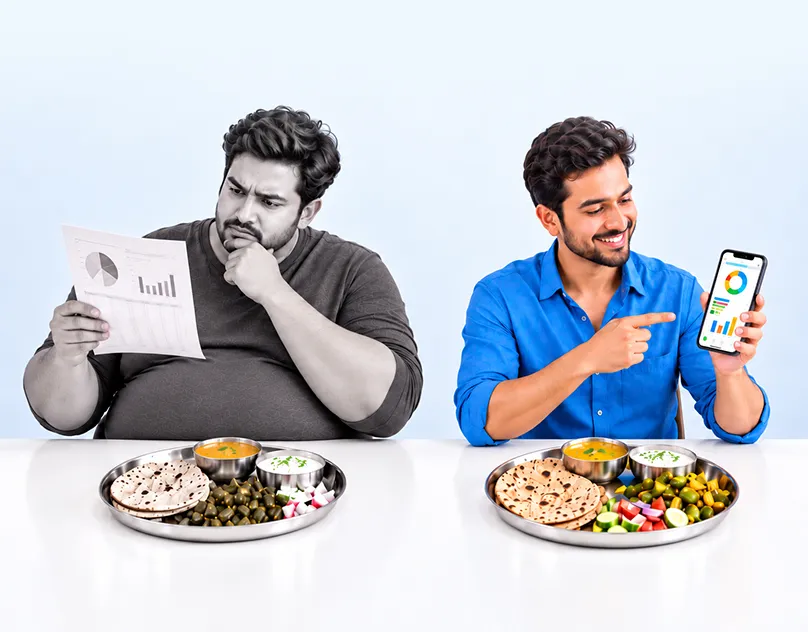
Same lunch. Same table. Two glucometers. Two very different numbers.
Maybe you’ve lived this. You and a relative sit down to two phulkas, a bowl of dal and a plate of sabzi. Two hours later, their reading is 128 and yours is 190. Neither of you sneaked a sweet. Neither skipped the evening walk. Somewhere between the plate and the finger-prick, your bodies told different stories.
If you have ever stared at a post-meal reading and wondered what you did wrong, the honest answer is often: nothing. A diabetes diet plan has a solid shared core that helps almost everyone, and a personal layer that decides how well it works for you. This guide walks through both, with Indian meal ideas, vegetarian and non-vegetarian choices, and what changes for pre-diabetes, type 1, type 2 and pregnancy.
The Common Ground Every Diabetes Diet Plan Starts From
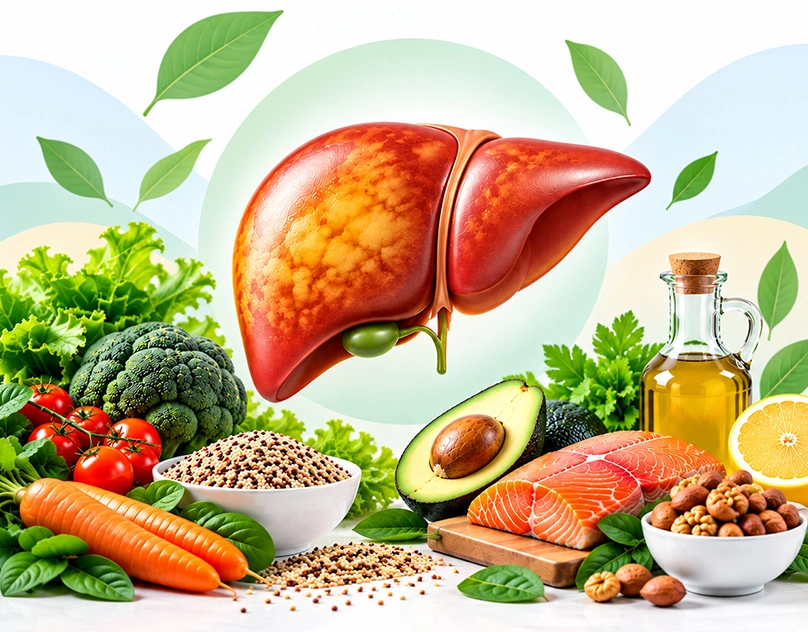
Walk into any good diabetes clinic and you will hear versions of the same advice, because it is well established. Fill half your plate with non-starchy vegetables. Give a quarter to protein, and a quarter to whole grains or millets. Eat at regular times so your blood sugar is not left to swing between long gaps and heavy meals. Choose whole fruit over juice, cook with measured oil, and treat sugary drinks as an occasional thing rather than a habit.
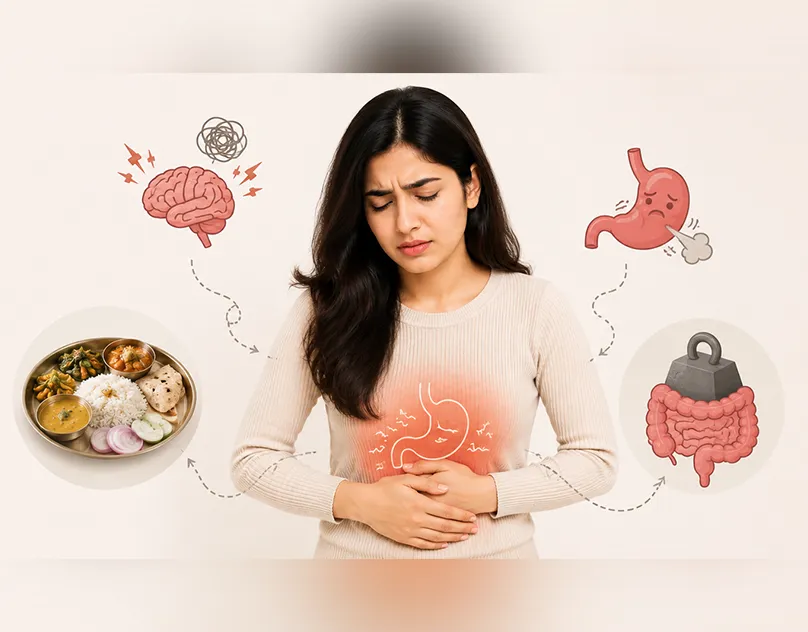
For Indian plates, the trouble is rarely any single food. It is the combination and the portion. A bowl of rice, a potato sabzi, a sweet chutney and a glass of juice might each seem harmless. Together they hit the bloodstream fast.
Choose more often
Keep in check
Moong, masoor, chana, rajma, sprouts
White rice, maida rotis, naan, bakery items
Jowar, bajra, ragi, whole-wheat rotis, oats
Poha, upma and idli in large portions without protein
Here is a five-day diabetes diet plan Indian households can follow without special ingredients. The dinner column offers a vegetarian and a non-vegetarian choice, so the same chart works whichever way you eat.
Veg: Moong khichdi, kachumber. Non-veg: Fish curry, steamed vegetables
A quick word on each style of eating. On a diabetes diet plan Indian vegetarian homes use, the main watch-out is protein. Dal-rice-potato meals are carbohydrate-heavy, so bring in paneer, tofu, curd, sprouts and a second dal. On the non-vegetarian side, the winners are eggs, fish and grilled or lightly cooked chicken. Heavy gravies, fried preparations and portions of biryani are what tend to push readings up.
One Condition, Four Different Stories
“Diabetes” is not one situation, and the diet is not one chart. Here is how the plan shifts.
Pre diabetes diet plan:-
This is the stage where you have the most power. Slightly raised blood sugar can often be pulled back, or delayed for years, through modest weight loss, regular movement and the eating pattern above. Large studies have shown lifestyle change can cut the risk of progressing to diabetes substantially. Focus on fibre, fewer refined carbs and a daily walk after meals.
Type 2 diabetes diet plan:-
Here the body still makes insulin but does not use it well, or cannot keep up. Portion control for rice and roti, protein at every meal, and spreading carbohydrates across the day matter most. Weight reduction, where relevant, can improve control considerably, and in some people leads to remission. Your doctor guides medication alongside food.
Type 1 diabetes diet plan:-
Type 1 is an autoimmune condition. The body makes little or no insulin, and food does not cause it or cure it. The diet is built around matching insulin to carbohydrates, so carb counting, consistent meal timing and carrying fast-acting sugar for lows are central. This plan must be built with your endocrinologist or diabetes educator, never from a generic chart.
Gestational diabetes diet plan Indian mothers can follow:-
Pregnancy is not the time to cut calories. The goal is steady blood sugar with enough nutrition for mother and baby: three small meals with two or three snacks, carbohydrates spread evenly, a protein-rich bedtime snack, and no fruit juice. Dal, sprouts, paneer, eggs, vegetables, millets and curd work well. Always have the plan checked by your obstetrician or dietitian.
So Why Does the Same Chart Give Different Readings?
Back to those two glucometers. Researchers have repeatedly found that people can show startlingly different blood sugar responses to the identical food. One person handles a bowl of rice calmly. Another spikes. Banana, bread and even oats have behaved this way in studies.
That is why “low glycaemic index” lists can mislead. They describe an average response, and you are not an average. How quickly you digest starch, how much insulin your pancreas releases, how sensitive your muscles and liver are to it, how hungry you feel afterwards: all of this varies from person to person, and a good part of it is inherited.
So when a diet that works for your friend does not work for you, it is not a character flaw. Your biology is simply asking for a different approach.
When Diabetes Runs in the Family
“My father had it. My mother’s side too.” Many Indian families carry this sentence like an unwelcome heirloom, and Indians do tend to develop type 2 diabetes earlier and at lower body weights than many other populations.
Genes such as TCF7L2, SLC30A8, KCNJ11 and PPARG have been linked with insulin release and sugar handling, while others, like FTO, relate to appetite and body weight. None of them is a sentence. What they offer is information about where your body is likely to struggle, and that is something you can plan around. You cannot change the genes you inherited, but you can change the food you pair them with.
What Your Genetic Blueprint Adds to the Plate
A personalised nutrition report does not throw out the guidance above. It sharpens it. Instead of one chart for everyone, it points to how your own body is likely to respond:
Insight
What it can mean on your plate
Carbohydrate response
Whether you may need tighter rice and roti portions, or can keep a standard Indian plate with attention on quality
Fat response
How much oil, ghee and nuts suit you, and which types of fat to favour
Insulin and sugar-handling tendencies
How closely to watch refined carbs, meal gaps and sweet foods
Appetite and fullness signals
Whether more protein, fibre or snack timing could keep cravings steady
Nutrient needs
Whether vitamin D, B12 or magnesium deserve extra focus
Exercise response
Whether walking, strength work or a mix helps your body most
Picture two people with type 2 diabetes. One is guided to cut back sharply on rice and shift to millets. The other can keep moderate grains but is told to be careful with saturated fat and add strength training. Same diagnosis, two sensible and different plans.
Important: A genetic test is not a diagnosis and does not replace your blood sugar tests, medication or doctor’s advice. It is an extra layer of insight to help you eat in a way that suits your body. This matters especially for type 1 and gestational diabetes, where your medical team leads.
Getting Your Answers From Home
Lifecode’s genetic test needs no clinic visit and no needles:
Order the kit. It arrives at your doorstep.
Take a cheek swab. It takes under a minute and is painless.
Send it back in the prepaid pouch.
Lab analysis looks at genetic markers linked to metabolism and nutrition.
Get your report and personalised diet plan in clear, simple language.
No fasting, no blood draw, and anyone in the family can do it.
Stop Eating by Someone Else’s Chart
The shared principles in a diabetes diet plan are worth following. But if your readings still refuse to match your effort, you are not failing. You may simply be following a plan written for a body that is not yours.
Learn how your body actually responds, then let your plate reflect it.