
Gene Overview
MTHFR (Methylenetetrahydrofolate Reductase)
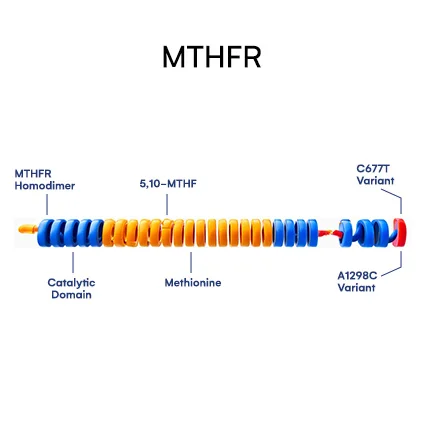
The MTHFR gene provides instructions for producing an enzyme that helps convert folate into its biologically active form used in cellular metabolism. This enzyme plays a key role in the methylation cycle, a process that supports DNA synthesis, detoxification, and homocysteine regulation. MTHFR does not determine health outcomes alone.
It influences how efficiently the body processes folate and manages methylation reactions. Variations in MTHFR gene may affect nutrient metabolism, cardiovascular balance, and cellular repair processes over time.
Why MTHFR Matters for Your Health
MTHFR supports essential biochemical processes that maintain metabolic and cardiovascular balance. Understanding this pathway helps explain differences in folate utilization and methylation efficiency.
Folate Metabolism
Converts dietary folate into active forms used by cells
Homocysteine Regulation
Helps maintain balanced homocysteine levels in blood
DNA Synthesis
Supports production and repair of genetic material
Detoxification Processes
Contributes to methylation reactions involved in detox pathways
Cellular Repair
Supports biochemical reactions needed for cellular maintenance
Key Functions of MTHFR
- Converts folate into methylated forms used in metabolism
- Supports methylation reactions throughout the body
- Regulates homocysteine metabolism
- Participates in DNA synthesis and repair
- Contributes to neurotransmitter synthesis pathways
- Maintains biochemical balance in one-carbon metabolism
How MTHFR Variations May Influence You
This is not a diagnosis. It reflects tendencies shaped over time.
Higher Enzyme Efficiency Pattern
May support efficient folate metabolism and balanced methylation activity.
Typical Enzyme Efficiency Pattern
Usually reflects expected folate processing and metabolic stability.
Lower Enzyme Efficiency Pattern
May experience slower folate conversion and therefore may benefit from consistent nutrient-supportive habits.
Scientific Foundation
Science Behind the MTHFR Gene
Folate Conversion Mechanism
MTHFR converts folate into 5-methyltetrahydrofolate, the active form used in methylation reactions. These reactions help regulate homocysteine metabolism and support DNA synthesis.
Metabolic Research Associations
Research links certain MTHFR variants with differences in homocysteine levels and folate metabolism efficiency. These effects depend on overall nutrient intake, lifestyle, and broader metabolic pathways.
Pathway Integration
MTHFR interacts with one-carbon metabolism, vitamin B pathways, and DNA repair systems, coordinating nutrient metabolism with cellular maintenance.
How Lifestyle Influences MTHFR Activity
Genetic baseline exists, but metabolic efficiency responds strongly to lifestyle inputs.
Nutrition
Adequate intake of folate and B vitamins supports methylation pathways.
Sleep
Consistent sleep supports metabolic and neurological balance.
Stress
Chronic stress may increase metabolic demand on methylation processes.
Movement
Regular physical activity supports overall metabolic function.
Habits
Long-term dietary consistency helps maintain nutrient balance.
Signs You May Benefit From Understanding MTHFR
How Lifecode Interprets MTHFR in Your Report
Lifecode evaluates MTHFR alongside methylation, nutrient metabolism, and detoxification pathways. Interpretation focuses on patterns affecting folate processing efficiency and homocysteine balance. Insights are assessed within the broader metabolic genetic network rather than based on a single gene result.
Lifestyle Guidance
Practical Recommendations
These are general lifestyle considerations, not medical advice.
Nutrition
Maintain a diet that supports adequate folate and B-vitamin intake.
Recovery
Prioritize sleep to support metabolic and neurological balance.
Stress Management
Reduce chronic stress that may increase methylation demand.
Movement
Engage in regular physical activity to support metabolic health.
Daily Habits
Consistent dietary and lifestyle routines help maintain biochemical stability.
Related Genes
FAQ
Frequently Asked Questions
The MTHFR gene helps your body convert folate into its active form. This supports methylation, DNA repair, and homocysteine balance. It plays a key role in how your body uses nutrients and maintains overall metabolic health.
MTHFR variations may slow folate conversion and affect methylation efficiency. This can influence homocysteine levels and nutrient metabolism. Effects vary by person and depend on diet, lifestyle, and overall health patterns.
Yes. A balanced diet rich in folate and B vitamins, good sleep, regular exercise, and stress control can support methylation. These habits help maintain metabolic balance, even if MTHFR efficiency varies.
Speak to a Lifecode Consultant
“Understanding MTHFR helps you focus on resilience and recovery rather than chasing quick fixes.”