
Gene Overview
GCK (Glucokinase)
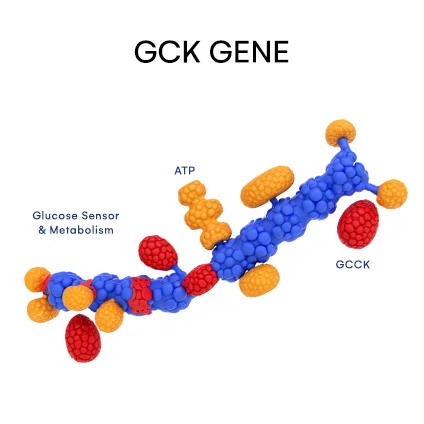
The GCK gene is located on chromosome 7p13. The GCK gene provides instructions for producing glucokinase, an enzyme that helps regulate how the body senses and processes glucose. Glucokinase acts as a metabolic sensor in the liver and pancreatic beta cells, helping detect rising blood sugar levels after food intake. GCK does not determine blood sugar outcomes alone.
It influences how efficiently cells recognize glucose and initiate metabolic responses such as insulin release and glucose storage. Variations may shape long-term patterns in glucose regulation and metabolic balance, interacting with diet, activity, and overall metabolic health.
Why GCK Matters for Your Health
GCK plays a central role in how the body detects and manages glucose levels. Understanding this pathway helps explain differences in blood sugar regulation and metabolic responses to food.
Glucose Sensing
Helps pancreatic cells detect changes in blood sugar levels
Insulin Regulation
Supports signals that trigger insulin release after meals
Liver Metabolism
Assists the liver in storing or releasing glucose
Energy Distribution
Influences how glucose is directed toward storage or energy use
Metabolic Balance
Supports stable regulation of blood glucose over time
Key Functions of GCK
- Acts as a glucose sensor in pancreatic beta cells
- Regulates insulin release in response to blood sugar levels
- Supports glucose storage in the liver
- Participates in carbohydrate metabolism
- Helps maintain stable blood glucose balance
- Coordinates nutrient sensing with metabolic responses
How GCK Variations May Influence You
This is not a diagnosis. It reflects tendencies shaped over time.
Higher Glucose Sensing Efficiency Pattern
May support stable glucose detection and balanced insulin signaling.
Typical Regulation Pattern
Usually reflects expected glucose sensing and metabolic regulation.
Lower Glucose Sensing Efficiency Pattern
May experience greater sensitivity to carbohydrate intake and may benefit from structured metabolic-supportive habits.
Scientific Foundation
Science Behind the GCK Gene
Glucose Detection Mechanism
Glucokinase catalyzes the first step in glucose metabolism by converting glucose into glucose-6-phosphate. This step allows cells to sense glucose levels and regulate metabolic responses accordingly.
Metabolic Research Associations
Research shows that variations in GCK can influence fasting glucose levels and insulin signaling patterns. These differences interact with diet, body composition, and overall metabolic health.
Pathway Integration
GCK works alongside glucose transporters, insulin signaling pathways, and hepatic metabolism systems to regulate how glucose is sensed and processed throughout the body.
How Lifestyle Influences GCK Activity
Genetic baseline exists, but glucose regulation remains strongly influenced by lifestyle patterns.
Nutrition
Balanced carbohydrate intake supports stable glucose metabolism.
Sleep
Consistent sleep supports hormonal and metabolic balance.
Stress
Chronic stress may influence glucose regulation through hormonal pathways.
Movement
Regular physical activity improves glucose utilization by muscles.
Habits
Stable eating routines support predictable metabolic responses.
Signs You May Benefit From Understanding GCK
How Lifecode Interprets GCK in Your Report
Lifecode evaluates GCK alongside glucose sensing, insulin signaling, and carbohydrate metabolism pathways. Interpretation focuses on patterns influencing blood sugar regulation, metabolic flexibility, and long-term metabolic resilience. Insights are interpreted within the broader metabolic genetic framework rather than relying on a single gene variant.
Lifestyle Guidance
Practical Recommendations
These are general lifestyle considerations, not medical advice.
Nutrition
Maintain balanced meals that support steady glucose levels.
Recovery
Prioritize sleep to support metabolic hormone regulation.
Stress Management
Reduce chronic stress that may affect glucose balance.
Movement
Regular physical activity improves glucose utilization.
Daily Habits
Consistent eating and activity routines support long-term metabolic stability.
FAQ
Frequently Asked Questions
The GCK gene helps your body recognize when blood sugar rises after eating. Think of it as a sensor that tells your pancreas when to release insulin to manage that sugar properly.
Yes. If your GCK gene affects how efficiently your body processes glucose, you may notice energy dips, brain fog, or sluggishness after meals — especially carbohydrate-heavy ones.
No. Your GCK gene does not cause diabetes. It simply reflects how efficiently your body senses and manages blood sugar. Healthy eating habits, regular movement, and good sleep can significantly support your glucose balance.
- Vegetables — broccoli, spinach, and beans help stabilize blood sugar levels
- Whole grains — oats, quinoa, and brown rice release energy slowly and steadily
- Lean proteins — chicken, fish, and eggs reduce blood sugar spikes after meals
- Healthy fats — avocado, nuts, and olive oil support steady metabolic energy
- Berries — blueberries and strawberries are low in sugar and rich in antioxidants
Lifecode analyzes your GCK gene alongside your broader metabolic genetic profile to provide simple, personalized guidance on nutrition, daily habits, and lifestyle choices that support long-term blood sugar balance and energy health.
Speak to a Lifecode Consultant
“Understanding GCK Gene helps you focus on resilience and recovery rather than chasing quick fixes.”