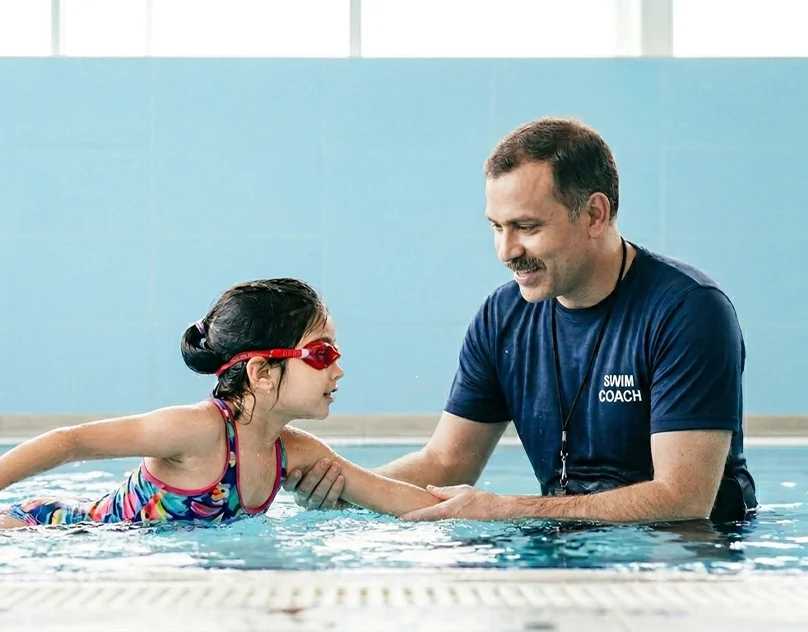
One child jumps into the pool and effortlessly mimics the coach’s swimming strokes after just two lessons. Another child, identical in age and enthusiasm, takes twelve lessons, requiring patient, deliberate practice before they confidently clear the length of the pool. One child is reading chapter books by age five, while another needs a completely different, highly structured approach to piece the alphabet together.
As a parent in India, witnessing these stark differences in the classroom, on the playground, or during extracurricular activities can spark a flurry of questions. You might wonder why child learns slowly or quickly genetics might be playing a quiet role behind the scenes. It is incredibly common to wonder if your child is falling behind or if you need to alter your coaching strategy at home.
The truth is that every child’s brain is wired differently, and these variations are a natural part of human diversity. Understanding the core mechanics behind these differences changes how you support your child, not what you expect of them. It turns out that the answer to why some children naturally grasp concepts instantly while others require steady, ongoing practice often traces back to a foundational genetic blueprint—specifically involving the BDNF gene learning speed child India pathways.
The Biological Architect of Learning: Neuroplasticity and the BDNF Gene
To understand the rhythm of how children pick up new physical and cognitive habits, we have to look at neuroplasticity. Neuroplasticity is the brain’s remarkable ability to reorganize itself by forming new neural connections throughout life, especially during childhood development. Every time a child practices a cricket shot, memorizes a poem, or learns a new language, their brain is physically reshaping itself, building pathways to turn that new action into an automatic habit.
A major driver of this process is a specific protein produced by the BDNF gene (Brain-Derived Neurotrophic Factor). Think of BDNF as a specialized fertilizer for the brain. It supports the survival of existing neurons and encourages the growth and differentiation of new neurons and synapses. When a child is actively engaged in a new activity, BDNF expression helps cement those fresh connections, directly impacting neuroplasticity genetics child tendencies.
Scientific literature, including BDNF and neuroplasticity – PubMed publications, highlights that variations in how this gene expresses itself can significantly influence a child’s natural learning pace.
Higher Expression Variants: Children who inherit genetic variations that favor a higher, more rapid release of BDNF often build neural pathways quickly. They are the ones who seem to absorb skills through sheer exposure, requiring very little review before moving on to the next challenge.
Lower Expression Variants: Children with genetic variations that result in a more gradual, conservative expression of BDNF experience a different timeline. Because the neural building blocks take a bit longer to stabilize, these children require sustained, deliberate reinforcement to lock a new skill into place.
Redefining the Curve: Different Paces, Equal Potential
It is vital for parents to recognize that a genetic learning pace child profile that leans toward a slower, more deliberate curve does not mean a child possesses lower intelligence. Genetic variations in BDNF expression do not dictate the ceiling of what your child can achieve; rather, they simply map out the specific learning curve your child naturally navigates.
Historically, rigid academic structures have favored fast gatherers, but modern insights into BDNF India child development demonstrate that a slower learning curve possesses unique advantages. Children who require more repetition often build highly resilient, deeply ingrained foundational habits because they have had to engage with the material thoroughly.
Framing this accurately means stepping away from comparison. When trying to figure out why child learns slowly or quickly genetics insights provide clarity, removing the emotional stress of thinking a child is simply “unmotivated” or “distracted.” Instead of pushing for an arbitrary timeline, parents can lean into tailored methods that match their child’s natural genetic architecture.
Tailoring Your Approach: Spaced Repetition and Multi-Sensory Input
If your child’s innate profile suggests that they are a student who benefits from steady, deliberate reinforcement, typical teaching methods might leave them feeling overwhelmed. Knowing why child needs more repetition learning styles can be optimized allows you to pivot your parenting and teaching strategies toward highly effective, evidence-based techniques.
Harness the Power of Spaced Repetition
Instead of cramming a new skill or concept into a single, exhausting weekend session, break the learning down into brief, digestible increments spaced out over days or weeks. For example, if a child is learning to play a musical instrument, ten minutes of focused practice every evening is vastly more effective than an hour-long session once a week. Spaced repetition gives the brain the necessary time windows to synthesize BDNF, gradually reinforcing those newly formed neural pathways while the child rests.
Implement Multi-Sensory Input
Don’t rely solely on verbal instructions or reading text. Engage multiple senses simultaneously to give the brain several pathways to anchor the same piece of information. If your child is learning a concept in science or math, combine reading aloud with physical models, educational videos, and hands-on activities. Engaging visual, auditory, and kinesthetic senses simultaneously provides a robust stimulus for neuroplasticity, helping children with a slower baseline pace anchor concepts much faster.
MaintainEmotional Encouragement
Stress and pressure can actively suppress BDNF production, creating a frustrating roadblock to learning. By keeping environments calm, celebrating incremental progress, and validating the effort rather than just the final grade, you optimize the biological conditions necessary for your child’s brain to adapt and grow.
Navigating the Map of Development
Every child’s developmental journey is completely distinct, and discovering their innate biological traits gives you a compass to navigate it smoothly. By understanding the deep-rooted connections between neuroplasticity genetics child variations and daily behaviors, you can stop guessing why certain milestones take longer and instead build an environment where your child thrives on their own terms.
Recognizing these inherent tendencies allows you to work alongside your child’s biology rather than fighting against it. Whether they are a swift absorber or a deep, methodical learner, their profile is completely valid and capable of incredible success.
To learn more about how genetic variations influence cognitive traits and physical coordination, explore our detailed resources in the [Genome Library: BDNF page], dive into the [Genome Library: Cognitive & Learning cluster], or review the [Genome Library: Neuroplasticity section].