
Gene Overview
LMNA Gene
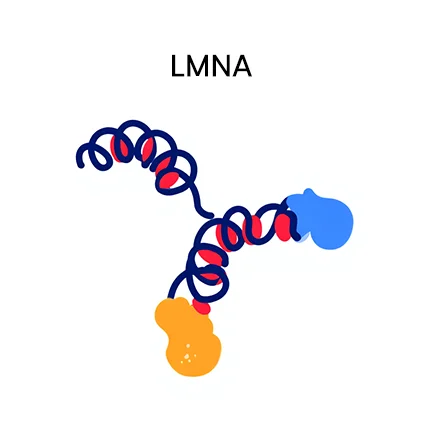
The LMNA gene provides instructions for making lamin A and lamin C, two structural proteins formed from the same gene through alternative splicing. These proteins form a supportive mesh inside the nucleus, helping cells withstand stress, divide properly, and protect genetic material over time.
LMNA does not directly determine cell lifespan, but it plays an important role in maintaining nuclear stability over time LMNA does not control how long cells survive. It influences how well they hold their shape under constant physical and metabolic pressure.
Why LMNA Matters for Your Health
LMNA affects the physical integrity of cells, especially those exposed to repeated strain. Understanding LMNA helps explain why some tissues fatigue, weaken, or age faster under long-term stress.
Cell structure
Maintains nuclear strength and shape organization
Aging
Contributes to long-term cellular stability
Muscle Function
Supports tissues exposed to mechanical force
Heart Health
Contributes to the structural integrity of cardiac muscle cells
Recovery
May influence how cells respond to repeated physical or metabolic strain
Key Functions of LMNA
- Provides structural support to the cell nucleus
- Protects DNA during cell division
- Helps regulate gene expression under stress
- Supports tissue durability
- Maintains nuclear organization
- Contributes to cellular aging pathways
How LMNA Variants May Influence You
This is not a diagnosis. It reflects tendencies influenced by environment and habits.
Higher Structural Stability Tendency
May support stronger cellular integrity and better tolerance to physical stress.
Typical Stability Tendency
Generally reflects normal nuclear structure and expected aging patterns.
Lower Stability Tendency
May require stronger focus on recovery and stress moderation to support tissue resilience.
Scientific Foundation
Science Behind the LMNA Gene
Nuclear Architecture
Lamin A and lamin C form a scaffold lining the inner surface of the nucleus. This structure framework protects DNA and helps cells respond appropriately to mechanical and metabolic stress.
Disease vs Common Variants
Research has shown that certain FOXO3 variants appear more frequently in populations with healthier aging patterns, including centenarians. These studies suggest a role in resilience rather than immunity from disease.
Gene Interactions
Rare LMNA mutations can cause serious conditions such as Hutchinson-Gilford progeria syndrome, dilated cardiomyopathy, or Emery-Dreifuss muscular dystrophy. Most people, however, carry common LMNA variants that do not cause disease but may subtly influence resilience and aging patterns.
Pathway Connections
LMNA interacts with pathways involved, DNA repair, and growth-regulation systems that balance durability and adaptability.
How Lifestyle Influences LMNA Function
Genes influence structural framework, but long-term durability is shaped by daily habits and environmental exposure.
Nutrition
Long-term nutritional balance supports cellular repair.
Sleep
Adequate rest allows nuclear repair processes to function properly.
Stress
Chronic stress increases mechanical and inflammatory strain on cells.
Movement
Regular, controlled movement supports tissue strength without overload.
Habits
Sustained patterns matter more than short bursts of intensity.
Signs You May Benefit From Understanding LMNA
How Lifecode Interprets LMNA in Your Report
Lifecode analyzes LMNA variants alongside genes involved in repair, stress response, and tissue integrity. Interpretation focuses on structural resilience, recovery patterns, and aging tendencies. Recommendations are tailored based on the full genetic profile rather than a single gene.
Lifestyle Guidance
Practical Recommendations
These are general lifestyle considerations, not medical advice.
Nutrition
Avoid prolonged extremes that weaken repair capacity.
Recovery
Schedule rest as part of routine, not as correction.
Stress Management
Manage prolonged physical or mental stress to support cellular resilience.
Supplements
Structural support may be discussed during consultation.
Daily Habits
Consistency supports durability over time.
FAQ
Frequently Asked Questions
LMNA gives instructions for making lamin A and lamin C. These proteins form a supportive layer inside the nucleus. They help cells keep their shape, protect DNA, and manage stress during daily wear and tear.
It does not set lifespan. It influences how well cells stay stable over time. Strong nuclear structure may support better resilience, while weaker stability can make tissues tire faster under pressure.
Habits matter. Balanced nutrition, proper sleep, controlled movement, and stress reduction help cells repair and adapt. These actions support durability even when genetic tendencies differ.
Speak to a Lifecode Consultant
“Understanding LMNA you focus on resilience and recovery rather than chasing quick fixes.”
