

Gene Overview
FSHR GENE

FSHR does not determine reproductive outcomes alone, but it contributes fundamentally to how sensitively the ovaries and reproductive tissues receive and respond to Follicle-Stimulating Hormone — influencing ovarian function
Follicle development, reproductive hormone balance, fertility potential, and the trajectory of hormonal transitions across a woman's reproductive life.
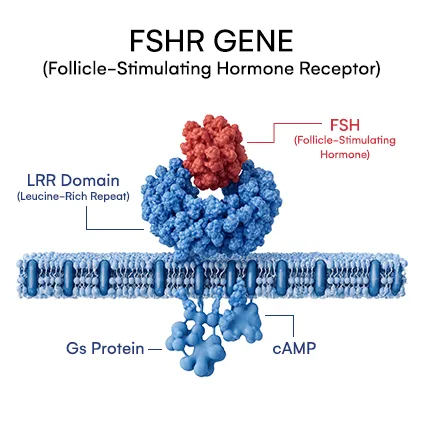
This gene encodes the FSH receptor, the molecular target through which FSH communicates its reproductive signalling instructions to ovarian cells. Certain variations are associated with differences in ovarian sensitivity to FSH stimulation, follicular development efficiency, reproductive hormone levels, fertility patterns, and the timing of menopause.
Why FSHR Matters for Your Health
FSHR has broad implications across reproductive, hormonal, bone, and metabolic health systems. Understanding FSHR helps explain why ovarian responses to hormonal signalling vary significantly between women and why FSH receptor sensitivity shapes reproductive health outcomes across every stage of the hormonal lifespan.
Ovarian Response & Follicle Development
Determines how sensitively ovarian cells detect and respond to FSH stimulation driving follicle maturation and ovulation
Fat Metabolism
Influences the estrogen and progesterone production that follows FSH-driven follicular development across the menstrual cycle
Fertility Potential
Shapes ovarian reserve responsiveness and the efficiency of follicular development underlying natural and assisted reproductive outcomes
Menopausal Timing
Contributes to the pace of ovarian ageing and the timing of the menopausal transition through differences in FSH receptor sensitivity across reproductive years
Bone & Metabolic Health
Affects bone density and metabolic regulation through FSH receptor expression in skeletal and metabolic tissues beyond the ovaries
Key Functions of FSHR
- Encodes the FSH receptor expressed on ovarian granulosa cells and other reproductive tissues
- Mediates FSH signalling that drives follicular recruitment, development, and maturation
- Regulates ovarian estrogen and inhibin production in response to pituitary FSH signals
- Influences the sensitivity of the ovarian response to FSH across the menstrual cycle and reproductive lifespan
- Contributes to the regulation of ovarian reserve and maintenance of follicular pool Over time
- Plays a role in bone density maintenance and metabolic regulation through extra-ovarian FSH receptor expression
How FSHR Variants May Influence You
This is not a diagnosis. It indicates tendencies that can be influenced through daily choices.
Higher Efficiency Variant
May support stronger ovarian sensitivity to FSH stimulation, more efficient follicular development, and more stable reproductive hormone production across the menstrual cycle.
Moderate Variant
Typically indicates balanced FSH receptor function with no major advantage or limitation in ovarian response or reproductive hormone regulation.
Lower Efficiency Variant
May experience reduced ovarian sensitivity to FSH signalling, potentially contributing to variable follicular development, altered reproductive hormone levels, and increased attention needed for reproductive and bone health support across hormonal transitions.
Scientific Foundation
Science Behind the FSHR Gene
Scientific Foundation
FSHR encodes the Follicle-Stimulating Hormone receptor, a G protein-coupled receptor expressed primarily on ovarian granulosa cells — the cells surrounding and supporting developing follicles. When FSH released from the pituitary gland binds to FSHR, it activates intracellular signalling cascades that drive follicular recruitment, granulosa cell proliferation, estrogen synthesis, and ultimately ovulation. Variants affecting receptor sensitivity can influence how efficiently this FSH signal is received and translated into ovarian reproductive activity.
Research has associated specific FSHR variants with differences in ovarian response to FSH stimulation, baseline FSH levels, antral follicle counts, and outcomes in assisted reproductive contexts. Studies have also linked FSHR variants to differences in menopausal timing — with reduced receptor sensitivity potentially associated with earlier depletion of the ovarian follicular pool and consequently earlier menopausal transition. Additionally, FSH receptor expression in bone tissue has connected FSHR variants to differences in bone mineral density trajectories — particularly significant as FSH levels rise during the menopausal transition.
FSHR interacts closely with genes including LHR, ESR1, CYP19A1, and SHBG, collectively shaping the complete hormonal signaling chain from pituitary FSH release through ovarian estrogen production — forming a comprehensive reproductive hormonal response profile.
How Lifestyle Influences FSHR
Although genes are fixed, FSHR receptor sensitivity and FSH-driven ovarian function are meaningfully supported by nutrition, body composition, stress management, and lifestyle consistency.
Nutrition
Adequate micronutrient intake — particularly folate, zinc, vitamin D, and omega-3 fatty acids — supports healthy ovarian granulosa cell function and the FSH receptor signalling environment. Maintaining stable blood glucose and avoiding extreme dietary patterns helps support the hormonal axis that drives FSH-FSHR communication.
Sleep
Consistent, restorative sleep supports the pituitary-ovarian hormonal axis and the overnight hormonal cycling that FSH release and FSHR-driven follicular development depend upon across the reproductive cycle.
Stress Recovery
Chronic stress suppresses pituitary FSH release and disrupts the hormonal environment in which FSHR signalling operates. Regular stress-reduction practices protect the hypothalamic-pituitary-ovarian axis that governs FSH receptor activation.
Movement
Regular moderate-intensity exercise supports healthy hormonal axis function and body composition — both of which influence FSH signalling efficiency and FSHR-driven ovarian response. Excessive high-intensity training can suppress FSH release and impair follicular development.
Habits
Long-term lifestyle consistency supports sustained FSH receptor health and ovarian function — particularly significant during perimenopause when FSHR sensitivity increasingly determines the pace and symptom experience of the hormonal transition.
Signs You May Benefit From Understanding FSHR
- Irregular menstrual cycles or variable ovulatory patterns
- Concerns about fertility or ovarian reserve
- Altered hormonal symptoms across the menstrual cycle
- Early signs of perimenopause or concern about menopausal timing
- Bone density concerns linked to hormonal transitions
How Lifecode Interprets FSHR in Your Report
Our comprehensive interpretation analyzes your FSHR variants alongside related reproductive and hormonal genes to provide personalized insights into your ovarian response tendencies, reproductive hormone balance, fertility-related patterns, menopausal timing trajectory, and bone health profile. We prioritize actionable recommendations based on your complete genetic profile.
Talk to an ExpertLifestyle Guidance
Practical Recommendations
These are general lifestyle considerations, not medical advice.
Nutrition
Prioritize micronutrient-dense foods supporting ovarian granulosa cell health — including folate, zinc, vitamin D, and omega-3 rich sources — to complement FSHR-driven FSH receptor signalling and follicular development.
Recovery
Establish consistent sleep routines to support pituitary-ovarian axis hormonal cycling and overnight recovery processes essential to FSH release and FSHR-mediated ovarian response.
Stress Management
Incorporate regular stress-reduction practices to protect hypothalamic-pituitary-ovarian axis function and maintain the hormonal environment that supports healthy FSHR signalling and follicular development.
Supplement
General reproductive support, ovarian health, and bone density supplementation may be discussed during consultation.
Daily Habits
Focus on consistency over intensity — sustained lifestyle patterns supporting hormonal axis health, healthy body composition, and ovarian function produce the greatest long-term benefit across all FSHR-related reproductive and hormonal health systems.
FAQ
Frequently Asked Questions
FSHR mediates FSH signalling in the ovaries. It supports follicle recruitment and maturation, regulates estrogen and inhibin production, and helps maintain the follicular pool over time. It is also expressed in bone and metabolic tissues, so it can influence bone density and metabolic regulation.
FSHR influences fertility potential but does not determine it alone. Variants can change how sensitively the ovaries respond to FSH, affecting follicular development efficiency, hormone levels and responsiveness in natural or assisted reproduction. Lifestyle, age and overall health also play major roles.
You cannot change your genes, but lifestyle can support FSH-driven ovarian function. Helpful habits include nutrient-rich food (folate, zinc, vitamin D, omega-3s), consistent sleep, stress management and moderate exercise. Extreme dieting or excessive high-intensity training can suppress FSH release and follicular development.
Research associates FSHR variants with differences in menopause timing. Reduced receptor sensitivity may be linked to earlier depletion of the follicular pool and an earlier menopausal transition. This is a tendency, not a prediction, and lifestyle and other genes also shape the timeline.
Speak to a Lifecode Consultant
“Learning about FSHR helps you understand how your body responds to stress and supports long-term recovery and well-being”
Talk to an Expert