
Gene Overview
CYP19A1 Gene
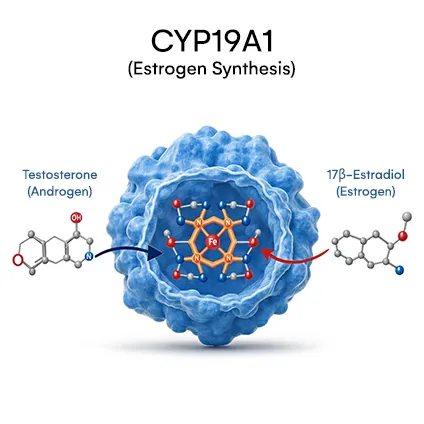
This gene encodes aromatase, the enzyme responsible for converting androgens into estrogen throughout the body. Certain CYP19A1 variants have been associated with differences in estrogen production efficiency, hormonal symptom intensity, estrogen–androgen balance, and the experience of hormonal transitions from reproductive years through menopause. As with most single-gene associations, individual effects are generally modest and act alongside many other genetic and lifestyle factors.
CYP19A1 belongs to the Cytochrome P450 (CYP450) family of enzymes — a large group of genes involved in hormone synthesis, detoxification, and metabolic regulation throughout the body. CYP19A1 does not determine hormonal health outcomes on its own, but research suggests it contributes to how efficiently the body produces estrogen — one of several factors that may influence circulating estrogen levels, hormonal balance, reproductive health, mood stability, bone density, and metabolic function across a woman’s life stages.
Why CYP19A1 Matters for Your Health
CYP19A1 has been studied in relation to reproductive, metabolic, skeletal, and mental health. Understanding CYP19A1 can help explain why estrogen levels and hormonal symptom experiences vary between women — while recognizing that estrogen production efficiency is one of many factors shaping these health outcomes, not the sole determinant.
Estrogen Production
May influence how efficiently androgens are converted into estrogen across reproductive, adipose, skeletal, and brain tissues.
Hormonal Balance
May contribute to the estrogen-to-androgen ratio linked in research to reproductive health, skin, energy, and mood regulation.
Bone Density
Research suggests aromatase activity plays a role in maintaining skeletal estrogen levels that help support bone mineral density across hormonal life transitions.
Mood & Brain Health
Local estrogen production in brain tissue, supported by aromatase, has been studied in relation to serotonin, dopamine, and neuroprotective signaling — an area of research that is still evolving.
Metabolic & Cardiovascular Health
Estrogen synthesis supported by aromatase may be one of several factors influencing insulin sensitivity, lipid regulation, and vascular health across the hormonal lifespan.
Key Functions of CYP19A1
- Encodes aromatase — the enzyme that converts androgens, including testosterone, into estrogen throughout the body
- Regulates estrogen biosynthesis — in ovarian, adipose, skeletal, adrenal, and brain tissues.
- Influences circulating estrogen levels — and the estrogen–androgen hormonal balance.
- Helps determine estrogen supply — available to estrogen receptors across target tissues.
- Contributes to local brain estrogen production — an area of ongoing research related to neurological and mood-related function.
- Plays a role in maintaining estrogen levels — during and after the menopausal transition.
How CYP19A1 Variants May Influence You
This is not a diagnosis. It reflects general tendencies that can be shaped by daily choices and should not be used to make medical decisions without guidance from a qualified healthcare professional.
Higher Efficiency Variant
May be associated with stronger estrogen production, more stable circulating estrogen levels, and greater hormonal resilience across reproductive transitions in some individuals — though higher aromatase activity may also warrant attention to healthy estrogen metabolism.
Moderate Variant
Typically associated with balanced aromatase function, without a strong tendency toward higher or lower estrogen synthesis or hormonal balance.
Lower Efficiency Variant
May be associated with reduced estrogen production efficiency in some individuals, which could contribute to lower circulating estrogen levels, greater hormonal symptom intensity, and a greater need for attention to bone density and mood support — particularly during perimenopause and menopause.
Scientific Foundation
Science Behind the CYP19A1 Gene
What CYP19A1 Does
CYP19A1 encodes aromatase, a cytochrome P450 enzyme expressed in ovarian granulosa cells, adipose tissue, bone, brain, and adrenal glands, and is considered a key enzyme in estrogen biosynthesis across these tissue types. Aromatase catalyses the conversion of androgens, including testosterone and androstenedione, into estradiol and estrone — one of the factors that influences how much estrogen is available to receptors throughout the body.
Genetic Variants and Health Associations
Research has associated specific CYP19A1 variants with differences in circulating estrogen concentrations, bone mineral density, menopausal symptom severity, and mood-related hormonal sensitivity, though study sizes and findings vary.
Brain Estrogen Production and Cognitive/Emotional Health
Some studies have also examined CYP19A1 variants in relation to local brain estrogen production, exploring possible links between aromatase function and neuroprotection, cognitive performance, and emotional regulation via estrogen’s influence on serotonin and dopamine pathways. This area of research is still developing, and findings should be interpreted with appropriate caution.
Interactions with Other Genes in the Estrogen Pathway
CYP19A1 is understood to interact with other genes involved in estrogen pathways, including ESR1, SHBG, CYP1B1, and COMT — involved respectively in estrogen receptor binding, estrogen transport, estrogen metabolism, and catecholamine/estrogen breakdown. Together, these genes form part of a broader hormonal regulation network, though genetics is only one of many factors — alongside lifestyle, environment, and overall health — that shape hormonal outcomes.
CYP19A1 and Polycystic Ovarian Syndrome (PCOS)
Aromatase activity has also been studied in polycystic ovarian syndrome (PCOS), a common hormonal condition. A 2020 observational study comparing ovarian granulosa cells from women with and without PCOS found significantly lower aromatase (CYP19A1) mRNA expression in the PCOS group and proposed that this reduced aromatase activity may contribute to the elevated testosterone levels seen in PCOS-related hyperandrogenism. This reflects one study population and should be read as a single data point within a broader body of PCOS research, not a general rule for every individual.
How Lifestyle Influences CYP19A1
Although genes are fixed, aromatase activity and estrogen synthesis efficiency can be meaningfully influenced by body composition, nutrition, and lifestyle patterns. The considerations below are general wellness information, not medical advice.
Nutrition
A diet rich in cruciferous vegetables is commonly associated with healthy estrogen metabolism pathways downstream of aromatase activity. Maintaining a healthy body composition is particularly relevant to CYP19A1 function, as adipose tissue is a known site of aromatase expression and estrogen production, especially after menopause.
Sleep
Consistent, restorative sleep supports overall hormonal rhythm and recovery processes. This may be particularly relevant during perimenopause, when aromatase activity in tissues outside the ovaries becomes a more significant source of estrogen.
Stress Recovery
Chronic stress elevates cortisol, which can affect the broader hormonal signalling environment in which aromatase operates. Stress-reduction practices may support a healthier adrenal and ovarian hormonal balance.
Movement
Regular moderate-intensity exercise is associated with healthy aromatase activity, body composition, and bone-density maintenance — considerations that may be particularly relevant for those with a lower-efficiency variant during hormonal transitions.
Habits
Consistent, long-term lifestyle habits are more strongly associated with hormonal and metabolic health than short-term changes, and may support estrogen production stability, especially across perimenopause and menopause.
Signs You May Benefit From Understanding CYP19A1
How Lifecode Interprets CYP19A1 in Your Report
Our interpretation considers your CYP19A1 variants alongside related hormonal synthesis and metabolism genes to provide general insights into estrogen production tendencies, hormonal balance patterns, bone health considerations, and mood and metabolic trends across reproductive life stages. These insights are intended to inform — not replace — guidance from a qualified healthcare professional, and should be considered alongside your personal and family medical history.
Lifestyle Guidance
Lifestyle Guidance
Practical Recommendations — these are general lifestyle considerations, not medical advice, and are not a substitute for consultation with a qualified healthcare professional.
Nutrition
Consider prioritizing cruciferous vegetables, phytoestrogen-containing foods, and blood-glucose-stabilising dietary patterns, which are commonly discussed in relation to healthy aromatase activity and estrogen synthesis balance.
Recovery
Establishing consistent sleep routines may support hormonal rhythm stability and the recovery processes relevant to estrogen production.
Stress Management
Incorporating regular stress-reduction practices may help support a healthier adrenal and ovarian hormonal environment.
Supplement
Any supplementation for hormonal support, estrogen metabolism, or bone health should be discussed with a qualified healthcare professional before use.
Daily Habits
Consistency tends to matter more than intensity sustained lifestyle patterns that support healthy body composition, estrogen synthesis, and hormonal balance are generally associated with the greatest long-term benefit.
Related Genes
FAQ
Frequently Asked Questions
CYP19A1 encodes aromatase, the enzyme responsible for converting androgens into estrogen. It is expressed in ovarian, adipose, bone, brain, and adrenal tissue, and is considered a key contributor to estrogen production throughout the body — though it works alongside many other genes and biological factors, not in isolation.
Not on its own. CYP19A1 variants have been associated with differences in estrogen production efficiency in research studies, but genetic variants generally have modest individual effects, and actual estrogen levels are shaped by age, body composition, health status, and lifestyle as well as genetics. A variant result should be read as a general tendency, not a measurement or prediction of your hormone levels.
Research has explored links between CYP19A1/aromatase activity and menopausal symptom severity, bone density, and conditions like PCOS. However, this is an association seen in study populations, not a diagnostic marker — symptoms and conditions like PCOS have multiple contributing causes, and a genetic report cannot diagnose them. If you’re experiencing symptoms, a healthcare professional can properly evaluate and diagnose your condition.
You cannot change your genetic variant, but lifestyle factors — such as body composition, sleep, stress management, and nutrition — may support healthy aromatase activity and hormonal balance, since adipose tissue and overall health influence estrogen synthesis. These are general wellness considerations, not medical treatments, and any supplementation should be discussed with a qualified healthcare professional first.
No. This information is intended to support general self-understanding, not to diagnose, treat, or guide medical decisions on its own. Always speak with a doctor, endocrinologist, or genetic counselor before making decisions about medication, supplements, or treatment based on genetic information.
Speak to a Lifecode Consultant
“Understanding CYP19A1 helps you focus on resilience and recovery rather than chasing quick fixes.”