
Gene Overview
ESR1 (Estrogen Receptor)
The ESR1 gene encodes Estrogen Receptor Alpha, the primary molecular receptor through which estrogen delivers its signals to cells across multiple organ systems. Variations in this gene are associated with differences in estrogen sensitivity, hormonal symptom intensity, bone health trajectory, cardiovascular risk, and how the body experiences hormonal transitions across reproductive life stages.
ESR1 does not determine hormonal health outcomes on its own, but it plays a significant role in how sensitively and efficiently the body’s cells receive and respond to estrogen — the primary female sex hormone governing reproductive health, mood, bone density, cardiovascular function, and metabolic regulation throughout a woman’s life.
Why ESR1 Matters for Your Health
ESR1 has broad implications across reproductive, metabolic, cardiovascular, and mental health systems. Understanding ESR1 helps explain why hormonal experiences — from menstrual patterns to menopause — vary so significantly between women, and why estrogen’s influence extends well beyond reproductive function.
Hormonal Sensitivity
Determines how sensitively cells throughout the body detect and respond to circulating estrogen at every life stage
Reproductive Health
Influences menstrual cycle regularity, hormonal symptom intensity, and how reproductive tissue responds to estrogen fluctuation
Bone Density
Plays a central role in how effectively estrogen helps maintain bone mineral density, particularly during perimenopause and menopause
Mood & Cognitive Function
May shape estrogen's influence on serotonin, dopamine, and neuroplasticity pathways that support mood stability and cognitive performance; this connection is biologically plausible but less directly studied in humans than the bone and cardiovascular links
Cardiovascular & Metabolic Health
May influence how estrogen supports vascular health, lipid regulation, insulin sensitivity, and metabolic function across hormonal transitions, though research findings in this area are mixed and often differ by sex and population
Breast Tissue Health
ESR1 is one of the most extensively studied genes in breast cancer research; certain variants have been associated with differences in breast cancer risk, and estrogen receptor status also guides how breast tumors are treated clinically
Key Functions of ESR1
- Encodes Estrogen Receptor Alpha, the primary cellular receptor mediating estrogen's effects throughout the body
- Regulates estrogen-driven gene expression in reproductive, skeletal, cardiovascular, and neurological tissues
- May influence how sensitive target tissues are to fluctuating estrogen levels across the menstrual cycle and life stages
- Shapes hormonal symptom intensity during menstruation, perimenopause, and menopause
- May contribute to bone mineral density maintenance through estrogen-receptor–mediated skeletal signaling
- Connects estrogen signaling to mood, serotonin regulation, and cognitive function pathways
- Plays a well-documented role in breast tissue biology; ESR1 status (estrogen receptor–positive vs. negative) is a standard clinical marker used to guide breast cancer treatment decisions
How ESR1 Variants May Influence You
This is not a diagnosis. These categories simplify a body of research that is often mixed, sex-specific, or population-dependent, and reflect general tendencies that can be shaped through daily choices rather than fixed outcomes.
Higher Efficiency Variant
May support more precise estrogen receptor signaling, stronger bone density maintenance, and more stable hormonal symptom profiles across reproductive life transitions.
Moderate Variant
Typically reflects balanced estrogen receptor function, without a strong advantage or limitation in hormonal sensitivity or symptom experience.
Lower Efficiency Variant
May benefit from stronger lifestyle support to manage hormonal symptom intensity, protect bone density, support mood stability, and maintain cardiovascular and metabolic health across hormonal transitions.
Scientific Foundation
Science Behind the ESR1 Gene
How ESR1 Works: From Estrogen Binding to Gene Expression
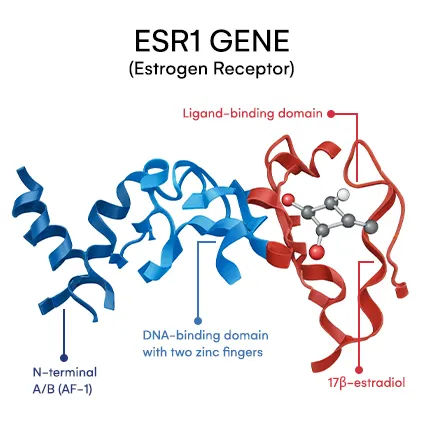
ESR1 encodes Estrogen Receptor Alpha, the principal nuclear receptor through which estrogen regulates gene expression across reproductive, skeletal, cardiovascular, neurological, and metabolic tissues. When estrogen binds to the receptor, the receptor undergoes a structural change that allows it to activate specific gene expression programs governing tissue maintenance, hormonal signaling, and physiological balance. Variants that affect receptor sensitivity directly influence how strongly estrogen’s signals are received — shaping everything from menstrual symptom intensity to bone density trajectory and cardiovascular resilience.
ESR1 and Bone, Cardiovascular, and Mood Research
Research has linked specific ESR1 variants to differences in bone mineral density and fracture risk, though findings vary in strength across populations and some studies find associations with fracture risk that are independent of bone density itself. Cardiovascular associations are less consistent: several studies report elevated coronary heart disease risk tied to specific ESR1 genotypes, but these effects often appear in men only, differ by ethnic population, and other large studies have found no significant association at all. The link between ESR1 variants and mood sensitivity or serotonin regulation is biologically plausible but has considerably less direct human research behind it than the bone and cardiovascular findings.
ESR1 and Breast Cancer: Inherited Risk vs. Clinical Treatment Marker
ESR1 is also one of the most heavily studied genes in breast cancer research. Meta-analyses have associated several common ESR1 variants with modestly increased breast cancer risk, though — as with the bone and cardiovascular findings — individual studies vary in strength and consistency. Separately, and more clinically significant, ESR1 plays a central role in breast cancer treatment: whether a tumor is estrogen receptor-positive or -negative determines whether hormone-based therapies are likely to be effective. This is a distinct question from inherited variants and is assessed directly in tumor tissue, not through a general genetic profile. Because breast cancer risk and treatment are clinical matters, any personal concerns in this area are best discussed with a doctor or genetic counselor rather than inferred from a wellness-oriented report.
ESR1's Role Alongside Other Hormonal Genes
ESR1 interacts closely with genes including COMT, CYP19A1, SHBG, and PGR. Together, these genes may influence how estrogen is produced, transported, received, and metabolized throughout the body — forming a broader hormonal sensitivity profile that extends beyond receptor function alone.
How Lifestyle Influences ESR1
Although genes themselves are fixed, ESR1 receptor sensitivity and estrogen-related health outcomes are meaningfully shaped by nutrition, lifestyle, and environmental factors.
Nutrition
Diets rich in phytoestrogen-containing foods, cruciferous vegetables, and fiber support healthy estrogen metabolism and receptor signaling. Stable blood glucose levels reduce the metabolic burden on hormonal regulation systems connected to ESR1 function.
Sleep
Consistent, restorative sleep supports hormonal rhythm stability and the overnight recovery processes that estrogen receptor signaling depends on, particularly during hormonally dynamic life stages.
Stress
Chronic stress elevates cortisol, which can disrupt estrogen balance and heighten hormonal symptom sensitivity in individuals with more reactive ESR1 profiles. Regular stress-reduction practices support hormonal regulatory balance.
Movement
Regular weight-bearing and resistance exercise supports bone density maintenance through estrogen receptor pathways, particularly for individuals with ESR1 variants associated with lower skeletal estrogen sensitivity.
Habits
Long-term lifestyle consistency supports sustained estrogen receptor health, particularly across hormonally dynamic transitions like perimenopause and menopause, when ESR1 function becomes increasingly significant.
Signs You May Benefit From Understanding ESR1
How Lifecode Interprets ESR1 in Your Report
Our comprehensive interpretation analyzes your ESR1 variants alongside related hormonal and metabolic genes to provide personalized insights into your estrogen sensitivity profile, hormonal symptom tendencies, bone health trajectory, and cardiovascular and mood patterns across reproductive life stages. We prioritize actionable recommendations based on your complete genetic profile.
Lifestyle Guidance
Lifestyle Guidance
Practical recommendations — general lifestyle considerations, not medical advice.
Nutrition
Build meals around cruciferous vegetables, ground flaxseed, and soy-based foods, and pair carbohydrates with protein or fiber to avoid the glucose swings that add strain to hormonal regulation.
Recovery
Keep a consistent sleep and wake time, even on weekends, and treat 7–9 hours as a nightly baseline rather than a deficit to make up for later.
Stress Management
Build a short daily practice — a walk, breathwork, or journaling — rather than saving stress relief for occasional high-intensity resets; frequency matters more here than duration.
Supplement
Bring bone health, hormonal support, or estrogen metabolism supplements up in consultation rather than self-selecting them, since the right choice depends on your full variant profile and life stage.
Daily Habits
Track patterns over weeks rather than days — small habits kept up consistently outperform short bursts of intensity, especially heading into perimenopause and menopause.
Related Genes
FAQ
Frequently Asked Questions
ESR1 is the gene that encodes Estrogen Receptor Alpha, the main receptor through which estrogen sends signals to cells throughout the body. It doesn’t control hormonal health on its own, but it shapes how sensitively and efficiently your cells receive and respond to estrogen.
ESR1 regulates estrogen-driven gene expression in reproductive, skeletal, cardiovascular, and neurological tissues. Variants in the gene can influence how sensitive your tissues are to fluctuating estrogen levels — affecting things like menstrual symptom intensity, bone density maintenance, and cardiovascular resilience.
ESR1 is one of the most studied genes in breast cancer research, and some variants have been associated with modestly increased risk. Separately, ESR1 also plays a clinical role in breast cancer treatment — whether a tumor is estrogen receptor-positive or -negative determines whether hormone-based therapies will work. That tumor-status test is different from inherited variant risk, and any personal concerns are best discussed with a doctor or genetic counselor.
Yes — while the gene itself is fixed, ESR1 receptor sensitivity and estrogen-related outcomes are meaningfully shaped by nutrition, sleep, stress management, and movement, especially around hormonally dynamic stages like perimenopause and menopause.
It may. ESR1 is connected to serotonin, dopamine, and neuroplasticity pathways that support mood and cognitive function, but this link is biologically plausible rather than firmly established — it has far less direct human research behind it than the bone density and cardiovascular associations.
Speak to a Lifecode Consultant
“Understanding ESR1 helps you focus on resilience and recovery rather than chasing quick fixes.”