
Gene Overview
CYP1A2 (Caffeine Metabolism)
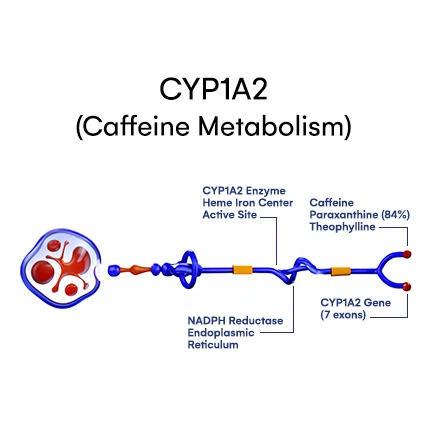
The CYP1A2 gene provides instructions for producing an enzyme in the liver that helps break down caffeine certain medications and several other compounds. This enzyme belongs to the cytochrome P450 family, which supports detoxification and metabolism of substances entering the body.
CYP1A2 does not determine caffeine tolerance alone. It influences how quickly caffeine is processed and cleared from the bloodstream. Variations in this gene may affect how individuals respond to caffeine intake, shaping patterns in alertness, sleep sensitivity, and cardiovascular response over time.
CYP1A2 is one of the primary enzymes responsible for caffeine metabolism, accounting for roughly 90–95% of caffeine breakdown in the liver.
Why CYP1A2 Matters for Your Health
CYP1A2 activity affects how the body processes caffeine and certain dietary compounds. Understanding this pathway helps explain differences in caffeine sensitivity, stimulant effects, and sleep patterns.
Caffeine Breakdown
Controls the speed at which caffeine is metabolized in the liver
Energy Response
Influences how long caffeine’s stimulating effects last
Sleep Sensitivity
Affects how caffeine intake may impact sleep timing
Detoxification Role
Supports metabolism of various environmental compounds
Cardiovascular Response
May influence how caffeine affects heart rate and blood pressure
Key Functions of CYP1A2
- Metabolizes caffeine in the liver
- Processes certain medications and dietary compounds
- Supports detoxification of environmental chemicals
- Influences stimulant sensitivity
- Regulates clearance of several metabolic substrates
- Contributes to individual differences in caffeine tolerance
How CYP1A2 Variations May Influence You
Genetic variations (polymorphisms) in CYP1A2 can affect how efficiently the enzyme functions.
Faster Metabolism Pattern
May process caffeine more quickly, leading to shorter stimulant effects.
Typical Metabolism Pattern
Usually reflects expected caffeine processing and moderate sensitivity.
Slower Metabolism Pattern
May experience longer caffeine effects, greater sensitivity, and benefit from moderated intake timing.
Scientific Foundation
Science Behind the CYP1A2 Gene
Caffeine Metabolism Mechanism
CYP1A2 converts caffeine into metabolites in the liver, which are then eliminated from the body. The rate of this process influences how long caffeine remains active in circulation.
Genetic Research Findings
Studies show that CYP1A2 variants influence caffeine metabolism speed. Differences in enzyme activity may affect caffeine tolerance, sleep disruption risk, and cardiovascular responses.
Pathway Integration
CYP1A2 interacts with detoxification pathways, liver metabolism systems, and environmental exposure responses, helping regulate how the body processes certain compounds.
How Lifestyle Influences CYP1A2 Activity
Genetic baseline exists, but metabolism can be influenced by environment and habits.
Nutrition
Certain foods and compounds may influence enzyme activity.
Sleep
Poor sleep may increase sensitivity to stimulants.
Stress
Stress hormones can modify stimulant response patterns.
Movement
Physical activity supports overall metabolic efficiency.
Habits
Consistent caffeine timing can improve tolerance and sleep quality.
Signs You May Benefit From Understanding CYP1A2
How Lifecode Interprets CYP1A2 in Your Report
Lifecode evaluates CYP1A2 alongside metabolism, detoxification, and lifestyle-response pathways. Interpretation focuses on patterns influencing caffeine metabolism speed, stimulant tolerance, and potential lifestyle adjustments for better sleep and energy balance. Insights are considered within the broader metabolic genetic context. This integrated approach helps provide personalized insights rather than relying on a single gene result.
Lifestyle Guidance
Practical Recommendations
These are general lifestyle considerations, not medical advice.
Nutrition
Monitor caffeine intake and observe personal response patterns.
Recovery
Protect sleep timing to support metabolic balance.
Stress Management
Reduce stimulant reliance during periods of chronic stress.
Movement
Regular activity supports healthy metabolic processing.
Daily Habits
Consistent caffeine timing and moderation help maintain energy stability. Keeping a simple caffeine and sleep log may help identify personal tolerance patterns.
Related Genes
FAQ
Frequently Asked Questions
The CYP1A2 gene produces a liver enzyme that breaks down caffeine and other compounds. It accounts for roughly 90–95% of caffeine metabolism, influencing how quickly caffeine clears from your bloodstream.
Variations in CYP1A2 determine whether you are a fast or slow caffeine metabolizer. Slower metabolizers may experience prolonged stimulant effects, greater sleep disruption, and higher cardiovascular sensitivity to caffeine.
Yes. While your genetic baseline is fixed, consistent caffeine timing, regular physical activity, balanced nutrition, and stress management can support better metabolic processing and reduce sensitivity-related discomfort.
Speak to a Lifecode Consultant
“Understanding CYP1A2 helps you focus on resilience and recovery rather than chasing quick fixes.”
