
Gene Overview
ALDH2 (Alcohol Sensitivity)
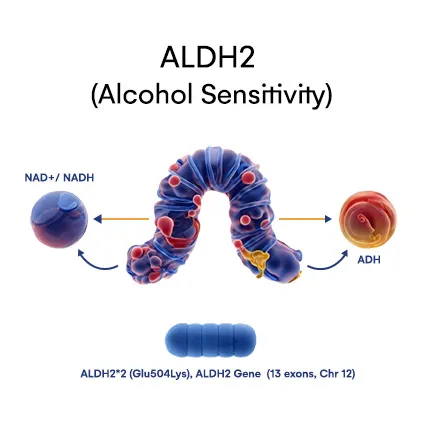
The ALDH2 gene provides instructions for producing aldehyde dehydrogenase 2, an enzyme that helps break down acetaldehyde, a toxic byproduct formed when the body metabolizes alcohol. This enzyme plays an important role in alcohol metabolism and cellular detoxification.
ALDH2 does not determine alcohol tolerance alone. ALDH2 does not solely determine alcohol tolerance; it works in combination with other enzymes such as ADH1B. It influences how efficiently the body converts acetaldehyde into less harmful compounds. Variations in this gene may affect alcohol sensitivity, flushing reactions, and long-term responses to alcohol exposure.
Why ALDH2 Matters for Your Health
ALDH2 activity affects how the body processes alcohol and manages toxic metabolic byproducts. Understanding this pathway helps explain differences in alcohol tolerance, metabolic stress, and cardiovascular responses after drinking.
Alcohol Breakdown
Helps convert acetaldehyde into less harmful substances
Toxin Removal
Supports detoxification of reactive aldehydes in cells
Cardiovascular Response
May influence blood vessel reactions during alcohol metabolism
Cellular Protection
Reduces buildup of harmful metabolic intermediates
Metabolic Stress Handling
Affects how the body responds to alcohol-related oxidative stress
Key Functions of ALDH2
- Converts acetaldehyde into acetate during alcohol metabolism
- Supports detoxification of reactive aldehydes
- Helps reduce oxidative stress in cells
- Influences alcohol tolerance and flushing responses
- Participates in cellular protection against metabolic toxins
- Contributes to metabolic stability during alcohol exposure
- Supports mitochondrial function, as ALDH2 is primarily located in mitochondria
How ALDH2 Variations May Influence You
This is not a diagnosis. It reflects tendencies shaped over time.
Higher Enzyme Efficiency Pattern
May support efficient acetaldehyde breakdown and reduced alcohol sensitivity.
Typical Enzyme Efficiency Pattern
Usually reflects expected alcohol metabolism and tolerance patterns.
Lower Enzyme Efficiency Pattern
May lead to stronger alcohol sensitivity, flushing reactions, and greater accumulation of acetaldehyde after drinking.
Scientific Foundation
Science Behind the ALDH2 Gene
Alcohol Metabolism Mechanism
When alcohol is consumed, it is first converted into acetaldehyde by alcohol dehydrogenase enzymes. ALDH2 then converts acetaldehyde into acetate, which the body can safely process and eliminate. Efficient ALDH2 activity prevents accumulation of acetaldehyde. If ALDH2 activity is reduced, acetaldehyde accumulates and causes flushing, rapid heart rate, and cellular toxicity
Health Research Associations
Certain ALDH2 variants are linked to stronger alcohol flushing reactions and increased sensitivity to alcohol exposure. Research also suggests interactions with cardiovascular and metabolic health pathways. The ALDH2*2 variant is particularly well studied and is common in East Asian populations.
Pathway Integration
ALDH2 interacts with detoxification systems, oxidative stress regulation, and mitochondrial function, helping cells manage reactive metabolic byproducts. It also plays a role in detoxifying aldehydes generated from lipid peroxidation (not just alcohol metabolism)
How Lifestyle Influences ALDH2 Activity
Genetic baseline exists, but lifestyle choices strongly influence alcohol-related outcomes.
Nutrition
Balanced nutrition supports detoxification and metabolic stability.
Sleep
Adequate sleep supports liver and metabolic recovery.
Stress
Chronic stress may increase oxidative burden during alcohol metabolism.
Movement
Regular physical activity supports overall metabolic health.
Habits
Moderation and awareness of alcohol intake reduce metabolic strain.
Signs You May Benefit From Understanding ALDH2
How Lifecode Interprets ALDH2 in Your Report
Lifecode evaluates ALDH2 alongside detoxification, oxidative stress, and metabolic pathways. Interpretation focuses on patterns influencing alcohol metabolism efficiency and cellular response to metabolic toxins. Insights are integrated within the broader genetic and lifestyle context rather than a single gene effect.
Lifestyle Guidance
Practical Recommendations
These are general lifestyle considerations, not medical advice.
Nutrition
Maintain balanced nutrition that supports liver metabolism.
Recovery
Prioritize sleep to support detoxification processes.
Stress Management
Reduce chronic stress that may increase metabolic strain.
Movement
Regular activity supports metabolic resilience.
Daily Habits
Moderate alcohol and steady routines aid metabolic balance. Low ALDH2 individuals should limit alcohol to reduce risks.
Related Genes
FAQ
Frequently Asked Questions
Reduced ALDH2 activity slows acetaldehyde breakdown after drinking, causing flushing, rapid heartbeat, and increased long-term health risks from toxic buildup.
Lifestyle cannot change your genotype, but limiting alcohol, improving sleep, and eating a balanced diet can meaningfully reduce metabolic stress.
Yes. ALDH2 also detoxifies aldehydes from cellular oxidative stress, influencing cardiovascular health and mitochondrial function regardless of alcohol consumption.
Speak to a Lifecode Consultant
“Understanding CYP1A2 helps you focus on resilience and recovery rather than chasing quick fixes.”
