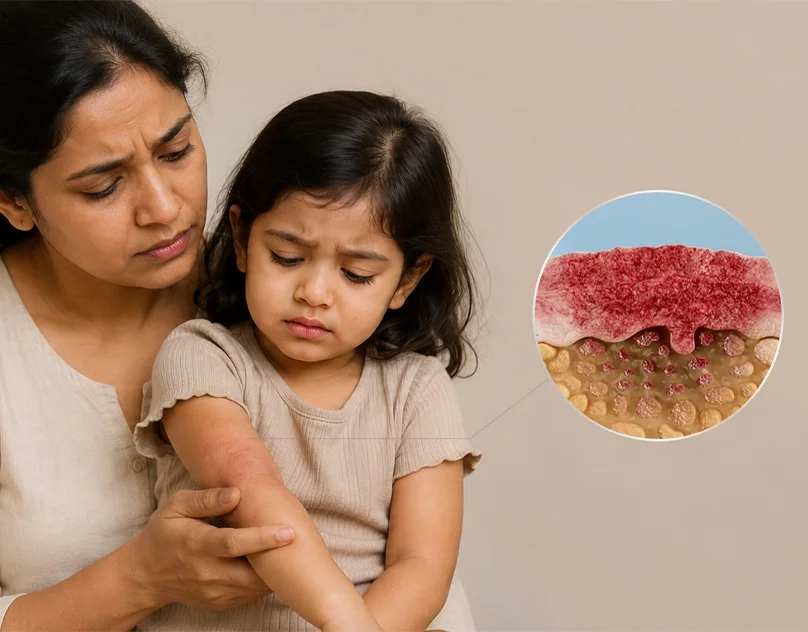
You have done everything by the book. You’ve consulted with nutritionists, swapped processed snacks for iron-rich greens and lentils, and perhaps even tried various supplements. Yet, every time the blood work comes back, the results are the same: “borderline.” It’s a frustrating cycle of effort without the expected reward. When a child iron deficiency despite iron rich food persists, most parents assume it’s a nutritional gap they haven’t filled yet.
But what if the issue isn’t what is going into their body, but how is their body programmed to receive it?
If your child’s haemoglobin levels seem stuck in a plateau, it’s time to look beyond the dinner plate and into the biological “gatekeepers” of their gut. This isn’t about a lack of effort; it’s about iron absorption in child’s genetics specific contexts, where the way a body processes nutrients is often decided at a cellular level long before the first bite of food is even taken.
The "Intake vs. Utilization" Misconception
We are often taught a simple equation: Input = Output. If a child eats enough spinach, pomegranate, or red meat, their iron levels should rise. However, the body does not simply absorb 100% of the minerals we consume. There is a massive distinction between iron intake and iron utilization efficiency.
While a diet rich in bioavailable iron is the foundation, the body’s internal transport system acts like a high-security border. For some children, this border is naturally more restrictive. This is why you might see a child with iron deficiency despite iron rich food even in households with meticulous meal planning. The body may be receiving the “shipment,” but the “gates” aren’t opening wide enough to let the iron into the bloodstream.
The Genetic Gatekeepers: TMPRSS6 and TF
To understand why some children, struggle with “stubborn” iron levels, we have to look at specific markers. In the world of nutrigenomics, two major players dictate how a child handles iron: the TMPRSS6 gene and the TF gene.
The TMPRSS6 Gene: The Iron Thermostat
The TMPRSS6 gene iron connection is one of the most significant discoveries in paediatric nutrition. This gene provides instructions for making a protein called matriptase-2, which acts as a regulator for hepcidin.
Think of hepcidin as the “stop sign” for iron absorption. When hepcidin levels are high, the body blocks iron from entering the blood. A specific variant in the TMPRSS6 gene can cause the body to keep that “stop sign” up longer than necessary, effectively lowering the child’s genetic absorption ceiling. In these cases, no matter how much iron-rich food is consumed, the body’s “thermostat” is set to “low absorption.”
The TF Gene: The Transport Vehicle
Once iron is absorbed through the gut wall, it needs a taxi to get to the bone marrow and other tissues. This taxi is a protein called Transferrin, governed by the TF gene. If a child has a genetic variant that impacts the efficiency of these transport vehicles, the iron may enter the body but fail to reach its destination effectively. This can lead to a scenario of child’s low haemoglobin genetics where the raw materials are present, but the logistics are flawed.
Why "Standard" Advice Often Fails
In many regions, including the specific demographic of iron absorption in child’s genetics, standard pediatric advice focuses heavily on increasing dosage. However, if a child has a “low absorption ceiling” due to their TMPRSS6 profile, simply “adding more” can sometimes lead to gastric distress without improving blood markers.
This is why even specialists sometimes miss this layer. They are looking for a disease, but what they are seeing is a “marker of absorption tendency.” Understanding these tendencies via a genetic iron absorption test based or globally accessible service can change the strategy from “more iron” to “smarter iron.”
Practical Steps: Bypassing the Genetic Ceiling
If genetics are playing a role in why child iron is always low, the solution isn’t just a better diet—it’s a more strategic one. Here is how parents can adapt:
Liposomal Iron: Some advanced forms of iron, like liposomal iron, use a delivery system that mimics the body’s cell membranes. This can sometimes bypass the traditional “gatekeepers” in the gut that are restricted by TMPRSS6 variants.
Synergistic Nutrients: It isn’t just about Vitamin C. Genetic insights might suggest that a child needs specific co-factors like Vitamin A or copper to help “unlock” the iron already stored in their tissues.
Timing and Inhibitors: For children with sensitive genetic absorption markers, even small amounts of calcium or tannins (found in some teas or chocolates) consumed near mealtime can completely shut down an already narrow absorption window.
These insights are meant to empower your conversation with a professional. Always consult a pediatrician or a hematologist before making any changes to your child’s supplementation or medical routine. Genetic markers indicate tendencies, not a clinical diagnosis.
Moving Beyond the "Borderline"
Seeing your child stuck at a “borderline” reading, check-up after check-up is exhausting. It leads to “parental guilt” regarding the diet—a guilt that is often entirely misplaced. By understanding that child iron deficiency despite iron rich food can be a matter of biological programming rather than kitchen habits, you can stop “fixing the diet” and start “supporting the system.”
A genetic iron absorption test India context provides a roadmap. Instead of guessing why the haemoglobin isn’t rising, you can see the actual blueprints of your child’s internal transport system.
Learn More from the Genome Library
TMPRSS6 Gene Explained – Deep dive into the iron regulator.
Micronutrient Cluster – How B12, Folate, and Iron work together.
Nutrigenomics Section – The science of food and DNA.
Don’t stay in the dark about why the numbers aren’t moving. Understand your child’s nutrient absorption genetics. Empower your next paediatrician visit by exploring the Children’s Health Blueprint.