
Gene Overview
NAD+ Metabolism Pathway
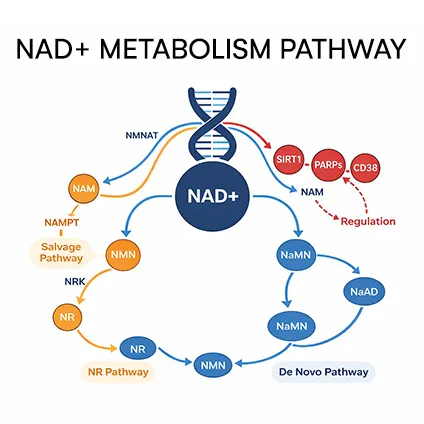
The NAD+ metabolism pathway refers to the biological processes that produce, recycle, and regulate nicotinamide adenine dinucleotide (NAD+), a molecule present in every living cell. NAD+ is a coenzyme essential for converting nutrients into cellular energy and supporting repair systems. The NAD+ metabolism pathway does not act as a longevity switch. It governs how efficiently cells generate and reuse NAD+
A molecule central to energy production and repair. NAD+ levels naturally decline with age and chronic stress. The speed of that decline influences how well cells sustain energy balance, manage damage, and adapt to metabolic demand.
Why the NAD+ Metabolism Pathway Matters for Your Health
NAD+ sits at the crossroads of energy, repair, and stress response. Understanding this pathway helps explain differences in stamina, recovery speed, and age-related energy loss.
Cellular Energy
Supports efficient conversion of nutrients into usable energy through mitochondrial oxidative metabolism
Aging
Linked to age-related decline in repair and metabolic flexibility
Stress Adaptation
Helps cells respond to physical and metabolic strain
DNA Repair
Supplies fuel for repair enzymes during cellular damage
Recovery
Influences how quickly cells rebound after depletion
Key Functions of the NAD+ Metabolism Pathway
- Drives mitochondrial energy production
- Fuels DNA repair processes
- Supports cellular stress signaling
- Regulates metabolic efficiency
- Maintains redox balance between NAD+ and NADH
- Contributes to resilience under energetic demand
How NAD+ Pathway Efficiency May Influence You
This is not a diagnosis. It reflects tendencies shaped over time.
Higher Efficiency Variant
May support steadier energy levels, stronger repair capacity, and improved stress tolerance.
Typical Efficiency Pattern
Usually reflects expected energy regulation without pronounced benefit or limitation.
Lower Efficiency Variant
May experience faster energy depletion and benefit from stronger recovery-focused habits.
Scientific Foundation
Science Behind the NAD+ Metabolism Pathway
Energy and Repair Coupling
coenzyme and electron carrier. It transfers electrons during energy production and activates enzymes involved in repair and stress response. When supply drops, both energy output and repair capacity decline.
Aging and Decline
Research shows NAD+ levels fall with age and chronic stress exposure. This decline is associated with reduced mitochondrial performance and slower cellular recovery.
Pathway Integration
NAD+ metabolism interfaces with nutrient sensing, stress signaling, and repair systems, adjusting output based on cellular demand.
How Lifestyle Influences the NAD+ Metabolism Pathway
Genetics set the baseline, but activity depends heavily on behavior.
Nutrition
Adequate, consistent intake supports NAD+ recycling.
Sleep
Rest allows restoration of cellular energy balance.
Stress
Chronic stress accelerates NAD+ depletion by increasing repair and inflammatory demand
Movement
Regular activity promotes efficient energy turnover.
Habits
Sustained routines preserve energy capacity better than short interventions.
Signs You May Benefit From Understanding NAD+ Metabolism
How Lifecode Interprets NAD+ Metabolism in Your Report
Lifecode analyzes NAD+ related markers alongside energy, repair, and stress pathways. Interpretation focuses on patterns affecting energy sustainability, recovery capacity, and metabolic resilience. Insights are prioritized based on your full genetic context.
Lifestyle Guidance
Practical Recommendations
These are general lifestyle considerations, not medical advice.
Nutrition
Avoid repeated cycles of depletion and excess.
Recovery
Protect downtime to restore cellular energy.
Stress Management
Reduce chronic drains on energy systems.
Supplements
Energy-support strategies may be discussed during consultation.
Daily Habits
Stability matters more than intensity.
Related Topics
FAQ
Frequently Asked Questions
Research shows declining NAD+ reduces mitochondrial performance, slows DNA repair, and lowers stress tolerance. This scientifically linked decline increases fatigue risk and reduces cellular recovery capacity over time.
NAD+ governs energy production, repair enzyme activation, and stress adaptation. Studies associate lower NAD+ efficiency with reduced metabolic flexibility, slower recovery, and increased vulnerability to age-related cellular damage and chronic fatigue.
Lifecode examines clinically relevant genetic markers linked to NAD+ production, recycling, and repair signaling. Our expert analysis delivers evidence-based insights into your energy sustainability, metabolic resilience, and recovery capacity across your full genetic profile.
Speak to a Lifecode Consultant
“Understanding NAD+ Metabolism Pathway
helps you focus on resilience and recovery rather than chasing quick fixes.”
