
Gene Overview
HLA Genes (Allergy & Immune Sensitivity)
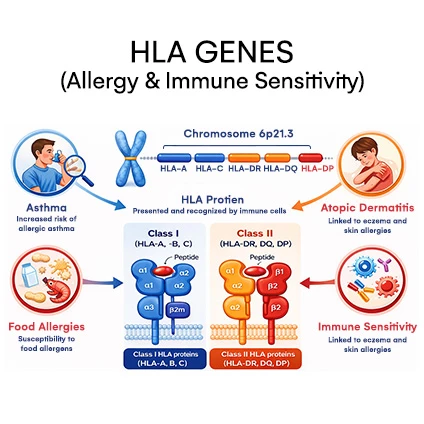
HLA genes do not determine whether a child will develop allergies or immune sensitivities, but they contribute significantly to how the developing immune system learns to distinguish harmless substances from genuine threats during the critical early years of life.
The Human Leukocyte Antigen system encodes proteins that are fundamental to immune education in childhood — the process by which a developing immune system is trained to tolerate foods, environmental exposures, and the body’s own tissues. Certain variations are associated with differences in allergic reactivity, food sensitivity thresholds, immune tolerance development, and inflammatory responses that can emerge and evolve from infancy through adolescence.
Why HLA Variants Matter for Your Health
HLA genes have broad implications across multiple areas of childhood immune development and long-term health trajectory. Understanding HLA in a pediatric context helps explain why some children develop sensitivities to foods, pollens, or environmental triggers earlier or more intensely than others, and why early immune environment shapes lifelong immune patterns.
Allergy Development
Influences the likelihood and severity of allergic responses to food proteins, environmental allergens, and airborne triggers during childhood
Immune Tolerance Learning
Shapes how effectively the developing immune system learns to tolerate harmless dietary and environmental substances in early life
Food Sensitivity
Certain HLA variants are directly linked to immune reactivity to specific food proteins such as gluten, affecting how the gut and immune system respond from early childhood
Skin & Respiratory Reactivity
Influences the threshold for inflammatory responses in the skin, airways, and mucosal surfaces commonly affected in childhood allergic conditions
Gut Immune Development
Plays a role in shaping gut-associated immune tolerance, which underpins broader immune calibration throughout childhood development
Key Functions of HLA Genes in Pediatric Development
- Encode proteins responsible for immune antigen presentation during the critical immune education window of early childhood
- Guide the developing immune system in learning to distinguish harmless from harmful substances
- Regulate T-cell tolerance training in the thymus and gut-associated lymphoid tissue
- Influence the threshold at which immune responses are triggered by dietary or environmental antigens
- Shape the inflammatory response profile that underlies childhood allergic and sensitivity conditions
- Contribute to the long-term calibration of immune reactivity patterns that persist into adulthood
How HLA Variants May Influence Your Child
This is not a diagnosis. It indicates tendencies that can be influenced through early environment and daily choices.
Higher Efficiency Variant
May support more precise immune tolerance learning, lower allergic reactivity, and stronger early-life immune discrimination between harmless and harmful substances.
Moderate Variant
Typically indicates balanced immune development with no major advantage or limitation in allergic sensitivity or immune tolerance acquisition.
Lower Efficiency Variant
May benefit from additional attention to early immune environment, dietary introduction strategies, and lifestyle support to guide healthy immune tolerance development and manage sensitivity tendencies effectively.
Scientific Foundation
Science Behind HLA Genes in Allergy & Immune Sensitivity
Immune Education in Early Life
During the first years of life, the immune system undergoes a critical learning phase in which it is exposed to thousands of dietary, microbial, and environmental antigens. HLA proteins play a central role in this process by presenting antigen fragments to developing T-cells, which then determine whether a tolerance or reactivity response is established. The quality of this immune education process significantly influences allergy and sensitivity patterns throughout childhood and beyond.
HLA & Allergy Research
Research has identified strong associations between specific HLA variants and childhood-onset immune sensitivities including celiac disease, peanut allergy, cow’s milk protein sensitivity, and atopic conditions such as eczema and allergic rhinitis. These associations reflect differences in how efficiently the immune system processes and tolerates common antigens during developmental windows, rather than representing fixed disease outcomes.
The Hygiene Hypothesis & HLA Context
Studies exploring the relationship between early microbial exposure, immune development, and HLA type have contributed to the understanding that the immune system requires diverse early-life environmental input to calibrate correctly. HLA variants modulate how effectively this calibration occurs, connecting genetic predisposition with the developmental environment.
Gene Interactions
HLA genes interact with genes like IL–4, IL–13, FOXP3, and STAT6, collectively shaping the balance between tolerogenic and reactive immune responses in the developing child. The interaction between HLA type and early gut microbiome composition is a particularly active area of pediatric immune research.
How Lifestyle & Environment Influence HLA Gene Expression in Children
Although genes are fixed, HLA-associated immune development in children is profoundly shaped by early environmental inputs, feeding practices, and lifestyle factors.
Nutrition
Diverse, age-appropriate dietary introduction during the early immune education window supports healthy tolerance development. Diets rich in varied plant foods, fermented foods, and prebiotic fibre help shape the gut microbiome environment that interacts with HLA-driven immune calibration.
Sleep
Consistent, age-appropriate sleep supports immune memory formation, regulatory immune cell development, and the resolution of low-grade inflammatory activity that can accompany HLA-associated sensitivity patterns in children.
Stress Recovery
A calm, supportive early environment contributes to healthy immune regulation. Chronic early-life stress is known to influence immune tone and inflammatory thresholds, interacting with HLA-related immune sensitivity tendencies.
Movement
Regular age-appropriate physical activity supports healthy immune surveillance and promotes anti-inflammatory signalling that complements HLA-related immune function during development.
Habits
Long-term consistency in early environmental and lifestyle inputs matters more than isolated interventions — the developing immune system is shaped by sustained, repeated exposures and routines across the childhood years.
Signs Your Child May Benefit From Understanding HLA Genes
How Lifecode Interprets HLA Genes in Your Child's Report
Our comprehensive interpretation analyzes your child’s HLA variants alongside related pediatric immunity and sensitivity genes to provide personalized insights into allergic reactivity tendencies, immune tolerance development patterns, food sensitivity risk, and early immune environment considerations. We categorize findings and prioritize actionable recommendations based on your child’s complete genetic profile.
Lifestyle Guidance
Practical Recommendations
These are general lifestyle considerations, not medical advice.
Nutrition
Support diverse, age-appropriate dietary exposure during early developmental windows and prioritize gut-nourishing foods to promote healthy immune tolerance alongside HLA-associated immune development.
Recovery
Establish consistent, age-appropriate sleep routines to support immune regulation, healthy inflammatory balance, and immune memory development in line with your child's genetic profile.
Stress Management
Foster a calm, predictable, and emotionally supportive daily environment to help maintain immune balance and reduce the amplification of HLA-related sensitivity responses during childhood.
Supplements
General immune-support and gut-health supplementation relevant to pediatric needs may be discussed during consultation.
Daily Habits
Focus on consistency over intensity — stable early-life routines, diverse environmental exposure, and sustained dietary variety may provide the meaningful long-term benefit for HLA-related pediatric immune development and sensitivity management.
FAQ
Frequently Asked Questions
HLA genes train your child’s immune system to identify safe substances from real threats, directly influencing allergy risk, food sensitivity, and immune tolerance development.
No. An HLA variant indicates tendency, not certainty. Early diet, environment, and lifestyle choices significantly influence whether these genetic tendencies ever develop into actual allergies.
The first few years are critical. During this window, the immune system actively learns tolerance. Early nutrition and environment shape how HLA variants express lifelong.
Possibly. HLA variants are linked to eczema, food sensitivities, and gut reactivity. A Lifecode report provides useful genetic context alongside professional clinical evaluation and diagnosis.
Lifecode analyses HLA variants alongside immune genes, delivering personalised insights on allergy risk, food sensitivity, and immune tolerance to guide smarter early-life health decisions.
Speak to a Lifecode Consultant
“Understanding HLA Genes (Allergy & Immune Sensitivity) helps you focus on resilience and recovery rather than chasing quick fixes.”