
Gene Overview
DRD2 (Dopamine Receptor D2)
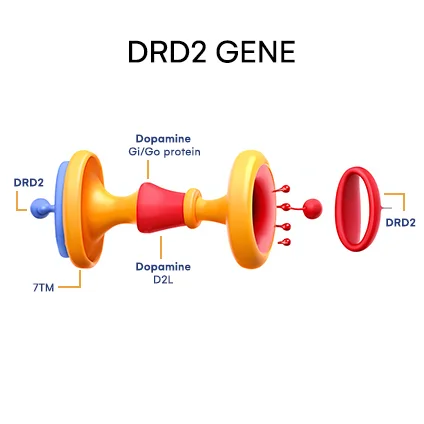
The DRD2 gene provides instructions for producing the D2 dopamine receptor, a protein found throughout the brain’s reward and motivation circuits. This receptor plays a key role in how the brain responds to dopamine signals, influencing feelings of reward, satisfaction, and motivation. DRD2 does not determine behavior alone.
It operates in combination with other genetic, environmental, and lifestyle factors and influences how efficiently the brain processes dopamine-driven feedback and manages reward responses. Variations in the DRD2 gene may affect reward sensitivity, craving patterns, and motivational balance over time.
Why DRD2 Matters for Your Health
DRD2 supports essential neurochemical processes that maintain motivational and behavioral balance. Understanding this pathway helps explain differences in reward sensitivity and dopamine signaling efficiency.
Reward Processing
Modulates how the brain registers and responds to pleasurable stimuli
Craving Regulation
Influences the intensity and persistence of reward-seeking behavior
Motivation & Drive
Helps balance inflammatory signals linked to metabolic health
Impulse Modulation
Contributes to behavioral regulation and decision-making pathways
Dopamine Clearance
Participates in feedback loops that regulate dopamine availability
Key Functions of DRD2
- Modulates dopamine receptor sensitivity in reward circuits
- Supports signaling balance across the mesolimbic pathway
- Regulates feedback inhibition of dopamine release
- Participates in motivation, habit formation, and behavioral reinforcement
- Contributes to emotional regulation and stress response pathways
- Maintains neurochemical balance in reward-related brain regions
How DRD2 Variations May Influence You
This is not a diagnosis. It reflects tendencies shaped over time.
Higher Receptor Density Pattern
May support efficient dopamine signaling and balanced reward processing, with stable motivational responses.
Typical Receptor Density Pattern
Usually reflects expected dopamine feedback and motivational stability under normal conditions.
Lower Activity Pattern
May experience reduced dopamine signal sensitivity and therefore may benefit from consistent lifestyle habits that support healthy reward balance.
Scientific Foundation
Science Behind the DRD2 Gene
Dopamine Receptor Mechanism
DRD2 encodes a G-protein coupled receptor that binds dopamine and inhibits further dopamine release through autoreceptor feedback. This mechanism helps regulate the intensity and duration of reward signals in the brain.
Behavioral Research Associations
Research links certain DRD2 variants particularly the Taq1A polymorphism with differences in dopamine receptor availability and associations with reward sensitivity, addictive tendencies, and impulse control. These effects depend on environmental context, lifestyle, and broader neurochemical pathways.
Pathway Integration
DRD2 interacts with the mesolimbic dopamine system, prefrontal cortical circuits, and stress response pathways, coordinating reward signaling with behavioral regulation and emotional balance.
How Lifestyle Influences ADIPOQ Function
Genetic baseline exists, but dopamine system balance responds strongly to lifestyle inputs.
Nutrition
Adequate intake of tyrosine, B vitamins, and micronutrients supports dopamine synthesis pathways
Sleep
Consistent sleep supports dopamine receptor restoration and neurological balance
Stress
Chronic stress may dysregulate reward circuits and amplify craving responses
Movement
Regular physical activity supports dopamine release and receptor sensitivity
Habits
Long-term behavioral consistency helps reinforce stable reward pathways
Signs You May Benefit From Understanding DRD2
How Lifecode Interprets DRD2 in Your Report
Lifecode evaluates DRD2 alongside reward signaling, neurotransmitter metabolism, and stress response pathways. Interpretation focuses on patterns affecting dopamine receptor efficiency and motivational balance. Insights are assessed within the broader neurological genetic network rather than based on a single gene result.
Lifestyle Guidance
Practical Recommendations
These are general lifestyle considerations, not medical advice.
Nutrition
Maintain a diet that supports adequate dopamine precursor and cofactor intake
Recovery
Prioritize sleep to support receptor restoration and neurological balance
Stress Management
Reduce chronic stress that may increase demand on reward regulation pathways
Movement
Engage in regular physical activity to support dopamine system health
Daily Habits
Consistent behavioral and lifestyle routines help maintain neurochemical stability
FAQ
Frequently Asked Questions
The DRD2 gene controls how your brain receives and responds to dopamine the chemical responsible for feelings of pleasure, motivation, and satisfaction. Think of it as the brain’s reward antenna. How well that antenna works depends partly on your DRD2 gene.
Yes. If your DRD2 gene affects how well your brain receives dopamine signals, you may notice stronger cravings, difficulty feeling satisfied, or low motivation. This is a biological tendency, not a personal weakness, and lifestyle habits can significantly support balance.
Yes. Regular exercise, balanced nutrition, quality sleep, and stress management can positively influence adiponectin levels and support better metabolic gene expression.
- Protein-rich foods — chicken, eggs, fish, and legumes provide tyrosine, the building block of dopamine
- Bananas and avocados — natural sources of dopamine precursors and healthy fats
- Dark chocolate — supports dopamine release in moderate amounts
- Green tea — contains L-theanine which supports calm, focused dopamine activity
- Leafy greens and whole grains — provide B vitamins essential for dopamine synthesis
- Nuts and seeds — magnesium and zinc support healthy neurotransmitter balance
Lifecode analyzes your DRD2 gene alongside your broader dopamine and reward signaling genetic profile to provide simple, personalized guidance on nutrition, daily habits, sleep, and stress management — helping you support long-term motivational balance, emotional well-being, and healthier behavioral patterns.
Speak to a Lifecode Consultant
“Understanding DRD2 helps you focus on resilience and recovery rather than chasing quick fixes.”