
Gene Overview
DNA Repair Pathways
DNA repair is a continuous, tightly regulated biological process that maintains genomic integrity throughout life. DNA repair pathways do not prevent damage. They determine how accurately the body fixes it. Every cell experiences DNA breaks and errors each day from normal metabolism and environmental exposure.
Repair pathways detect these faults, correct them, or isolate damaged cells. Differences in repair efficiency influence long-term cellular stability rather than immediate health outcomes.
Why DNA Repair Pathways Matter for Your Health
Accurate repair protects the integrity of genetic information over time. Understanding
these pathways explains why some bodies tolerate cumulative stress better than others.
Genomic Stability
Preserves accurate genetic instructions
Aging
Slows accumulation of cellular errors
Cancer Defense
Helps prevent damaged cells from propagating
Stress Recovery
Supports restoration after chemical or physical stress
Cell Survival
Determines whether cells repair or shut down
Key Functions of DNA Repair Pathways
- Detects DNA damage and structural errors
- Repairs single- and double-strand breaks
- Corrects replication mistakes
- Maintains chromosome integrity
- Coordinates cell cycle checkpoints
- Prevents propagation of damaged cells
- Trigger programmed cell death (apoptosis) when repair is not possible
How DNA Repair Capacity May Influence You
This is not a diagnosis. It reflects long-term tendencies shaped by exposure and habits.
High Repair Accuracy Pattern
May support stronger cellular stability and reduced error accumulation.
Typical Repair Pattern
Generally reflects expected repair performance over a lifetime.
Lower Repair Efficiency Pattern
May benefit from stronger focus on recovery and exposure management.
Scientific Foundation
Science Behind DNA Repair Pathways
Constant Maintenance
Cells experience thousands of DNA lesions daily. Multiple repair systems operate in
parallel to fix different types of damage, from small base errors to major strand breaks.
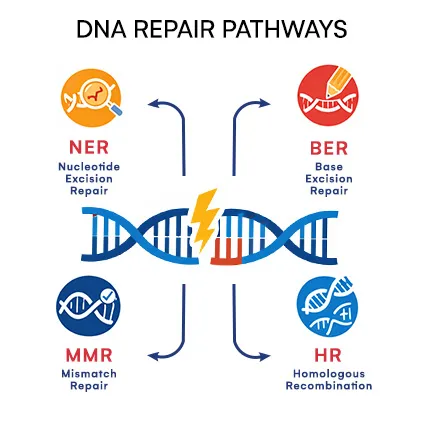
Primary repair mechanisms include base excision repair (BER), nucleotide excision repair
(NER), mismatch repair (MMR), and double-strand break repair pathways.
Aging and Error Accumulation
Research shows repair efficiency declines with age and chronic stress. Reduced accuracy allows errors to accumulate, contributing to aging-related decline.
System Coordination
DNA repair works alongside cell cycle control and stress-response systems to decide whether repair, pause, or removal is the safest outcome.
How Lifestyle Influences DNA Repair Pathways
Genetic capacity sets the framework, but environmental load matters.
Nutrition
Adequate intake supports repair enzyme function.
Sleep
Repair activity increases during consistent sleep cycles.
Stress
Long-term elevated cortisol levels can impair cellular recovery processes
Movement
Regular activity supports cellular turnover and repair efficiency.
Habits
Long-term exposure patterns outweigh short-term changes. Reducing exposure to smoking, pollution, and excessive UV radiation lowers DNA repair burden.
Signs You May Benefit From Understanding DNA Repair
How Lifecode Interprets DNA Repair Pathways in Your Report
Lifecode analyzes DNA repair-related markers alongside oxidative stress, inflammation, and cell-cycle genes. Interpretation focuses on repair accuracy, recovery capacity, and long-term genomic stability. Insights are prioritized using your full genetic profile.
Lifestyle Guidance
Practical Recommendations
These are general lifestyle considerations, not medical advice.
Nutrition
Avoid prolonged deficiencies or extreme restriction.
Recovery
Protect regular rest periods for repair.
Stress Management
Limit chronic exposure where possible.
Supplements
General cellular support may be discussed during consultation.
Daily Habits
Consistency supports repair accuracy over time
FAQ
Frequently Asked Questions
DNA repair mechanisms include base excision repair, nucleotide excision repair, mismatch repair, homologous recombination, and non-homologous end joining. These systems fix DNA damage and maintain genetic stability.
Cells use DNA damage recognition proteins and surveillance pathways. The DNA damage response activates repair enzymes and cell cycle checkpoints to correct replication errors, strand breaks, and environmental damage.
Defective DNA repair causes genetic mutations and repair-deficient diseases, including cancer. Some therapies target repair pathways, making cancer cells more sensitive to treatment while protecting normal cells.
Speak to a Lifecode Consultant
“Understanding DNA Repair Pathways helps you focus on resilience and recovery rather than chasing quick fixes.”
