
Gene Overview
AMPK Pathway
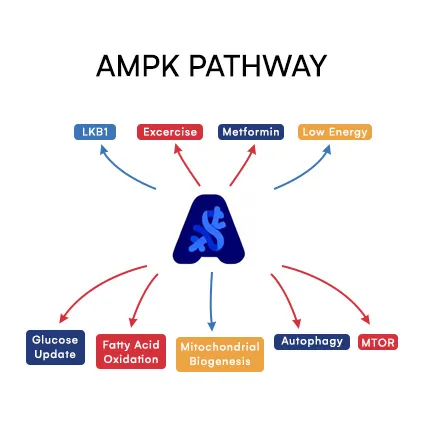
The AMPK pathway does not boost energy. It decides how energy is used when supply is limited. AMPK acts as the cell’s fuel gauge. When energy drops, it shifts priorities away from growth and toward survival, efficiency, and repair.
Differences in AMPK signaling reflect how quickly and effectively the body adapts to energetic stress.
Why the AMPK Pathway Matters for Your Health
AMPK influences how the body responds to scarcity, effort, and metabolic pressure. Understanding this pathway explains why some people adapt well to stress while others experience earlier fatigue.
Energy Balance
Redirects energy toward essential functions
Metabolic Flexibility
Helps cells switch between fuel sources
Aging
Supports maintenance during low-energy states
Stress Tolerance
Improves survival during physical or metabolic strain
Recovery Efficiency
Affects how quickly balance is restored after demand
Key Functions of the AMPK Pathway
- Senses cellular energy availability
- Slows energy-consuming processes when fuel is low
- Activates repair and maintenance systems
- Promotes efficient fuel use
- Coordinates stress-adaptation signaling
- Supports long-term metabolic stability
How AMPK Pathway Activity May Influence You
This is not a diagnosis. It reflects adaptive tendencies shaped over time.
Highly Responsive Pattern
May support strong energy efficiency, better endurance, and improved stress adaptation.
Balanced Pattern
Typically reflects stable energy sensing without strong extremes.
Lower Responsiveness Pattern
May experience slower adaptation to energy stress and benefit from structured recovery routines.
Scientific Foundation
Science Behind the AMPK Pathway
Energy Sensing Mechanism
AMPK is activated when cellular energy levels fall. Once triggered, it shifts cellular behavior away from growth and toward conservation, repair, and efficiency.
Metabolic and Aging Research
Studies associate AMPK activation with improved metabolic health and resilience during aging. Reduced responsiveness is linked to inefficient energy use under stress.
Pathway Coordination
AMPK interacts with nutrient sensing, repair, and stress-response systems, helping cells decide when to conserve, repair, or resume growth.
How Lifestyle Influences the AMPK Pathway
Genetics define sensitivity, but daily inputs control activation.
Nutrition
Consistent intake supports balanced energy sensing.
Sleep
Adequate rest restores energy signaling accuracy.
Stress
Chronic stress may disrupts energy prioritization.
Movement
Regular activity naturally stimulates adaptive energy signaling.
Habits
Long-term patterns shape responsiveness more than short-term efforts.
Signs You May Benefit From Understanding the AMPK Pathway
How Lifecode Interprets the AMPK Pathway in Your Report
Lifecode evaluates AMPK-related markers alongside metabolic, stress, and recovery pathways. Interpretation focuses on how efficiently your body senses energy demand and adjusts priorities under pressure. Insights are integrated across your broader genetic profile.
Lifestyle Guidance
Practical Recommendations
These are general lifestyle considerations, not medical advice.
Nutrition
Avoid prolonged imbalance between intake and demand.
Recovery
Allow regular periods of low demand to restore balance.
Stress Management
Reduce continuous energy drain where possible.
Supplements
Energy-support strategies may be discussed during consultation.
Daily Habits
Efficiency builds through consistency, not intensity.
Related Topics
FAQ
Frequently Asked Questions
AMPK acts as your cell’s fuel gauge, sensing energy drops and activating repair and survival systems. Studies associate stronger AMPK signaling with better metabolic flexibility, endurance, and long-term aging resilience.
Reduced AMPK responsiveness is linked to inefficient energy use, slower stress adaptation, and increased fatigue risk. Research suggests this may reduce metabolic recovery capacity and lower tolerance to prolonged physical or metabolic strain over time.
Lifecode evaluates clinically relevant AMPK-related genetic markers alongside metabolic, stress, and recovery pathways. Our expert analysis delivers evidence-based insights into your energy-sensing efficiency, stress adaptation capacity, and long-term metabolic health across your full genetic profile.
Speak to a Lifecode Consultant
“Understanding AMPK Pathway helps you focus on resilience and recovery rather than chasing quick fixes.”
