In the world of health and longevity, one name comes up more than almost any other: mTOR. It sounds like something out of a science fiction movie, but it is actually one of the most important systems inside your body.
Think of mTOR as the “General Manager” of your cells. It decides when your body should build new parts and when it should stop cleaning up and repairing the old ones. Understanding what the mTOR pathway controls is a key secret to living a longer, healthier life.
What is the mTOR Pathway?
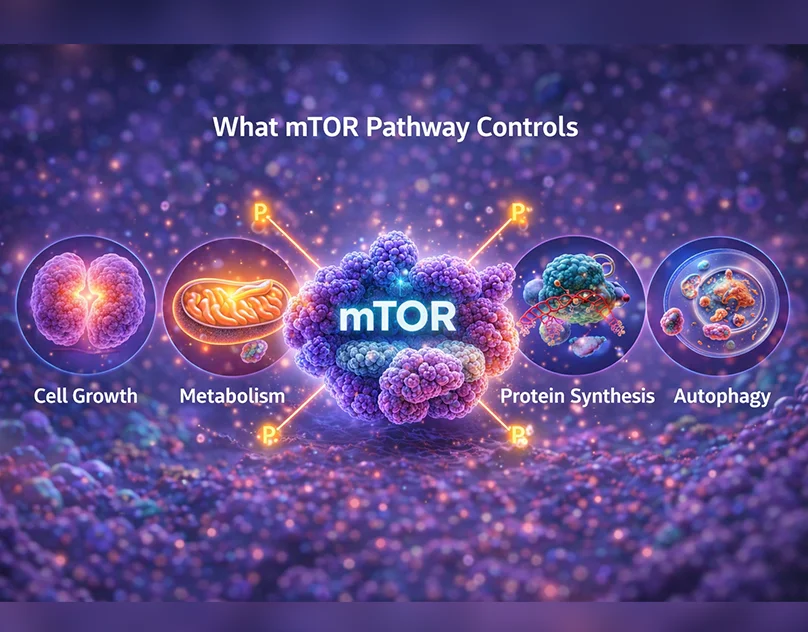
The mechanistic target of rapamycin (mTOR)… is a serine-threonine protein kinase that regulates cell growth, cell proliferation, cell motility, cell survival, protein synthesis, autophagy, and transcription.”
In simpler terms, mTOR is a protein that acts like a smart switch. It listens to the environment around your cells. When it senses that you have plenty of food and energy, it flips the “Growth” switch. When it senses that resources are low, it flips the “Repair” switch.
What mTOR Pathway Controls: The Two Modes
Your body has two main jobs: growing and maintaining itself. mTOR is the boss that chooses which job to focus on at any given time.
1.The Growth Mode (Anabolism)
When mTOR is active (turned “on”), your body is in building mode. It focuses on:
Making Proteins: Creating the building blocks for your muscles and organs.
Cell Division: Making new cells to replace old ones or to help you grow.
Building Energy Stores: Storing fat and nutrients for later use.
This mode is very important when we are young and growing, or when we are trying to build muscle at the gym.
2.The Repair Mode (Autophagy)
When mTOR is quiet (turned “off” or “inhibited”), your body shifts its focus to maintenance. This triggers a process called autophagy.
Autophagy as the natural, regulated mechanism of the cell that removes unnecessary or dysfunctional components. Think of it as a “cellular vacuum cleaner.” During this time, your cells:
Clean out broken proteins.
Repair damaged DNA.
Recycle old cell parts into new energy.
Why the Balance Matters for Longevity
The problem for many of us in the modern world is that our mTOR switch is stuck in the “on” position. Because we have constant access to food—especially proteins and sugars—our bodies stay in growth mode all the time.
While growth is good, too much of it can lead to problems as we age. Research has shown that:
Lifespan: Scientists have found that slowing down mTOR activity can increase the lifespan of many different animals, from tiny worms to mice.
Disease Prevention: Keeping mTOR balanced helps protect against age-related issues like heart disease, memory loss, and even some types of cancer.
Healthspan: It isn’t just about living longer; it’s about staying strong and sharp for all of those years.
Did You Know? The word “Rapamycin” in mTOR comes from a compound found on Easter Island. This compound was the first thing scientists discovered that could safely slow down the mTOR switch to help with health.
The Role of Genetic Testing: Finding Your Personal Balance
Everyone’s mTOR switch is a little bit different. Some people have a pathway that is very sensitive and turns on easily, while others might have a switch that stays “off” longer. This is why genetic testing is so valuable.
Genetic testing allows you to look at your DNA to see the specific instructions your body was born with. Here is how it helps:
Understanding Sensitivity: A genetic test can show if your mTOR pathway is likely to be overactive. If it is, you might benefit more from strategies like intermittent fasting.
Personalized Diet: Not everyone reacts to protein the same way. Testing can help you understand how much protein your body needs to stay strong without over-activating your growth signals.
Smart Exercise: Your genes can tell you how your body handles the stress of exercise, which is a natural way to pulse the mTOR switch.
Instead of following a “one-size-fits-all” health plan, genetic testing gives you a customized roadmap based on your unique biology.
How to Manage Your mTOR Switch
You have the power to influence your mTOR pathway through your daily habits. Here are a few ways to keep it in balance:
Protein Timing: Eating high amounts of protein (especially leucine) turns mTOR “on.” Spacing out your protein intake can give your body time to switch back to repair mode.
Intermittent Fasting: Going for periods without food is the most effective way to quiet mTOR and start the “cellular cleaning” process.
Healthy Movement: Strength training pulses the mTOR switch to build muscle, while endurance exercise helps keep your metabolism flexible.
Take Control of Your Aging with LifeCode
Your journey to a longer life starts with understanding how your body works. At LifeCode, we specialize in helping you unlock the secrets hidden in your DNA. Managing the mTOR pathway is a delicate balance, and we are here to provide the data you need to get it right.
Our LifeCode Panel Advanced Genetic Testing offers a comprehensive look at your longevity genes and pathways, including mTOR. By knowing your results, you can stop guessing and start living with a plan that is truly yours.
Take Your Next Step Today:
Order a Genetic Testing Kit (Swab Test): Start your journey from the comfort of your home with a simple, painless kit.
Book a Genetic Consultation: Speak with our health experts to review your results and build a personalized longevity strategy.