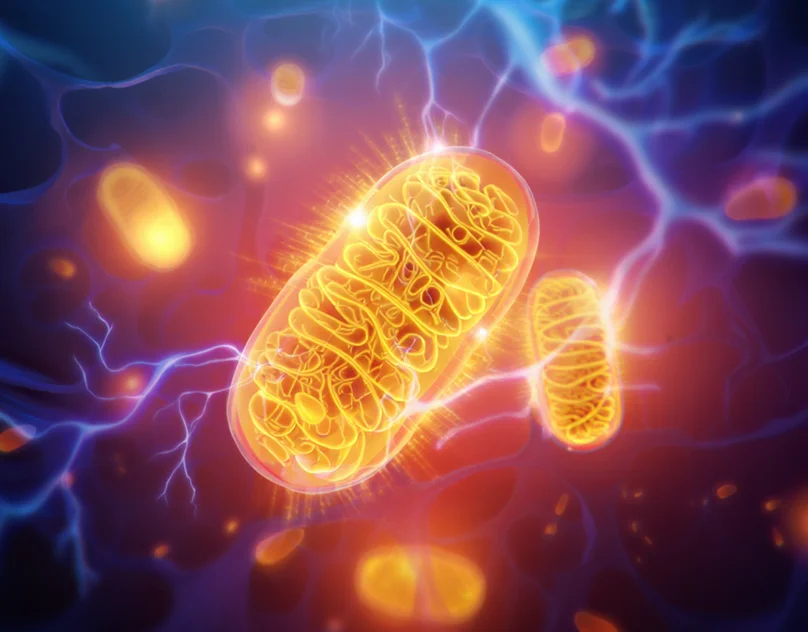
When you think about your energy levels, you might think about how much coffee you drank or how many hours you slept. However, your true energy starts much deeper. It begins inside your cells, within tiny structures called mitochondria.
Understanding mitochondrial efficiency is one of the most important steps you can take toward better health and a longer life. When your mitochondria work well, you feel vibrant.
What are Mitochondria?
Mitochondria are often called the “powerhouses of the cell.” Their main job is to take the nutrients from the food you eat and the oxygen you breathe and turn them into ATP (adenosine triphosphate). ATP is the “energy currency” that powers every move you make and every thought you have.
What Does Mitochondrial Efficiency Mean?
Mitochondrial efficiency refers to how effectively these powerhouses convert fuel into energy without creating too much “smoke.”
Think of a car engine:
High Efficiency: The engine uses fuel cleanly, produces a lot of power, and creates very little exhaust.
Low Efficiency: The engine wastes fuel, produces less power, and creates a lot of thick, damaging smoke (known as oxidative stress).
When your mitochondria are efficient, they produce high amounts of energy while keeping cellular damage to a minimum. According to research from the National Institutes of Health (NIH), maintaining this efficiency is a key factor in slowing down the aging process.
The Signs of Mitochondrial Decline
As we age, or due to poor lifestyle choices, our mitochondria can become less efficient. This is often called mitochondrial dysfunction.
Studies show that mitochondrial decline is linked to several health challenges:
Brain Fog: Difficulty focusing or remembering things.
Slower Metabolism: A 2023 study highlighted that inefficient mitochondria can lead to weight gain and metabolic issues.
Muscle Weakness: Mitochondria are highly concentrated in muscle tissue; when they fail, strength often follows.
The Role of Genetic Testing
Not everyone starts with the same “engine.” This is where genetic testing becomes essential. Your DNA contains the instructions for how your mitochondria are built and how they repair themselves.
By looking at your genetic markers, you can discover:
Mitochondrial Inheritance: Understanding the specific traits you inherited that affect energy production.
Oxidative Stress Risk: Some people are genetically more likely to produce “exhaust” (free radicals) that damages their cells.
Nutrient Needs: Certain genes dictate how well your body uses CoQ10, B vitamins, and Magnesium—all of which are “fuel” for your mitochondria.
Genetic testing allows you to move away from general advice and toward a plan that supports your specific cellular makeup. It helps you identify exactly what your “powerhouses” need to run at peak performance.
How to Support Your Mitochondrial Efficiency
The good news is that you can “train” your mitochondria to be more efficient. Here are three proven ways:
Zone 2 Exercise: Low-intensity, steady movement (like a brisk walk) encourages your body to create more mitochondria.
Intermittent Fasting: Giving your body a break from food triggers a process called mitophagy, where your cells clean out old, broken mitochondria and replace them with new ones.
Cold Exposure: Short bursts of cold (like a cold shower) signal your body to burn energy for heat, which strengthens mitochondrial function.
Power Your Life with Lifecode
Your energy is your most valuable resource. At Lifecode, we believe that the best way to protect your health is to understand it from the inside out.
The Lifecode Panel Advanced Genetic Testing gives you a clear window into your cellular health. By analyzing your unique genetic profile, we provide insights into your mitochondrial efficiency and offer a personalized roadmap to boost your energy and longevity.