Have you ever wondered why you feel a dip in energy in the afternoon or why you naturally wake up just before your alarm goes off? This isn’t a coincidence. It is controlled by your circadian rhythm—a 24-hour internal clock that runs in the background of your brain.
While we often think of this rhythm as just a “sleep schedule,” it is actually controlled by a specific set of circadian rhythm genes. These genes act like a master conductor, making sure every system in your body stays in sync with the rising and setting of the sun.
What Are Circadian Rhythm Genes?
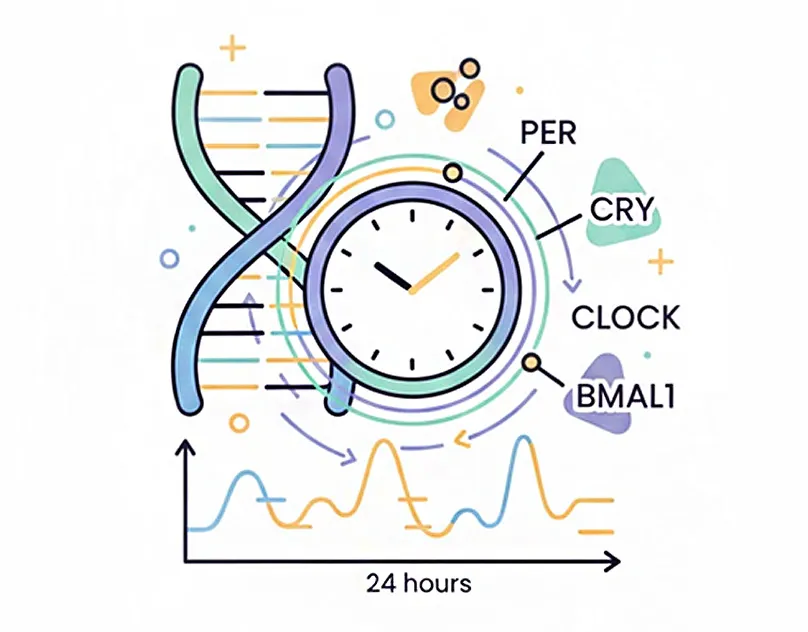
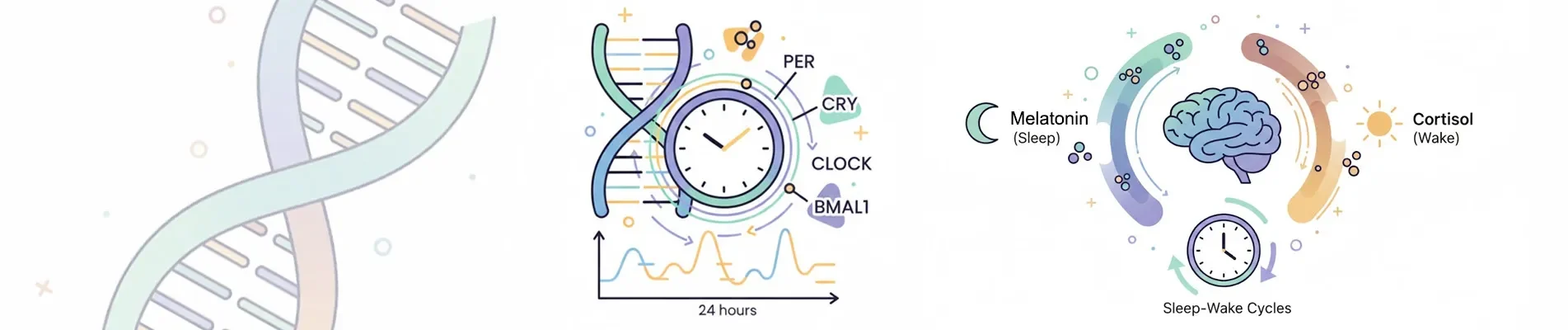
Every cell in your body has a “clock.” These clocks are managed by a group of genes, the most famous being CLOCK, BMAL1, PER (Period), and CRY (Cryptochrome).
These genes work in a feedback loop. Throughout the day, they build up certain proteins, and at night, those proteins are broken down. This cycle tells your body exactly what time it is and what it should be doing.
What Do These Genes Regulate?
Circadian genes do much more than just make you sleepy. They are responsible for regulating almost every major biological process. According to the National Institute of General Medical Sciences, these genes influence:
Sleep-Wake Cycles: They control the release of melatonin, the hormone that helps you fall asleep, and cortisol, which helps you wake up.
Metabolism and Weight: These genes dictate when your body should burn energy and when it should store it. This is why eating late at night can disrupt your weight loss goals.
Body Temperature: Your temperature naturally drops to its lowest point in the early morning and peaks in the late afternoon.
Immune Function: Your immune system follows a rhythm, often becoming more active at night to repair tissues and fight off infections.
Hormone Balance: Beyond sleep hormones, circadian genes regulate insulin, growth hormones, and even hunger signals like ghrelin.
The Impact of "Social Jetlag"
When our modern lifestyle clashes with our genetic rhythm-such as through shift work, blue light from screens, or late-night snacking—it creates “circadian misalignment.”
Statistics from the Sleep Foundation show that long-term disruption of these rhythms is linked to a 50% increase in the risk of obesity and a higher chance of developing type 2 diabetes. When your genes are out of sync, your health suffers.
The Role of Genetic Testing
Not everyone has the same “clock.” Some people are naturally “morning larks,” while others are “night owls.” This is determined by small variations in your DNA.
Genetic testing is the only way to truly understand your body’s unique timing. By analyzing your circadian genes, you can discover:
Your Chronotype: Whether your body is genetically programmed to perform best in the morning or evening.
Sleep Sensitivity: How your genes respond to caffeine or blue light.
Metabolic Timing: The best time of day for you to eat to maintain a healthy weight.
Instead of fighting against your body, genetic testing allows you to align your schedule with your DNA. This can lead to better sleep, higher energy, and a lower risk of chronic disease.
How to Support Your Internal Clock
You can help your circadian genes stay on track by following a few simple habits:
Seek Morning Sunlight: Aim for 10–15 minutes of natural light shortly after waking to “reset” your master clock.
Limit Blue Light: Use “night mode” on devices or wear blue-light-blocking glasses two hours before bed.
Consistent Meal Times: Eating at the same time every day helps anchor your peripheral clocks in your digestive system.
Sync Your Life with Lifecode
Understanding your internal rhythm is one of the most powerful things you can do for your long-term health. At Lifecode, we use advanced science to help you discover how your genes are wired to handle time.
The Lifecode Panel Advanced Genetic Testing provides a deep look at your circadian rhythm genes. We don’t just tell you that you’re tired; we help you understand the genetic “why” behind your energy levels and sleep patterns. By knowing your results, you can stop guessing and start living in sync with your biology.
Take Your Next Step Today
Circadian rhythm genes control your body’s internal clock—when you sleep, wake, and repair. But this timing differs for each person. Your genes decide how your body responds to light, stress, and daily routines.