
Gene Overview
MC4R
MC4R (Melanocortin-4 Receptor) is a clinically significant gene involved in appetite regulation and energy balance. It does not directly cause obesity but influences how the brain interprets hunger, fullness, and energy needs. Variants in this gene have been associated with differences in eating behaviour and weight trajectory in studies published in Nature Genetics and The New England Journal of Medicine.
MC4R acts within the hypothalamus, coordinating signals between fat stores, hormones, and the nervous system.
Why MC4R Matters for Your Health
MC4R plays a central role in balancing food intake with energy use. Differences in this gene may shape behavioural responses to food and metabolic risk over time. Associations below reflect population-level research and represent tendencies, not certainties.
Appetite Control
Signals when to stop eating via the brain's satiety pathways
Body Weight Regulation
Associated with long-term weight trajectory patterns in GWAS research
Energy Expenditure
Influences how efficiently calories are utilised
Hormonal Signalling
Interacts with leptin, insulin, and α-MSH within the melanocortin pathway
Metabolic Risk
Linked to obesity-related conditions, including type 2 diabetes risk, in certain variant carriers
Primary Functions of MC4R
- Regulates hunger and satiety through the hypothalamic melanocortin system
- Integrates leptin and insulin signalling to communicate energy status to the brain
- Supports energy homeostasis by adjusting food intake and metabolic rate
- Influences body fat accumulation patterns
- Coordinates brain–body communication about energy needs
- Contributes to metabolic adaptation signalling
How MC4R Variants May Influence You
Genetic variation indicates predisposition, not certainty. Lifestyle and environment remain critical. Variant categories are based on peer-reviewed genotype–phenotype associations and are not diagnostic classifications.
Efficient Signalling Variant
Associated with stronger satiety responses and more consistent fullness recognition, supporting balanced food intake.
Typical Signalling Variant
Represents standard pathway activity. Lifestyle remains the primary determinant of weight outcomes.
Reduced Signalling Variant
Associated with delayed satiety, larger portion tendencies, and increased dietary reward sensitivity. Structured eating habits and environmental strategies are particularly beneficial.
Scientific Foundation
Scientific Background of the MC4R Gene
Biological Role
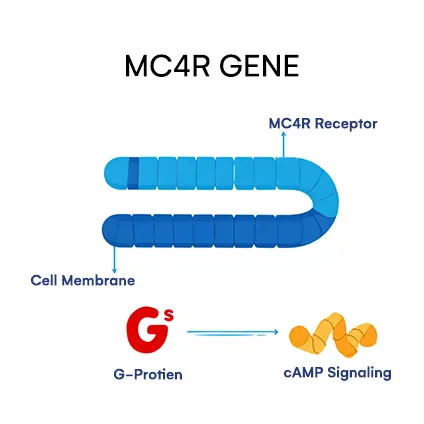
MC4R encodes a G-protein-coupled receptor activated by α-MSH, transmitting satiety signals that reduce food intake and increase energy expenditure. Loss-of-function variants represent the most common known single-gene cause of severe early-onset obesity.
Research Evidence
Rare variants (MAF <1%) produce stronger effects; common variants identified in GWAS show subtler population-level BMI differences. Lifecode’s interpretation draws on the UK Biobank, FinnGen cohort, and meta-analyses from Obesity Reviews and Cell Metabolism.
Pathway Interactions
MC4R works within a network including LEP, LEPR, POMC, AGRP, and FTO. Lifecode analyses your result within this broader gene network, not in isolation.
Lifestyle Factors That Modify MC4R Impact
Genes do not change, but expression and impact can shift with behaviour over time.
Nutrition
Higher protein (25–30% of energy) and fibre (25g+ daily) improve satiety signalling and may offset reduced MC4R activity.
Meal Timing
Consistent schedules support leptin and ghrelin rhythm alignment.
Sleep Quality
Sleeping under 7 hours suppresses leptin and elevates ghrelin, disrupting MC4R’s hormonal environment.
Stress Exposure
Elevated cortisol weakens satiety perception and increases reward-driven eating.
Physical Activity
Regular exercise supports melanocortin pathway activity and insulin sensitivity.
Indicators You May Benefit From MC4R Insight
How Lifecode Interprets MC4R in Your Report
Lifecode reviews MC4R alongside LEP, LEPR, FTO, POMC, and BDNF using clinically validated genotyping platforms. Variant interpretation references ClinVar, gnomAD, dbSNP ,GWAS Catalog and current peer-reviewed literature. Insights are combined with your lifestyle data to identify sustainable behaviour strategies and not restrictive approaches. Our reports complement, not replace, qualified healthcare professional advice.
Lifestyle Guidance
Practical Recommendations
Educational only. Not clinical treatment or diagnosis.
Nutrition
Prioritise lean proteins, legumes, wholegrains, and vegetables to support satiety and stable blood glucose.
Portion Awareness
Pre-portioning meals and hunger/fullness scales help when internal satiety cues are less reliable.
Behavioural Strategies
Slower eating pace and reduced mealtime distractions strengthen internal hunger recognition.
Routine Building
Consistent sleep and meal timing positively influence leptin rhythms and appetite hormone regulation.
Long-Term Focus
Sustainable behaviour adjustments consistently outperform short-term restriction, particularly for those with appetite-influencing variants.
FAQ
Frequently Asked Questions
No. An MC4R variant indicates a predisposition, not a certainty. While certain variants are associated with delayed satiety signals and increased appetite sensitivity, lifestyle factors including nutrition, sleep, physical activity, and meal timing remain critical determinants of weight outcomes. Genetic variation shapes tendencies, not guaranteed results.
Yes. Research consistently shows that structured lifestyle strategies can meaningfully offset reduced MC4R activity. Higher protein intake (25–30% of energy), adequate dietary fibre (25g+ daily), consistent meal timing, quality sleep of at least 7 hours, and regular physical activity all support the melanocortin pathway and improve satiety signalling, even in those with appetite-influencing variants.
These three categories reflect how effectively your MC4R receptor transmits satiety signals. An efficient signalling variant is associated with stronger fullness recognition and balanced food intake. A typical variant represents standard pathway activity. A reduced signalling variant is linked to delayed fullness, larger portion tendencies, and greater dietary reward sensitivity, where structured eating habits and environmental strategies are most beneficial.
Speak to a Lifecode Consultant
“Understanding MC4R helps you focus on resilience and recovery rather than chasing quick fixes.”
