
Gene Overview
LEPR (Leptin Receptor)
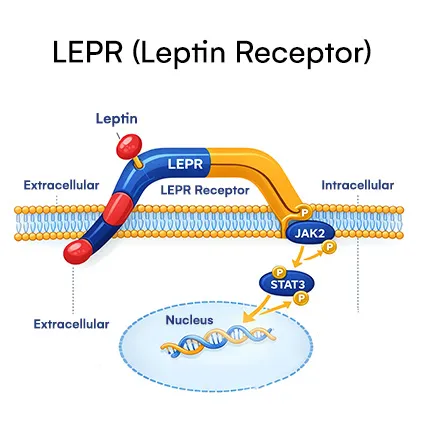
The LEPR gene provides instructions for making the leptin receptor, a protein that allows cells to respond to leptin a hormone produced by fat tissue that signals energy availability to the brain and body. LEPR does not determine body weight on its own. It influences how effectively the body interprets hunger, fullness, and energy storage signals. Variations may affect appetite regulation, metabolic balance, and long-term weight patterns.
When signaling is less efficient, the body may perceive energy shortage even when intake is adequate, shaping eating behavior and energy use over time. LEPR plays a central role in energy homeostasis and appetite hormone signaling.
Why LEPR Matters for Your Health
Leptin signaling sits at the center of appetite control, metabolic regulation, and energy balance. Understanding LEPR helps explain differences in hunger patterns, weight stability, and response to lifestyle changes.
Appetite Regulation
Helps the brain recognize fullness and adjust food intake
Weight Balance
Influences how the body stores and uses energy
Metabolism
Supports coordination between fat tissue and energy expenditure
Hormonal Signaling
Interacts with insulin and stress pathways
Energy Stability
Affects consistency of hunger and satiety signals
Key Functions of LEPR
- Transmits leptin signals to the brain
- Regulates appetite and satiety responses
- Influences energy expenditure
- Supports metabolic hormone coordination
- Contributes to body weight regulation
- Plays a role in inflammation signaling related to metabolism
How LEPR Variations May Influence You
This is not a diagnosis. It reflects tendencies shaped over time and influenced by the environment and lifestyle.
Higher Signaling Efficiency Pattern
May support clearer fullness cues, steadier weight regulation, and more stable appetite patterns.
Typical Signaling Pattern
Usually reflects expected appetite control with normal response to diet and activity.
Lower Signaling Efficiency Pattern
May experience persistent hunger signals, weight fluctuations, or greater sensitivity to calorie imbalance, benefiting from structured routines.
Scientific Foundation
Science Behind the LEPR Gene
Leptin Signaling Mechanism
Leptin binds to its receptor in the brain, particularly in areas controlling appetite and energy expenditure. LEPR enables this communication. When signaling is disrupted, appetite regulation may become less precise.
Energy Balance and Weight Regulation
Research links LEPR variants to differences in body mass index, eating behavior, and metabolic efficiency. These effects are typically subtle and interact with lifestyle factors.
Pathway Integration
LEPR interacts with insulin signaling, inflammatory pathways, and nutrient sensing systems, shaping how the body responds to energy availability over time.
How Lifestyle Influences LEPR Function
Genetics establish sensitivity, but daily habits influence how signals are expressed.
Nutrition
Balanced meals support consistent satiety signaling.
Sleep
Poor sleep can disrupt leptin communication and hunger control.
Stress
Chronic stress alters appetite hormones and energy perception.
Movement
Regular activity improves metabolic responsiveness to leptin.
Habits
Predictable eating and recovery routines stabilize signaling patterns.
Signs You May Benefit From Understanding LEPR
How Lifecode Interprets LEPR in Your Report
Lifecode evaluates LEPR alongside appetite, metabolic, and hormonal pathways. Interpretation focuses on patterns affecting hunger regulation, energy storage, and metabolic flexibility. Insights are considered within the broader genetic network rather than a single gene effect.
Lifestyle Guidance
Practical Recommendations
These suggestions are informational and not a substitute for clinical advice.
Nutrition
Prioritize balanced meals that support satiety rather than restriction cycles.
Recovery
Maintain consistent sleep to support hormone signaling.
Stress Regulation
Reduce chronic stress that can distort hunger cues.
Movement
Regular activity supports metabolic communication between the brain and body.
Daily Habits
Routine timing of meals and rest helps stabilize appetite signals.
FAQ
Frequently Asked Questions
The LEPR gene produces the leptin receptor, which helps the brain interpret signals from fat tissue about energy availability. It influences how your body regulates hunger, fullness, and energy storage — though it does not determine body weight on its own.
No. Having a higher impact FTO variant reflects a predisposition, not a guaranteed outcome. Daily lifestyle habits including nutrition, sleep, physical activity, and stress management remain powerful modifiers of your genetic tendencies.
Yes. While genetics establish your baseline sensitivity, daily habits meaningfully influence how leptin signals are expressed. Regular physical activity, balanced nutrition, quality sleep, and stress management all support more consistent leptin communication between the body and brain.
Speak to a Lifecode Consultant
“Understanding LEPR helps you focus on resilience and recovery rather than chasing quick fixes.”
