


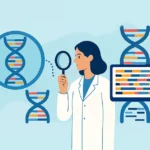



How Environment Interacts With Genes

How Environment Interacts With Genes

Have you ever wondered why two people can eat the same food, but only one of them gains weight? Or why can some people stay calm in a crisis while others feel stressed right away? The answer lies in a beautiful dance between your DNA and the world around you.   

For a long time, people thought our genes were a set of “fixed” instructions that never changed. We now know that your environment—the air you breathe, the food you eat, and the stress you feel—actually talks to your genes. This conversation is what scientists call Gene-Environment Interaction. 

To put it simply, your genes are like a piano, and the environment is the piano player. The piano has a set number of keys (your DNA), but the music that comes out depends on which keys are pressed and how hard.   

According to Wikipedia, “Gene–environment interaction is when two different genotypes respond to environmental variation in different ways.” This means that your unique genetic code determines how sensitive you are to the world around you.   

The “Light Switch” Effect (Epigenetics) 

Inside your body, there are chemical “tags” that can turn certain genes on or off. This field of study is called epigenetics. 

  • Turning “On”: A healthy diet might turn on a gene that protects you from inflammation. 
  • Turning “Off”: High levels of stress might turn off a gene that helps your immune system fight viruses. 

Your DNA is constantly taking notes on your lifestyle. Here are the most common ways the environment interacts with your genetic code: 

  1. Nutrition and Diet

What you eat is one of the most powerful environmental signals. For example, some people have a gene that makes them very sensitive to salt. If they eat a high-salt diet, their blood pressure may spike much higher than someone without that gene. 

  1. Physical Activity

Exercise doesn’t just build muscle; it changes how your genes work. Regular movement can help “silence” genes that lead to weight gain or heart disease. 

  1. Stress and Mental Health

Chronic stress releases hormones like cortisol. Over time, these hormones can change the epigenetic tags on your DNA, which might make you more susceptible to anxiety or sleep problems. 

  1. Environmental Toxins

Pollution, cigarette smoke, and even certain cleaning chemicals can enter our bodies and cause “typos” in our genetic instructions. This is why some people are more likely to get sick when exposed to low levels of pollution while others remain healthy. 

It can be scary to think about how the environment affects us, but it is actually good news! It means you have the power to influence your health. 

  • The 70/30 Rule: Many scientists believe that only about 30% of our health outcomes are decided by our genes alone. The other 70% comes from our environment and lifestyle choices. 
  • Chronic Disease: Research suggests that 90% of chronic diseases, such as Type 2 Diabetes and heart disease, are driven by how our environment interacts with our genes. 
  • Reversibility: Studies on epigenetics show that by changing your environment (like quitting smoking or eating more vegetables), you can actually “re-tag” your DNA to improve your health in as little as six months. 

If you don’t know what your genes are saying, it is hard to know which environmental changes to make. This is where genetic testing becomes your most valuable tool. 

How Genetic Testing Helps 

Genetic testing acts as a “decoder ring” for your body. Instead of following general health advice that is meant for everyone, you can follow advice that is meant for you. 

  • Identifies Sensitivities: A test can tell you if you are genetically sensitive to things like caffeine, gluten, or specific medications. 
  • Uncovers Risks: It shows where you might have a “susceptibility” (a higher risk) for certain conditions, allowing you to change your environment early to prevent them. 
  • Personalized Roadmap: It takes the guesswork out of wellness. You will know exactly which lifestyle habits—like HIIT workouts versus yoga—will work best with your DNA. 

At LifeCode, we believe that knowing your genetic blueprint is the first step toward a longer, more vibrant life. 

Your genes may be the deck of cards you were dealt, but your lifestyle is how you play the hand. At LifeCode, we want to give you the best strategy possible. Our advanced panels look deep into your DNA to see how your environment is currently affecting your health and how you can optimize your future. 

If you are ready to see how your environment and genes are working together, our team at lifecode.life is here to guide you with professional and compassionate care.   

Take Action for Your Health Today 

Don’t leave your health to chance. Learn how to work with your DNA instead of against it. 

  • Book a Genetic Consultation: Speak with a specialist at lifecode.life to understand your risks and get a personalized plan for your lifestyle. 
  • Order a Genetic Testing Kit (Swab Test): Start your journey from the comfort of home. Our simple cheek swab test provides a lifetime of health insights. 

Visit us at lifecode.life to unlock the secrets of your unique genetic code. 

January 19, 2026 Uncategorized