

Difference Between Trait Insights And Medical Predispositions

Difference Between Trait Insights and Medical Predispositions

Understanding your DNA can feel overwhelming at first. Terms like traitsrisk, and predisposition often sound similar, but they mean very different things. Knowing the difference between trait insights and medical predispositions helps you use genetic information wisely—without fear, confusion, or false assumptions. 

This guide explains both concepts clearly, in simple language, so you can see how genetic testing supports smarter, calmer health decisions. 

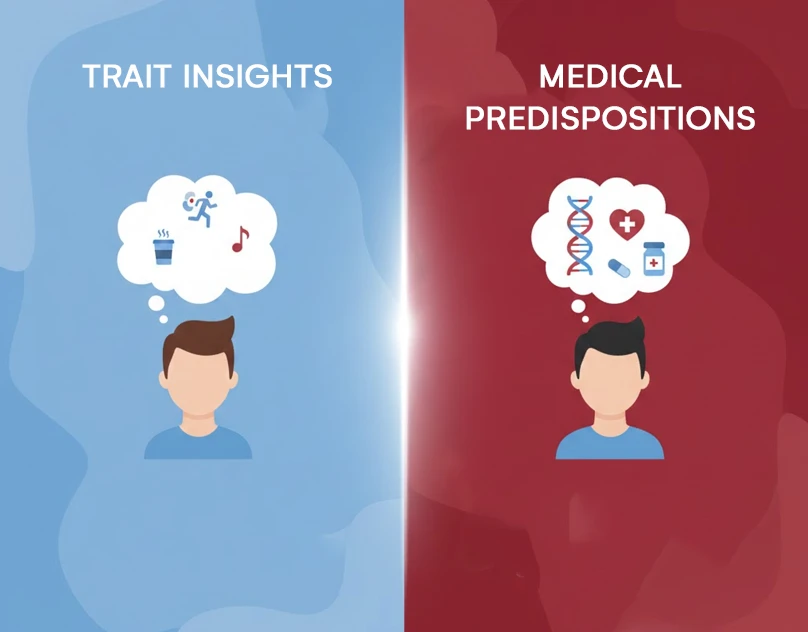
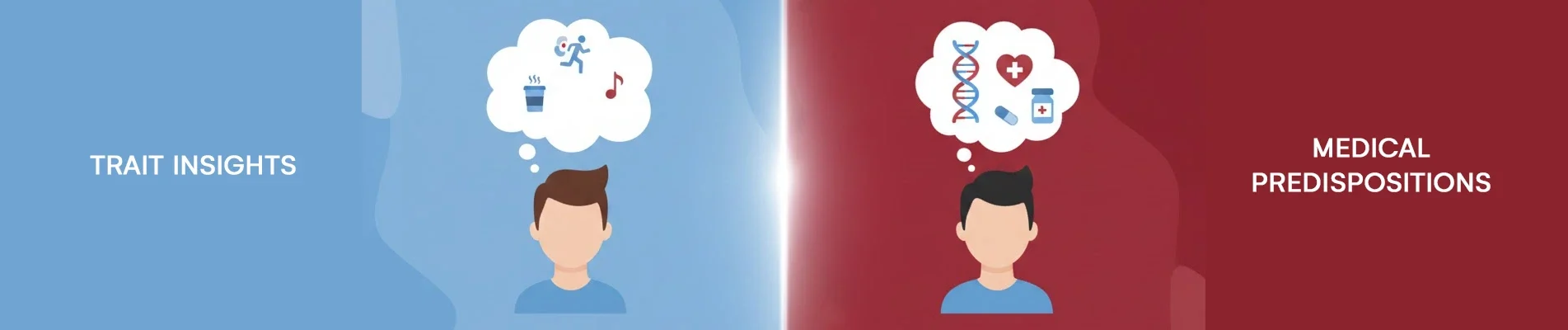
Trait insights describe how your genes influence everyday characteristics. These are usually non-disease traits that shape how your body responds, performs, or behaves. 

Trait insights are not diagnoses. They do not mean something is wrong. They simply explain tendencies. 

Common examples of trait insights 

  • Lactose tolerance or sensitivity 
  • Muscle type (endurance vs power) 
  • Sleep patterns and circadian rhythm 
  • Caffeine or alcohol metabolism 
  • Stress response 
  • Taste perception (sweet, bitter) 

According to Wikipedia, traits are influenced by genes and environment. For example, a gene may affect how you process caffeine, but how much coffee you drink still matters. 

  • Help personalize diet and fitness 
  • Improve lifestyle planning 
  • Explain body responses without labeling disease 
  • Support wellness-focused decisions 

Trait insights are about optimization, not illness. 

medical predisposition means your genes show a higher-than-average risk for a health condition. This does not mean you will get the disease. 

Medical predispositions highlight areas where prevention, monitoring, or early action may help.  

Examples of medical predispositions

  • Type 2 diabetes 
  • Heart disease 
  • High blood pressure 
  • Certain cancers 
  • Autoimmune conditions 
  • Neurodegenerative disorders 

Wikipedia states that genetic predisposition reflects increased probability, not certainty. Many people with risk genes never develop the condition, especially with healthy habits. 

Why medical predispositions matter

  • Enable early screening 
  • Support preventive care 
  • Guide lifestyle adjustments 
  • Help doctors personalize monitoring 

Predispositions are about foresight, not fate. 

Aspect 

Trait Insights 

Medical Predispositions 

Purpose 

Understand everyday tendencies 

Identify potential health risks 

Disease-related 

No 

Yes 

Outcome 

Optimization 

Prevention 

Certainty 

Descriptive 

Probabilistic 

Medical action 

Lifestyle guidance 

Monitoring and early care 

Trait insights explain how you function. 
Medical predispositions explain what to watch for.

Both traits and predispositions are shaped by small genetic variations called SNPs (single nucleotide polymorphisms). 

  • Humans share about 99.9% of DNA 
  • The remaining 0.1% creates differences in traits and risks 
  • Most health conditions are influenced by multiple genes, not one 

Wikipedia explains that complex diseases are polygenic, meaning many genes and lifestyle factors interact together. 

This is why genetic testing must be interpreted carefully and responsibly.

Genetic testing helps translate raw DNA data into meaningful insights. It does not predict the future. It helps you understand tendencies and risks early. 

What genetic testing can do

  • Identify inherited tendencies 
  • Highlight elevated health risks 
  • Support preventive planning 
  • Enable personalized wellness strategies 

What genetic testing cannot do

  • Diagnose diseases 
  • Replace medical exams 
  • Predict exact outcomes 
  • Eliminate lifestyle influence 

At LifeCode, testing is designed to inform—not alarm. Results are explained in a calm, science-led way so users can act with clarity. 

Many people assume: 

  • A trait equals a condition 
  • A risk equals certainty 

This confusion can cause unnecessary fear. 

Trait insights describe how your body works today. 
Medical predispositions describe what may need attention over time. 

Understanding this difference is the foundation of responsible genetic awareness. 

Trait insights and medical predispositions work best when viewed together. 

For example: 

  • A fitness trait may show slower muscle recovery 
  • A medical predisposition may show higher inflammation risk 

Together, they can guide: 

  • Training style 
  • Recovery time 
  • Diet choices 
  • Preventive screening 

This combined view supports smarter, proactive care. 

LifeCode focuses on predictive clarity, not fear-based reporting. 

What makes LifeCode different 

  • Deep gene coverage across thousands of markers 
  • Clear explanations at a grade-6 reading level 
  • Science-backed interpretations 
  • Focus on prevention and foresight 
  • Human-first reporting, not raw data dumps 

LifeCode helps users understand what their genes suggest—and what they still control. 

Learn more at lifecode.life. 

Your genes are not your destiny. They are a guide. 

Start your proactive health journey today 

  • Book a genetic consultation for expert guidance 
  • Order a genetic testing kit (easy swab test) from home 

Explore Advanced Genetic Testing Panels with LifeCode and gain early insights that support smarter decisions, better planning, and long-term well-being. 

 Visit lifecode.life to begin your journey toward informed, confident health choices. 

January 9, 2026 Uncategorized